
Pro-Israel Counter-Protest, Heavy NYPD Presence, and Community Unity Mark
Tivuch Shelly Housing Program at YIKGH
What was supposed to be a straightforward Israel real-estate information night in Kew Gardens Hills turned into something far bigger – a night that showed just how sharply divided the atmosphere has become, and how determined this community remains.
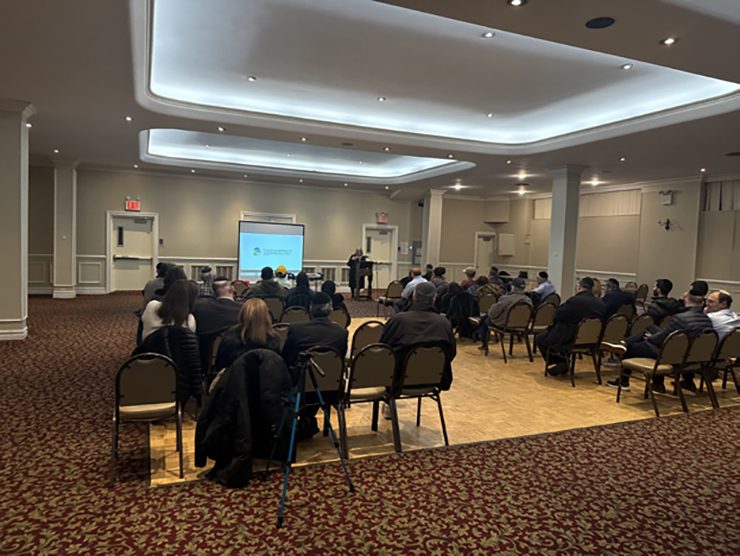
On Thursday evening, January 8, Tivuch Shelly, a well-known Israeli real-estate firm that works with North American buyers, hosted an informational seminar inside the Simchah Room of the Young Israel of Kew Gardens Hills. The flyer promoted housing opportunities in Jerusalem, Netanya, Ashdod, Carmei Gat, Ramat Beit Shemesh, and Ma’ale Adumim.
The shul itself had no connection to the program beyond renting the space. No contracts were signed, and no properties were sold. It was simply an educational presentation about housing options, legal protections, and investment structures in Israel.
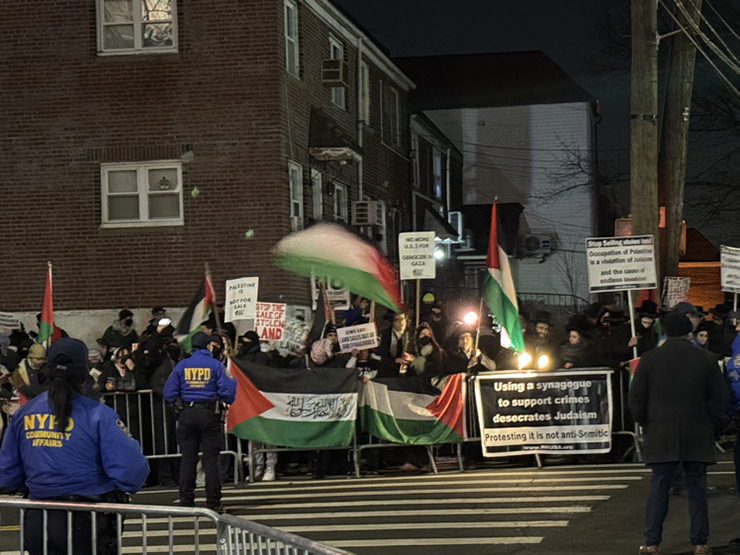
Outside, though, the scene was anything but quiet.
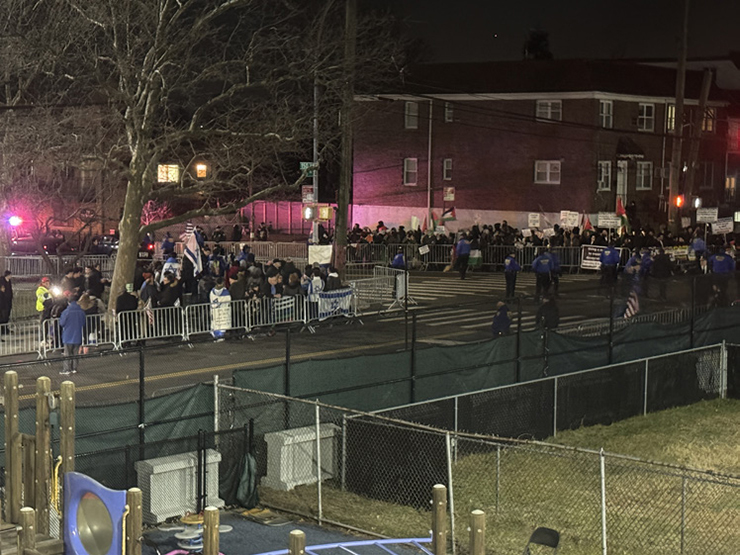
Hundreds of demonstrators gathered across the street, waving Palestinian flags and chanting anti-Israel and pro-Hamas slogans. Their anger was directed at the fact that an Israel-focused real-estate seminar was taking place in a Jewish neighborhood – and at Tivuch Shelly specifically. Videos that later circulated online showed rhetoric that many city officials said crossed the line into praising extremist violence.
The location made the situation even more unsettling. The shul sits in the middle of a residential area surrounded by Jewish schools, yeshivos, and family homes.
For the local community, the protest wasn’t just political – it was personal.
In the hours before the demonstration, protest organizers had not clearly announced where they would gather, leaving parents, schools, and institutions unsure what to expect. Phones were buzzing all afternoon with questions about safety and logistics.

Schools moved quickly. The Yeshiva of Central Queens dismissed early so students could get home before the protest grew. Ohr HaChaim/Yesodei Yeshurun and Yeshivas Chofetz Chaim kept students inside and provided pizza dinners so talmidim could stay put until things calmed down. At Yeshiva Ketana of Queens, Rabbi Binyomin Kessler rode the bus home with his students to make sure every child arrived home safely. Other schools, including Lander College for Men and Yeshiva Sha’arei Zion, adjusted schedules or restricted movement as a precaution.
The NYPD responded with a massive presence. More than 200 officers were deployed, including counterterrorism units, drone teams, supervisors, and legal staff. The operation was overseen by Police Commissioner Jessica Tisch and led locally by the 107th Precinct under Commanding Officer Michael Black-Larkins, with Community Affairs Officers Kevin McCarthy and Tim Gorman coordinating closely with community leaders.
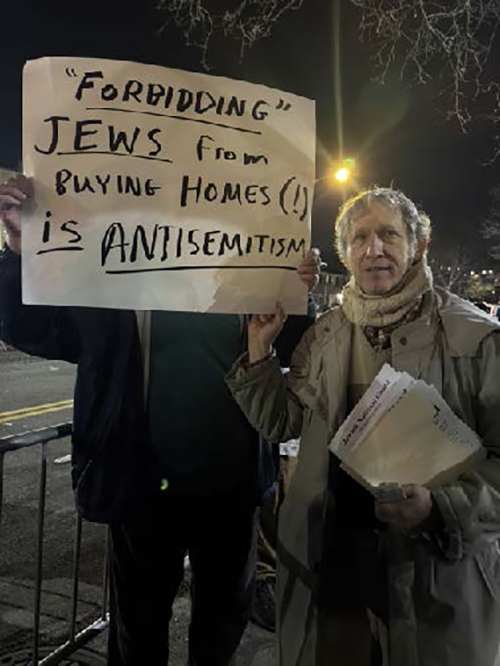
Barricades went up, streets were controlled, and protesters were kept at a distance from the shul. A peaceful pro-Israel counter-protest formed across the street, with community members holding American and Israeli flags and staying within NYPD guidelines.
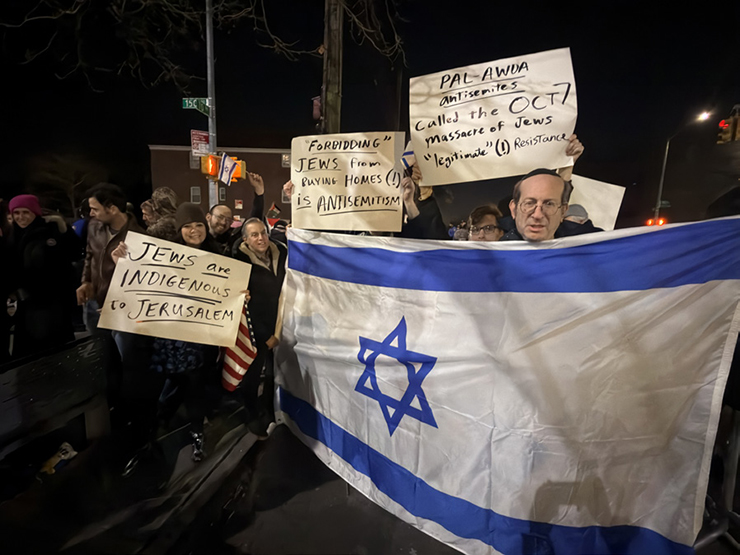
Inside the building, the mood couldn’t have been more different.
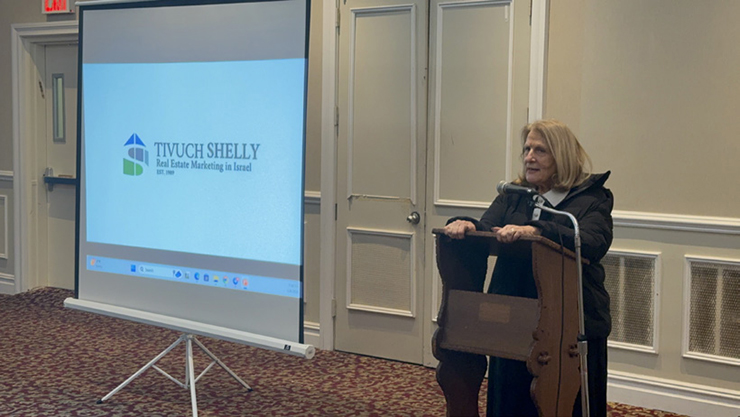
Shelly Levine, founder of Tivuch Shelly, opened the program with remarks that were personal and direct. She spoke about her aliyah in the late 1970s and the values that shaped her company – helping Anglo buyers navigate the Israeli real-estate system with honesty, support, and long-term guidance.
“This isn’t just about apartments,” Levine told the audience. “It’s about continuity, identity, and not being intimidated from standing up for Israel and Jewish life.”
She explained how Israeli law protects buyers through bank-controlled escrow accounts, engineer verification, and guarantees that remain in place until legal title is transferred. For overseas buyers, she said, those safeguards make all the difference.
Yoni Gold, who runs Tivuch Shelly’s American operations, presented projects across Israel, with special attention on Ma’ale Adumim – a growing Anglo community just minutes from Jerusalem. The development offers favorable tax conditions, flexible payment plans, and features tailored to religious families, including shuls, Shabbos elevators, and space for sukkos.
Israeli attorney Nir Grossman discussed the importance of proper legal representation, while mortgage specialist Adam Siegel addressed financing options available to American buyers.
Meanwhile, outside, the chants continued.
Then, almost as suddenly as it began, the protest ended. At around 9:00 p.m., demonstrators dispersed quickly and in unison. No official explanation was given, but the coordinated departure stood out to many residents.
Throughout the evening, Queens Shmira worked closely with the NYPD, schools, and community institutions to monitor conditions and relay concerns. City Hall, including the office of Zohran Mamdani, was kept informed of the security situation.

The night ended without injuries or damage.
But the effects didn’t stop there. After Shabbos, Queens Shmira received reports of anti-Israel graffiti on a nearby home along the earlier protest route. Volunteers arrived quickly and cleaned the wall before tensions could rise.
In response to the professionalism shown by local law enforcement, the Queens Jewish Alliance hosted a thank-you luncheon for the 107th Precinct the following Tuesday. Funded by local residents and catered by SoySauce, it was a simple but meaningful gesture of appreciation.
Just days earlier, City Hall had tried – unsuccessfully – to block a large Israeli-linked real-estate deal in Brooklyn involving thousands of rent-stabilized apartments. While that fight played out in court, the emotional spillover was felt on the streets of Queens.
Elected officials across the city and state later condemned the rhetoric heard at the protest. Governor Kathy Hochul denounced chants that appeared to glorify violence. Mayor Mamdani said that while protest is protected, targeting houses of worship is not. Council Speaker Julie Menin, Assemblymember Sam Berger, and Council Member James Gennaro echoed those concerns.
By the end of the night, the contrast was clear.
Outside, there was anger and pro-terror chants. Inside, there were quiet, practical questions and people thinking seriously about their future in Israel.
Despite the noise, the message inside the room stayed steady: Jewish life and Jewish building in Eretz Yisrael are moving forward.
For many in attendance, the question wasn’t whether Israel was part of their future – but when.
By Shabsie Saphirstein