Should Jewish Voters Look Beyond Hochul’s Gestures?
New York Governor Kathy Hochul stood before leaders of the Met Council and other major Jewish...
 Queens Jewish Link
Connecting the Queens Jewish Community
Queens Jewish Link
Connecting the Queens Jewish Community New York Governor Kathy Hochul stood before leaders of the Met Council and other major Jewish...

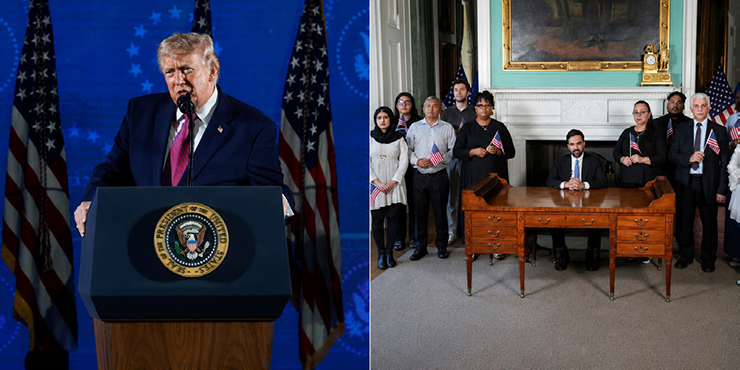
This July 4th weekend, as the nation marked its 250th birthday, two prominent speeches offered Americans a stark choice in how we understand our past and chart our future. One, delivered by New York City Mayor Zohran Mamdani, framed the American story as if we were currently undergoing systemic problems like slavery or Jim Crow, rewriting history to appeal to the victimhood mentality of the socialists. The other, given the next day by President Trump, celebrated America as the crowning achievement of human history, built by giants who secured unalienable rights and a people whose best days remain ahead. The contrast reveals more than a rhetorical differentiation; it’s a chasm between grievance and gratitude.
The 250th anniversary of American independence is an opportunity to restore pride in America’s past and confidence in its future. Restoring that pride and confidence is critical to our future.
America has been a place of almost unlimited opportunity for its Jewish citizens. The percentage of American Jews, less than 0.1% at the time of the Revolution, peaked at about 3.5% in the mid-20th century. From 2010 to 2020, one-third of the Supreme Court justices and more than 10% of the United States Senate were Jewish. Nearly 30% of American Nobel laureates have been Jewish. Jews should be proud of these achievements.

Mamdani-backed challengers defeat establishment Democrats as anti-Israel rhetoric reshapes key races
The night was humid, moist, and gloomy for traditional urban Democrats as candidates favored by Mayor Zohran Mamdani gained congressional seats in primaries where incumbents lost to young, radical challengers who made the “genocide” smear their defining campaign issue.
This July 4th marks 250 years since the American founding. For the Jewish community, the anniversary is not merely a national commemoration but a moment of gratitude and pride. Jewish history across two millennia has been defined by exile, persecution, massacres, and expulsions. The United States stands apart as the one diaspora society in which Jews achieved full legal equality, rapid economic and cultural integration, and the ability to maintain religious and communal identity without state coercion or fear of collective punishment. That achievement rests on the specific character of the American constitutional order.

Vice President JD Vance’s performance in Switzerland over the weekend was more than bad optics. It was a warning. In high-stakes talks involving Iranian proxies and their cutouts, the man who currently leads early 2028 Republican presidential polling looked tentative, overly eager for any deal, and oddly deferential to players who have called for the destruction of the United States and Israel. In short, Vance is not following the “Peace Through Strength” policy of the Trump administration.