
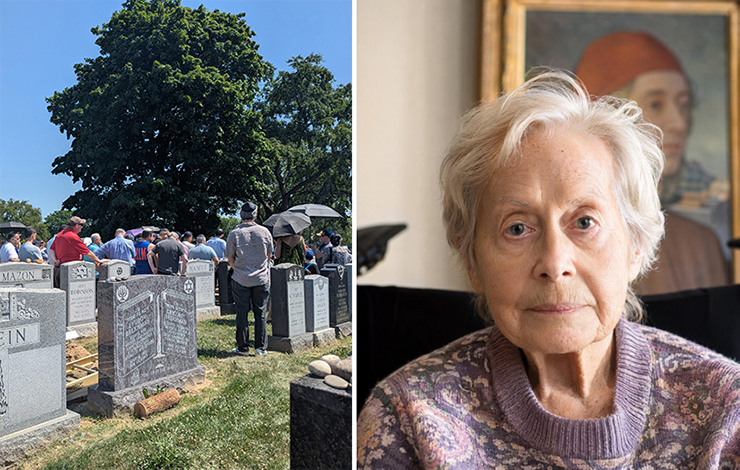
As the number of Holocaust survivors continues to dwindle, each passing represents the loss of another living witness to history. Behind every survivor is a story of unimaginable hardship, resilience, and courage. While some stories were carefully preserved for future generations, others faded quietly with time. Sarah Turner’s is one of those stories—known today only through fragments, yet powerful enough to inspire an entire community to ensure that her final wish would not be forgotten.
Sarah passed away on Wednesday, July 1, at the age of 96. Perhaps the most heartbreaking detail surrounding her passing was the profound isolation that framed it. She left behind no surviving immediate family. Her husband Leon had predeceased her by approximately 20 years, the couple was never able to have children, and there would be no sons, daughters, siblings, or close relatives to observe the traditional rites of shiv'ah in her memory.
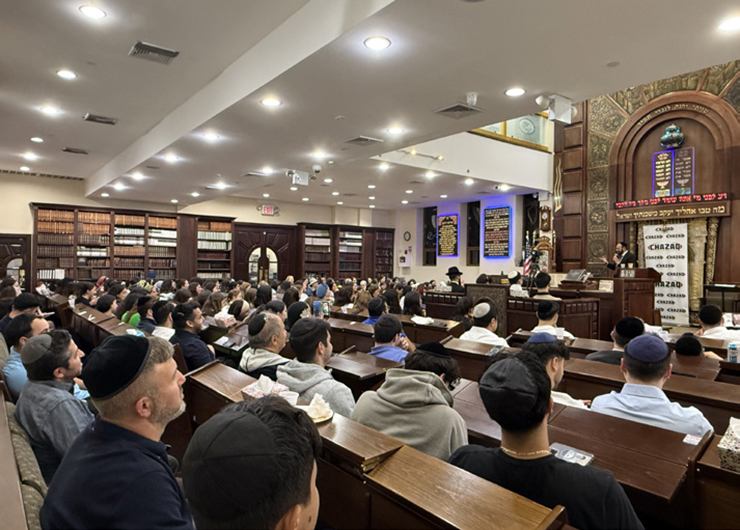
Recognizing this painful reality, members of the Jewish community issued an urgent appeal asking neighbors and strangers alike to attend her funeral. The request was driven by a singular, bittersweet goal: securing a minyan to ensure that a fellow Jew who had already endured so much in life did not make her final journey entirely alone. It was a simple ask rooted in one of Judaism’s greatest acts of chesed shel emes—the selfless kindness shown to the deceased, a dignity offered when no one is left to give it.
The effort to honor Sarah’s memory was amplified by From the Depths, an international Holocaust remembrance organization founded in 2014 by Jonny Daniels after a conversation with Nobel Peace Prize laureate Elie Wiesel about preserving Holocaust memory for future generations. The organization works to support Holocaust survivors, restore neglected Jewish cemeteries and gravesites, commemorate rescuers, and ensure that the stories of those who endured the Shoah are never forgotten. That sense of communal responsibility is deeply felt locally; just over a week earlier, members of the community had similarly gathered in large numbers for the funeral of another Holocaust survivor.
Although relatively little has been preserved about Sarah’s life, remarkable and devastating details have emerged through family members and those involved in arranging her funeral. Sarah was born in France on March 10, 1930. She was only ten years old when Nazi Germany occupied much of France in 1940.
Sarah survived the Holocaust after being hidden inside a Catholic monastery, where courageous nuns risked their own lives to shelter Jewish children. She was one of thousands of hidden children throughout occupied Europe who survived because members of the clergy, resistance fighters, and ordinary families chose to place compassion above their own safety.
Sarah’s story did not end with liberation. Emerging from the sanctuary of the monastery into a world where virtually her entire family had been wiped out, she faced the daunting task of rebuilding a life from the ashes of the Holocaust. According to her family, Sarah first made her way to Canada, later returned to Europe for a period, and ultimately immigrated to the United States, where she settled with her husband. Though she built a home, the losses inflicted by the Holocaust could never truly be replaced.
As the decades passed, the generation that had survived alongside her gradually disappeared. She ultimately outlived nearly everyone closest to her. Although she had no direct descendants, Sarah remained in contact with her extended family, including the Turniansky family, who helped preserve portions of her remarkable story. In the days following her passing, her life story even served as a poignant teaching tool in religious settings, including a dedicated memorial segment on Rabbi Shmuel Silber's daily Daf Yomi podcast, ensuring that her legacy reached thousands of listeners worldwide.
In one of the most touching details to emerge, Sarah reportedly shared a simple, aching request during her final days. Speaking with her great-niece by telephone, Sarah said she wanted only one thing: to be remembered.
Her funeral notice poignantly reflected both her extraordinary life and heartbreaking circumstances: “Sarah Turner was a child Holocaust survivor; she has no surviving direct relatives, no one to sit Shiv'ah. Please help us make a minyan in her honor.”
That brief message spread rapidly through a viral social media effort. Many people who had never met Sarah committed to attending her funeral simply because they believed that no Holocaust survivor should ever be buried without family - or, when family is gone, without a community standing in their place.
Sarah’s graveside service was held on Friday, July 3, at 10:30 a.m., coordinated through Schwartz Brothers-Jeffer Memorial Chapels, followed by burial at Mt. Hebron Cemetery. Neighbors and strangers alike arrived at the cemetery gates, ensuring that a proper minyan was present to fulfill her final wish.
Though much of Sarah Turner’s personal history may never be fully reconstructed, the final chapter of her life revealed something profoundly beautiful. When there was no immediate family left to accompany her, the community became her family.
May Sarah Turner’s memory forever be a blessing, and may her life continue to remind us of both the immeasurable loss of the Holocaust and the enduring responsibility to remember every survivor’s story, even when only fragments remain.
By Susie Garber