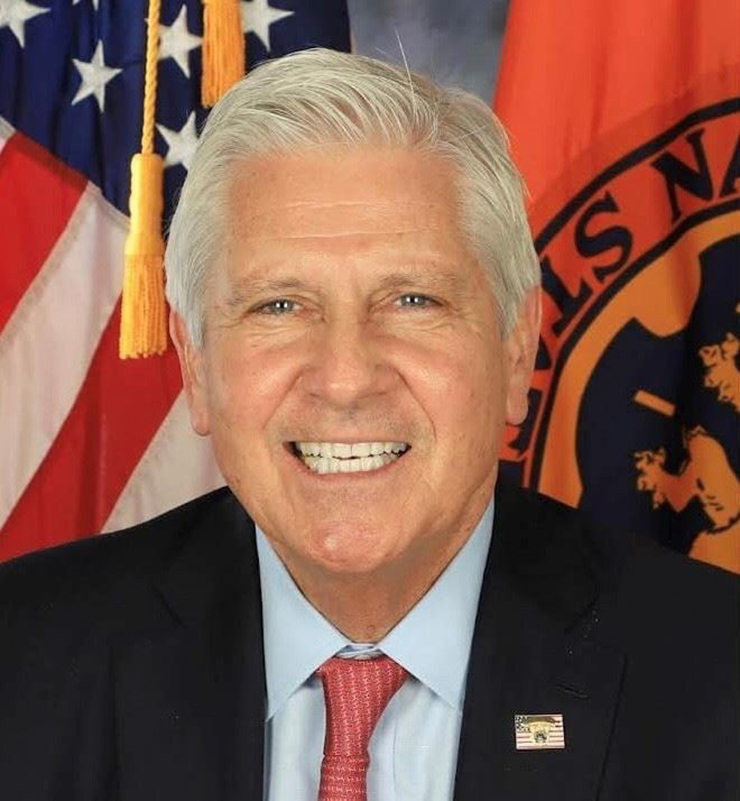

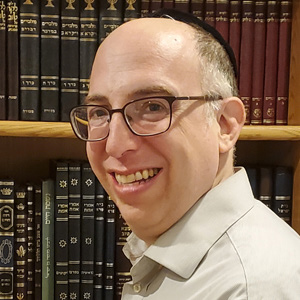
Ephraim Berger welcomed the community to the Young Israel of Queens Valley on Monday night, April 13, for a Yom HaShoah commemoration dedicated to the memory of his father, Dov Berger, z”l. A survivor of the Holocaust who was deeply committed to education, the elder Berger’s legacy served as the focal point for an evening of reflection held both in-person and via livestream. The program opened with Rabbi Daniel Rosenfelt, Rav of the Young Israel of Kew Gardens Hills, leading the assembly in the recitation of T’hilim.
Rabbi Shmuel Marcus, Rav of the Young Israel of Queens Valley, provided introductory remarks that placed the magnitude of the tragedy into a modern context. He recalled that following the 9/11 attacks, the Jewish community faced a handful of heart-wrenching agunah cases. During that time, rabbis utilized DNA evidence and collaborated with a frum individual employed by the MTA. Through their efforts, they were able to predict with certainty if a husband had been in the towers, allowing for the halachic determination that he had perished.
“Stop and think for a moment of the magnitude of the Holocaust,” Rabbi Marcus said. “Millions of Jews perished, and thousands upon thousands of women were left in halachic limbo. It is mind-boggling how overwhelming these questions must have been after the war. After eight months of waiting in vain for husbands who would never return, widows came to rabbanim in Europe, desperate for a heter so they could begin to rebuild. G’dolei Torah worked with immense sensitivity and urgency, whether in DP camps or elsewhere, to help these women. It is a story that is both tragic and profoundly heroic.”
The keynote speaker, Dr. Joshua Karlip, Denenberg Professor of History at Yeshiva University and Associate Director of the YU Center for Israel Studies, shared his expertise on the unprecedented challenges faced by the rabbanim of that era. He recalled meeting Mr. Berger’s father 15 years ago in Kew Gardens Hills, describing him as a true exemplar of mentchlichkeit and warmth.
Dr. Karlip addressed the enormity of the challenge confronting rabbis, many of whom had lived through the Holocaust themselves and lost their own families. He shared a quote from Rabbi Shlomo Dovid Kahana, who earned the title “father of the agunos” for his work on behalf of Jewish soldiers in World War I. In 1944, while in Jerusalem, Rabbi Kahana wrote: “In the wake of the horrific catastrophe of blood and fire and pillars of smoke that befell our people...our blood spilled like water. The number of victims went into the millions: men, women, and children. From myriads of brethren in Europe, only individuals remained from complete families. They are searching for their relatives and husbands and wives. There is no voice and no answer. Therefore, I said I will gird my strength like a warrior...to plunge to the depths of halachah if there is a way to find a heter for these women.”
Dr. Karlip explained that the unprecedented nature of the crisis lay both in the sheer number of agunos and the nature of their disappearance. The vast majority had husbands who vanished without a trace in death camps or killing pits. In these locations, there were often no survivors to tell the tale, and anyone who witnessed a murder was likely murdered himself or herself. While halachah allows for certain leniencies in freeing an agunah – such as accepting a single witness, hearsay, or the unprompted testimony of a non-Jew – the absolute lack of witnesses in the camps forced poskim to find new ways to adjudicate using circumstantial evidence and government registries.
There were also practical hurdles. The majority of European rabbis had shared the fate of their communities, as they were often targeted first. Rabbanim who escaped to the US or to Israel early in the war found it difficult to obtain the “nitty-gritty” details of the death camps required to write a t’shuvah. Only the top g’dolim of the generation would venture into this complicated territory, as the stakes were incredibly high if a husband was later found alive.
Dr. Karlip focused on three monumental poskim who worked heroically in this field: Rabbi Shlomo Dovid Kahana, Rabbi Tzvi Hirsch Meisels, and Rabbi Moshe Feinstein.
Rabbi Kahana, the eldest of the three, was born in Lithuania in 1869 and learned in Volozhin under Rav Chaim Brisker and the Netziv. As the rav of the Beis Din of Warsaw, he was a unique figure who maintained respect across all factions. After World War I, he opened an office in Warsaw to handle tens of thousands of agunah cases, utilizing satellite offices, chevros kadisha, and the Yiddish press to collect information. Due to his efforts, thousands of women were freed to remarry. After escaping to Jerusalem in 1939, he became the Rav of the Old City and continued this vital mission.
Rabbi Tzvi Hirsch Meisels, born in 1902 in southern Poland, was the Av Beis Din in Hungary before being deported to Auschwitz in 1944. He survived the selections and was eventually reunited in Bergen-Belsen with other survivors. Upon liberation, he became the Chief Rabbi of the Bergen-Belsen DP camp, where he spearheaded efforts to revive religious life. In the introduction to his sefer, which records sh’eilos asked in Auschwitz, he wrote: “I was almost burned by the crematoria. I made a kabbalah to Hashem that if He would be with me and guard me, I would do everything in my power to publish the chidushei Torah of rabbis who perished in the Holocaust and make efforts on behalf of agunos. Since a miracle occurred for me, I will go and do positive things.”
Rabbi Moshe Feinstein was born in Belarus in 1895 and served as a rav in Russia until 1936. He famously refused to leave his post, despite threats of arrest, because of his dedication to his community. Upon reaching the Lower East Side, he became the leading poseik of America and freed thousands of agunos, many from the Holocaust. It is often noted that in his long career of complex rulings, he never made a mistake in freeing an agunah.
Dr. Karlip concluded by explaining how these great rabbanim used Torah sources to establish precedents that allowed thousands of young agunos to rebuild their lives and, by extension, the Jewish people. They possessed the fortitude to take these bold halachic decisions upon their shoulders, aided by tremendous siyata diShmaya.
The program concluded with Kenny Mittel leading a rendition of “Acheinu Kol Beis Yisrael.” Mr. Berger thanked the participants, including Shabsie Saphirstein for his assistance with the livestream, and distributed the newly published memoir of his father’s Holocaust experience.
Author’s Note:
The memoir, titled Ask Your Father, concludes with a poignant reflection. When Mr. Berger’s father traveled to Eretz Yisrael and visited the M’aras HaMachpeilah, he blessed his children, grandchildren, and great-grandchildren with these words: “The Nazis, y”ms, thought to exterminate us, but this is our final revenge.” In other words: “We did it!”
It is a message we must take to heart. Hashem gave us a promise: Though they rise up in every generation to destroy us, Hashem is with us, and klal Yisrael will never disappear.
By Susie Garber