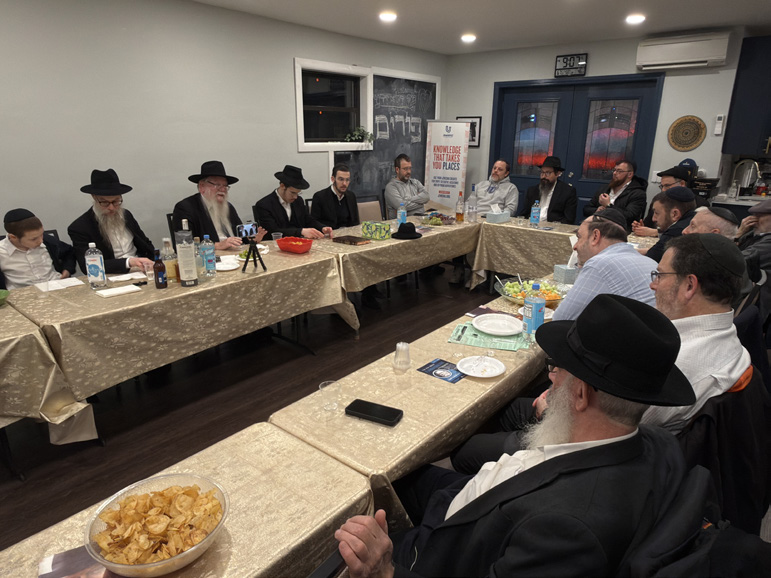

On Tuesday evening, May 12, the Navigating the Medical System Lecture Series featured a virtual presentation by Dr. Srikanth Reddy Boddu, MD, MSc, MRCS, FRCR, the Director of Neurointerventional Surgery at New York-Presbyterian Queens.
Dr. Mel Breite, the director and founder of the lecture series, welcomed the audience and noted that the evening’s discussion would focus on innovative pain management treatments that entirely bypass the need for major surgery or heavy medication.
Dr. Boddu explained that these cutting-edge procedures offer a minimally invasive approach to treating knee and spinal pain, effectively acting as a bridge between temporary joint injections and invasive open surgery. Because these techniques are performed on an outpatient basis, they allow patients to find long-term relief without “literally cutting” into the body.
Dr. Boddu began by discussing lower back pain, a condition affecting one out of every six patients. While treatments have focused primarily on spinal discs for decades, a recent shift in medical thinking recognizes that the surrounding bones are often the true culprits.
Using a detailed diagram of the spine, Dr. Boddu illustrated how wear and tear causes erosion on the vertebral endplates. When these endplates shift, they expose the bone, resulting in severe inflammation and pain. This condition is most frequently seen in manual laborers and individuals who are slightly overweight.
An MRI is the gold standard for identifying this specific inflammation, and contrast dye is not required. Through an MRI, doctors can pinpoint the exact stage of the condition:
Stage 1: Early onset
Stage 2: Advanced inflammation
Stage 3: Severe, or too advanced
To treat this vertebrogenic pain – especially for patients who find no relief from standing, sitting, or bending – doctors can utilize a brief, 7-to-15-minute outpatient procedure. Instead of incisions or stitches, a small probe is introduced through a needle directly into the painful area to buzz and deactivate the targeted nerve. This same-day procedure does not alter the patient’s anatomy, has been backed by five-year randomized control studies, and typically yields noticeable improvement within two weeks.
Next, Dr. Boddu addressed osteoarthritis, a pervasive condition affecting 20% of the population, particularly women and those with an increased BMI.
While conventional treatments rely heavily on joint injections and pain medications, Dr. Boddu introduced Genicular Artery Embolization (GAE). This procedure is not a replacement for total knee surgery; rather, it serves as a bridge to provide several years of relief, and it can even help patients who still experience chronic pain after a knee replacement.
Recurrent wear and tear on the knee joint causes abnormal, new blood vessels to form, which triggers chronic inflammation.
During GAE, a tiny tube is guided down into the blood vessels of the knee to identify the precise culprits. Doctors then introduce microscopic particles into these vessels to shut down the inflammation and dramatically reduce pain. Dr. Boddu shared photographs showing the immediate reduction of these abnormal blood vessels, noting that the long-term results show sustained patient improvement for up to two years.
Finally, the lecture turned to acute back pain, which is frequently caused by trauma, cancer, or aging. Dr. Boddu emphasized that fractures must be treated aggressively. Just as a hip fracture must be repaired within 24 hours to avoid severe, long-term complications, spinal compression fractures require swift intervention. Osteoporosis remains the leading cause of these wrist, hip, and spinal fractures in women, though two-thirds of cases go completely undiagnosed until a patient develops a visibly bent posture.
Historically, spinal fractures were treated with prolonged bed rest. However, keeping elderly patients immobile rapidly worsens osteoporosis and leaves them highly vulnerable to pneumonia and bedsores.
Today, a procedure called kyphoplasty eliminates the need for stitches. A needle is guided directly into the fracture to deploy a small balloon. Once inflated, the space is filled with a medical cement that sets completely in 15 minutes. While inside, the needle also takes a quick bone biopsy to detect the underlying cause of the fracture. Performed under simple sedation without general anesthesia, kyphoplasty brings dramatic, immediate relief and can even address multiple fractures in a single session.
The lecture concluded with an engaging Q&A session. As always, the community expressed its immense gratitude to Dr. Breite for organizing these vital, informative health lectures.
By Susie Garber