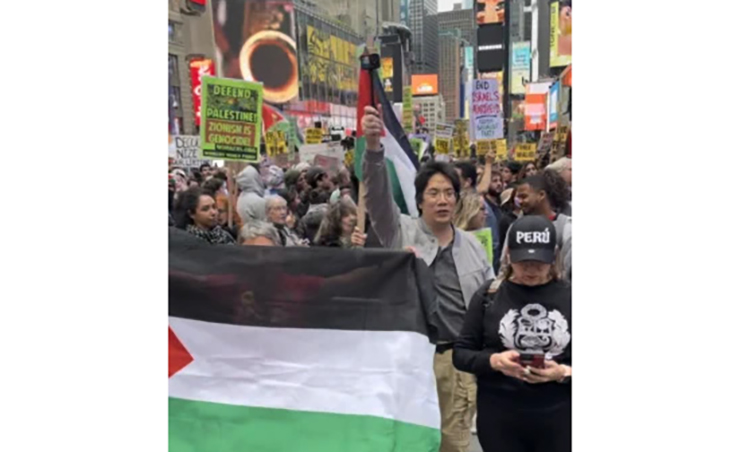

In November 2023, a 77-year-old man in Panama shot two climate change protesters who were blocking the road he was driving on. As he approached them with his gun, he reportedly said, “This ends here,” before firing. The incident in Panama did not receive widespread attention in the United States and did not deter protesters from routinely blocking roads to advance their political agenda. As more time passed without a similar fatal incident, protesters became increasingly emboldened to use their bodies and vehicles to impede both civilians and law enforcement from carrying out their daily routines.
It was only a matter of time until someone was killed, which occurred in Minneapolis last week. Renee Nicole Good, a 37-year-old mother of three, engaged in her usual practice after dropping the one child still in her custody at her progressive activist day school: she began stalking and harassing Immigration and Customs Enforcement (ICE) officers during their routine operations.
Footage from the incident shows that Good’s actions leading up to the attempted escape were intentional. She blocked the road for several minutes with her partner out of the car filming the entire interaction. When attempting to flee arrest (another crime), she accelerated toward an agent standing in front of her vehicle. The agent, fearing for his life, opened fire.
The narrative quickly shifted, portraying Good as an innocent bystander, with some claiming she was merely passing through and not deliberately involved. This was contradicted almost immediately by the available evidence (though it did not prevent some celebrities from praising her at the Golden Globes over the weekend). This incident extends beyond Good and reflects the inevitable consequence of years of anti-ICE rhetoric from Democrats and their activist allies. While no one forced Good to be present or act as she did, the incentive structure promoted by such rhetoric—that this type of activism is not only acceptable but praiseworthy—has contributed to an environment where confrontations are more likely to escalate, potentially endangering lives on both sides.
This situation highlights the role of Democratic leaders such as Minnesota Governor Tim Walz, Minneapolis Mayor Jacob Frey, and members of the Squad in Congress, who have repeatedly criticized ICE operations. For over a year, they have used strong language to describe border enforcement, with Walz referring to ICE as the “modern-day Gestapo” in a May 2025 University of Minnesota commencement speech. Frey has called for ICE to leave Minneapolis, while Squad members have advocated for abolishing the agency and framed deportations in highly critical terms. These statements, now part of mainstream Democratic discourse, have shaped perceptions of ICE agents and encouraged activist interference.
DHS has reported a significant increase in assaults on ICE officers and vehicular attacks since 2025. ICE Acting Director Todd Lyons condemned such rhetoric as “abhorrent and dehumanizing,” noting its potential to endanger agents. Sanctuary city policies in places like Minneapolis have also complicated federal operations, leading to more frequent confrontations.
There is also an observable pattern in many of these protests: A disproportionate number of women appear at the center of such movements and are often willing to engage in confrontational acts. Psychologist Jordan Peterson has suggested that some childless women—or those not fully engaged in traditional maternal roles—may redirect unfulfilled nurturing instincts toward ideological causes, treating perceived vulnerable groups as surrogate objects of protection.
Good was a mother of three, yet her actions in this incident carried significant risk. The broader trend of professionalized protest activity, documented by journalists like Nate Friedman, includes funding networks that support ongoing demonstrations across issues ranging from immigration to other political causes.
This dynamic is contributing to societal division. Protests of this nature disrupt daily life, cost taxpayers in security and cleanup, and increase the risk of escalation. The only immediate response available is to enforce laws consistently: support law enforcement and ensure that individuals who obstruct official duties are arrested and prosecuted to the fullest extent before further incidents occur.
Moshe Hill is a political analyst and columnist. His work can be found at www.aHillwithaView.com and on X at @HillWithView.