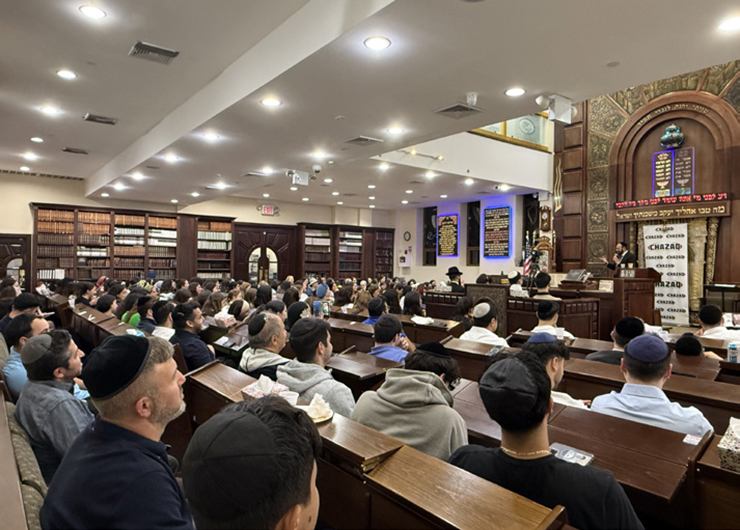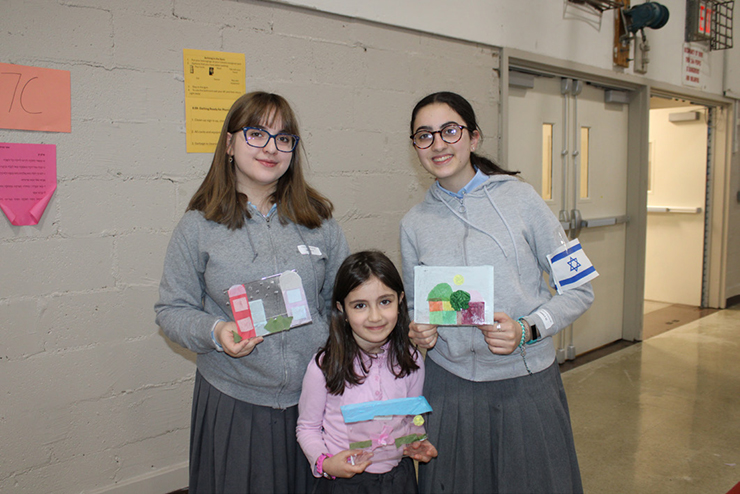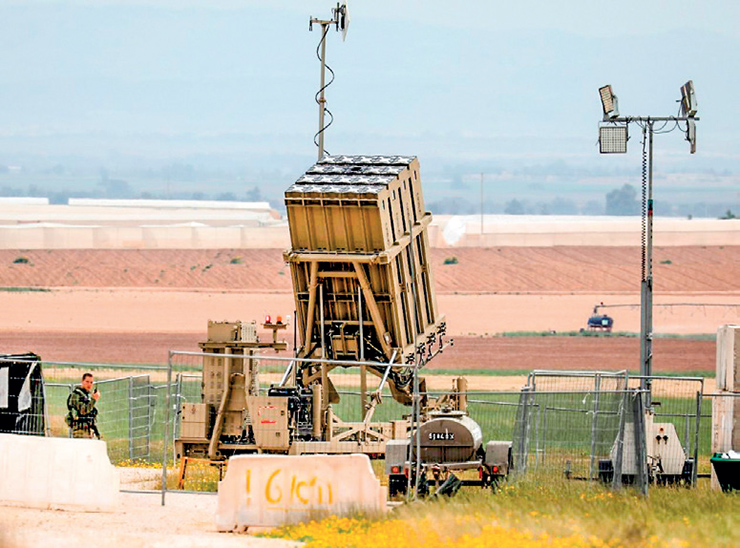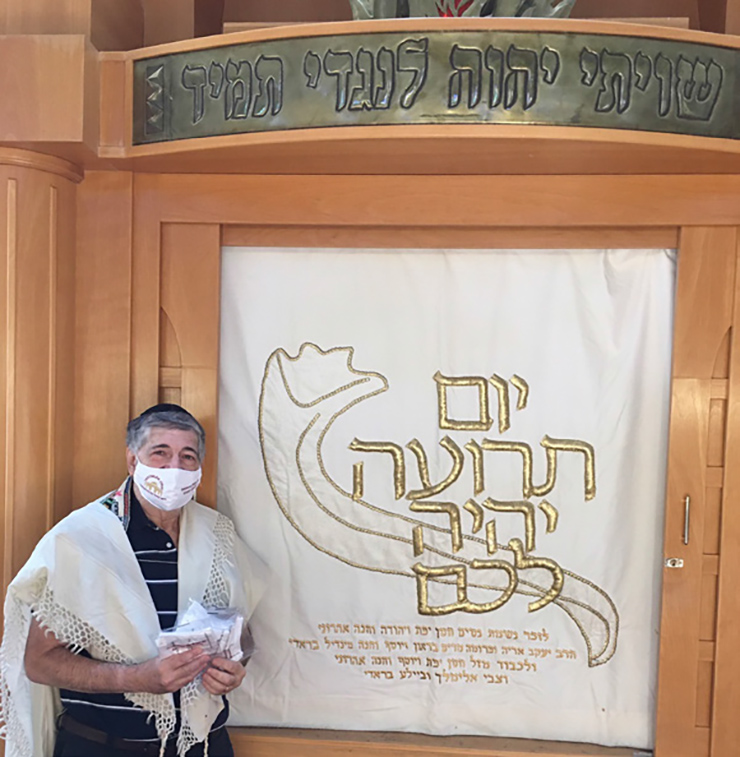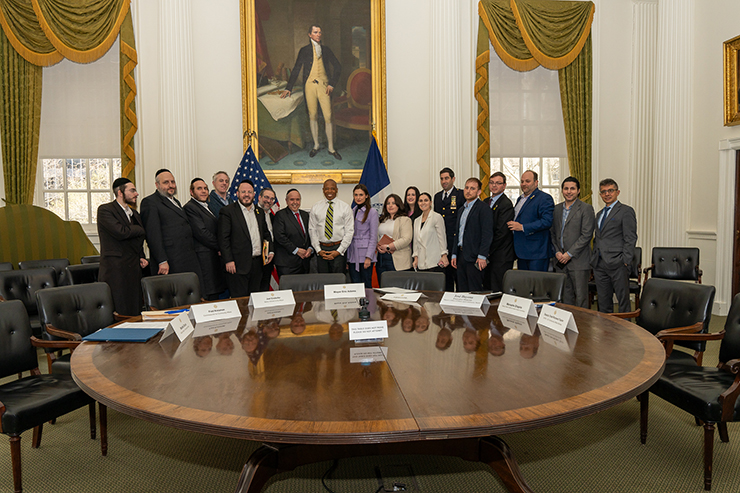

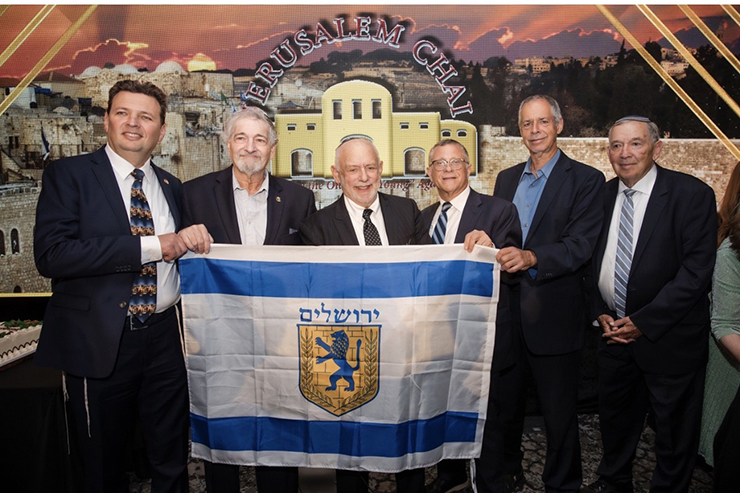
At The Seawane Club in Hewlett, the unfurling of the Flag of Yerushalayim set the tone for the night. It was a simple moment, but it captured much of what the evening stood for: Yerushalayim is not merely a memory. It is built, defended, restored, and lived.
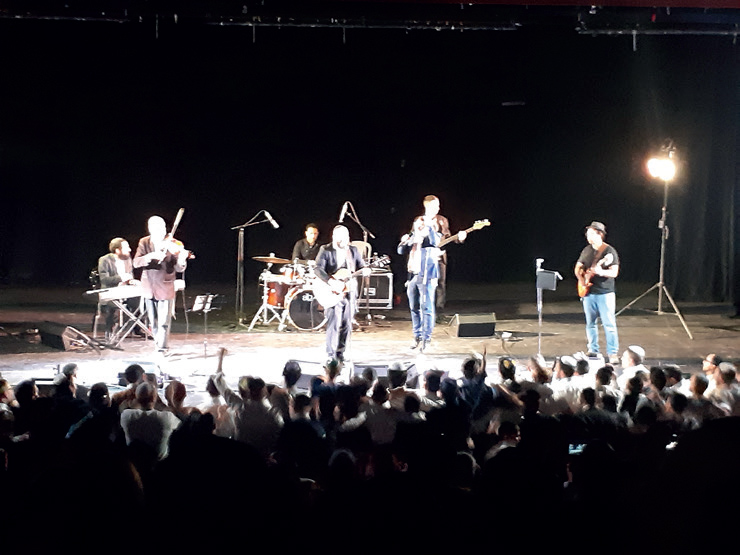
The Annual Yom Yerushalayim Dinner of the American Friends of Ateret Cohanim/Jerusalem Chai, held Tuesday evening, May 19, brought together Holocaust memory, IDF courage, family sacrifice, and the daily work of restoring Jewish life in the heart of Yerushalayim. The program featured video greetings from US Ambassador Mike Huckabee, remarks from CNN’s Scott Jennings, and a series of tributes to those building and defending the eternal capital. Throughout the ballroom, Aryeh Kunstler’s music mirrored the ebb and flow of the night’s emotional shifts.
The 28th of Iyar, just a few days before the dinner, was Yom Yerushalayim, the date in 1967 when Israeli forces reunited the Old City during the Six-Day War. Yerushalayim was restored through miracles, but it is secured through people.
Nearly five decades ago, Mati Dan HaCohen, founder and chairman of Ateret Cohanim in Eretz Yisrael, envisioned a Jewish return to the historic alleyways of Yerushalayim – not to remember the city from afar, but to bring Jewish families back to the places where their history began.
For more than 40 years, Ateret Cohanim has worked to restore ancient Yerushalayim by helping families put down roots, providing the schools, safety, and community needed to grow. That mission is guided in America by Executive Vice President Shoshana “Shani” Hikind and the Executive Council, working alongside lay leaders like Dr. Paul Brody, Dr. Jonathan Halpert, Robert “Robbie” Koppel, and Rubin Margules.
The Old City, Har HaZeisim, the City of David, and Shiloach are not far-off names to Jews who know Yerushalayim. They are places carried in prayer, mourned over on Tish’ah B’Av, and fought for in every generation. Ateret Cohanim asks a demanding question: Can the places Jews have prayed about for centuries once again become neighborhoods where families raise children?
Ambassador Huckabee’s address, preceded by vintage footage of his Old City visits arranged by Drs. Berkovich, Brody, and Joseph Frager, felt deeply personal. Noting that he has visited Israel over 100 times since 1973, he remarked that every trip’s highlight remains Yerushalayim, where the Bible comes to life. He described Yerushalayim as the place where ancient prophecy and present-day reality meet, praising Ateret Cohanim for bringing the prophets’ vision of rebuilt homes and playing children to life.
This work is rooted in something older than modern politics. Archival records trace the Torat Chaim Yeshiva in the Old City back to Rabbi Yitzchak Winograd in 1894. Its story – interrupted and later revived – mirrors a larger truth: Jewish return is not an invention, but a restoration.
That idea became personal during the inauguration of the Ann Hoenig Founders Award, honoring the late Ann Hoenig a”h. Narrated by Hikind – who has worked closely with the Hoenig family since joining the Ateret Cohanim circle in 1991 – a moving video tribute recalled how Ann and her husband Bernie ybd”l first traveled to Yerushalayim in 1983 to find Dan. Seeing historic apartments with carved-out mezuzos in the doorposts, Ann understood the dream needed an American organizational foundation.
Speakers remembered her as elegant and strong, an ohev Yisrael and ohev Yerushalayim. Her legacy was captured by the Talmudic phrase, “Al tikrei banayich ela bonayich” – read not “your children,” but “your builders.”
The tribute to chayalim bodedim brought the reality of the current war directly to the dinner attendees. For readers across the Queens and broader New York Jewish community – represented at the event by Council Member James Gennaro – the soldiers being honored were not anonymous names; they were local young men.
Sergeant Jacob Vershleiser, 25, of Lawrence, received a standing ovation. The grandson of Executive Council member Rubin Margules and his wife, Cecilia, Jacob spoke with profound humility. When he was accepted into the Golani brigade – a goal he had trained for since high school – he felt he had truly found his place. Having fought in Gaza and Lebanon over the past two years, he spoke openly about the sorrow soldiers have endured. He thanked his parents for fighting their own “war of worry” at home, and he expressed how WhatsApp messages from supporters around the world gave him strength on the front lines.
Dr. Frager then introduced Jerry Wartski, recipient of the Dr. Irving and Cherna Moskowitz Bonei Yerushalayim Award. Born in Poland in 1930, Wartski’s world was swallowed by the Holocaust. His mother was murdered in Auschwitz; his father died on a death march. For decades, he could not speak of what he had endured, but in recent years, he has shared his testimony, returning to Auschwitz and revealing the faded numbers on his arm. His testimony is not offered for sympathy; it is offered as memory, warning, and responsibility.
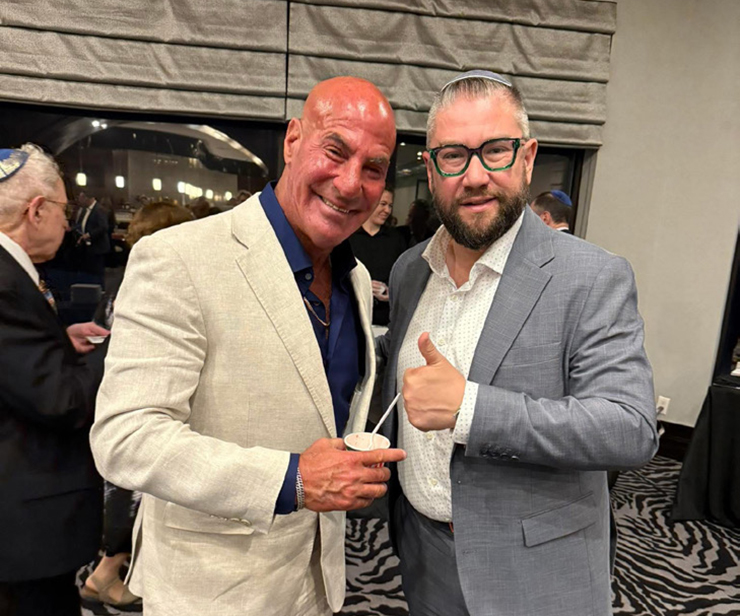
Sid Rosenberg presented the award to Wartski and his wife, Sue. He recalled first meeting the honoree at a White House Chanukah reception and spoke emotionally about his later appointment to the United States Holocaust Memorial Council. Standing beside Wartski in the shadow of October 7, Rosenberg felt as though he were beside living Jewish history itself; he warned that too many have grown comfortable forgetting how quickly hatred can return. The room then rose as one to sing “Happy Birthday” to Wartski, celebrating his 96th birthday.
The focus shifted to the national political arena via a video message from Scott Jennings. Called away by a last-minute CNN assignment, Jennings provided his remarks pro bono, refusing payment as a testament to his commitment. Addressing the comfort that anti-Israel voices are finding in American politics, he drew a firm distinction between the right to free speech and the moral values a political movement chooses to embrace. Speaking as a Christian ally, he noted that the fight for Israel is not just about politics; it is about the ability to tell right from wrong.
The tribute to D9 Commander Efraim Abrams of Oceanside turned the focus from politics back to the battlefield. Introduced by Shani Hikind, Abrams operated the heavy D9 bulldozers that clear explosive-laden routes in Gaza. He spoke of growing up observing Shabbos but knowing that when the army calls, one answers. He described the horrifying reality of Gaza – finding children’s drawings beside tunnels built for murder – and the heavy toll of losing 49 fellow soldiers.
Despite sustaining a cervical injury, traumatic brain injury, and PTSD from what he witnessed, Abrams did not speak as a victim, but rather as a Jew who promised his grandparents “never again.” He told the captivated crowd that just as he had served as the D9 in Gaza, Ateret Cohanim is the D9 in Yerushalayim: clearing the way, standing at the front, and advancing the redemption of the city.
The dinner concluded with an appeal for Kfar HaShiloach, the historic Yemenite village established in 1882 before Jewish life there was destroyed during the riots of the 1920s and 1930s. Moving 25 new families there in the near future is not about expansion; it is about closing a circle broken generations ago.
Speakers, honorees, and attendees left the evening with a shared realization: Jewish continuity is not secured by nostalgia. It is built by those who remember, return, defend, and refuse to let the heart of am Yisrael be weakened or forgotten.
By Shabsie Saphirstein