
As Chanukah approached, celebrations across Queens carried a gravity that extended far beyond annual tradition, unfolding amid a sharp rise in antisemitism and recent global attacks on Jewish communities. Menorah lightings and communal gatherings became statements of resilience and solidarity at a time when Jewish visibility itself had taken on heightened meaning.
Congresswoman Grace Meng’s Chanukah outreach reflected a sustained and deliberate presence throughout the eight days of celebration. By hosting and attending multiple Chanukah events, Meng sent a clear message that standing with the Jewish community is a continuous commitment.
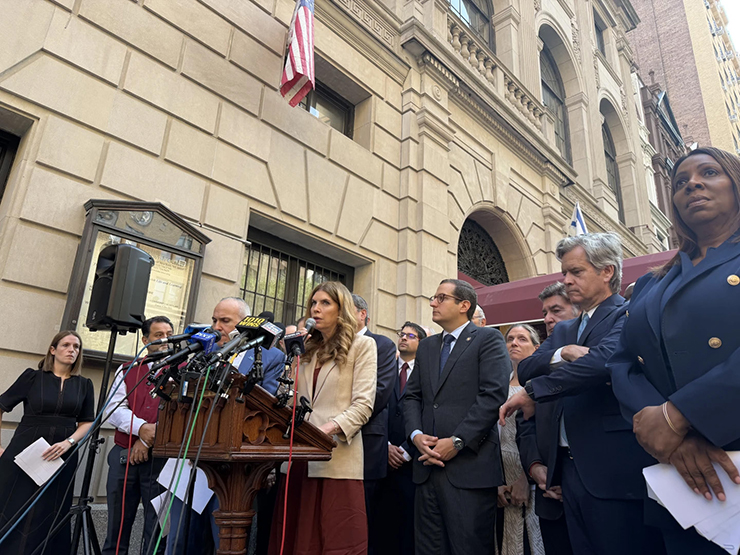
As has become an annual Queens Chanukah tradition, the gathering was once again hosted at District Leader Shimi Pelman’s Flushing healthcare facility, Union Care Plaza—a space that has increasingly served as a crossroads for public Jewish visibility. Opening the program, Rabbi Daniel Pollack, Jewish Liaison to Meng, traced the roots of the custom. He noted that even before Meng entered Congress, she made a point of marking Chanukah publicly with the Jewish community. What began years ago as a modest local program evolved into an annual commitment grounded in long-standing relationships rather than political convenience.
New York State Comptroller Thomas DiNapoli reflected on that idea in his remarks, praising Meng’s consistent ability to bring diverse communities together. He observed that her approach to public service—from Albany to Washington—has been defined by coalition-building and mutual respect, qualities that align closely with Chanukah’s enduring message. The holiday’s lesson, he noted, is not abstract optimism, but resilience: choosing light precisely when circumstances argue otherwise.
The tone sharpened as Queens District Attorney Melinda Katz cited that antisemitic incidents now account for more than half of all reported hate crimes in New York City. Katz underscored why public Jewish gatherings matter—especially now. She stressed that visibility is not recklessness, but resolve, and reassured attendees that law enforcement and counterterrorism units were fully mobilized to protect Chanukah events citywide.
New York City Council Member Julie Menin added a deeply personal dimension. Sharing her family’s Holocaust history, she recounted how her mother and grandmother—survivors from Hungary—found refuge within the Jewish community of Sydney, Australia. That lived connection transformed current events abroad from distant headlines into personal memory, reinforcing the urgency of safeguarding Jewish life wherever it is threatened. Menin highlighted concrete legislative efforts, including initiatives to strengthen security around houses of worship and a landmark educational program bringing every eighth-grade public school student to the Holocaust exhibition at the Museum of Jewish Heritage.
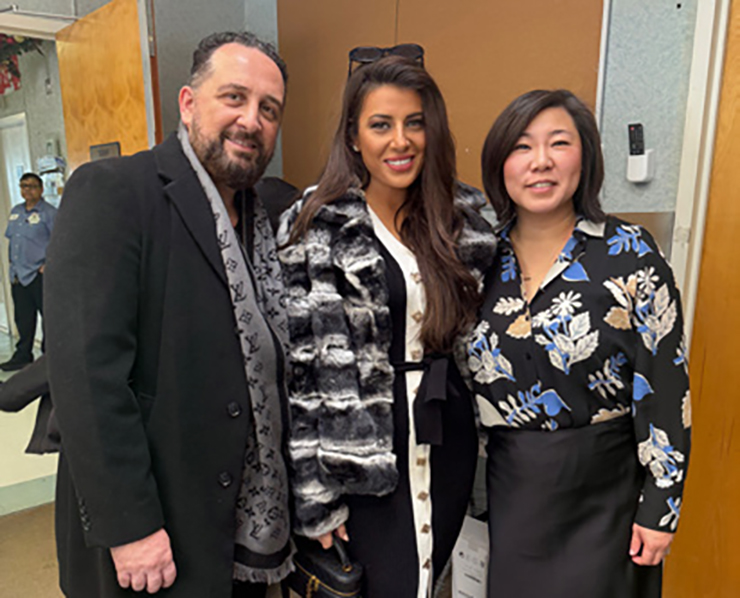
Rep. Meng addressed the audience, acknowledging that in the hours leading up to the event, she and her team had seriously questioned whether it was appropriate to proceed at all, given rising antisemitism and recent attacks closer to home. Yet it was precisely those realities, she explained, that clarified the answer. Canceling or retreating would contradict the essence of Chanukah. Coming together would honor it.
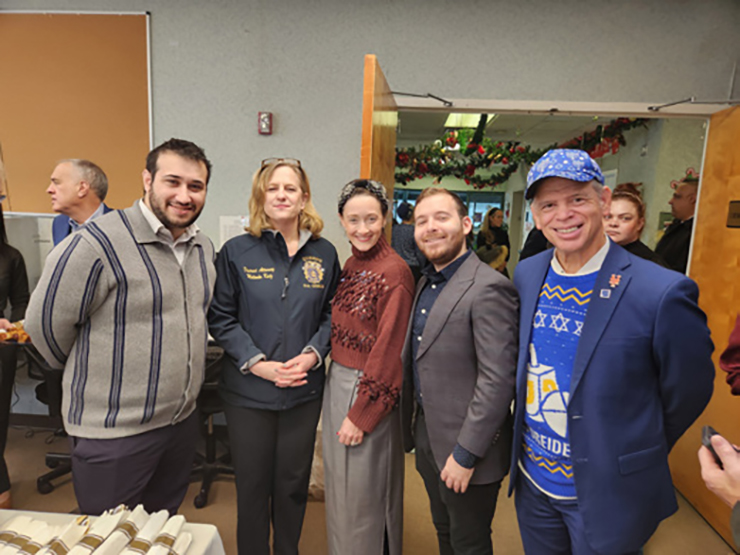
Meng framed the holiday as a historical narrative of communal action—a people uniting to resist erasure and assert identity publicly. Speaking explicitly as an ally and as a non-Jew, she affirmed that Jewish visibility is not a Jewish responsibility alone, but a shared civic one. America, she said, would not be the country it is without its Jewish community, and antisemitism—like all forms of hatred—must be confronted collectively.
She situated that message within a broader history of mutual support. During the surge of anti-Asian hate in recent years, Meng recalled, Jewish leaders and organizations were among the first to stand publicly with Asian American communities. That solidarity established a moral continuity: standing with the Jewish community during Chanukah is not an act of courtesy, but an obligation rooted in shared values.
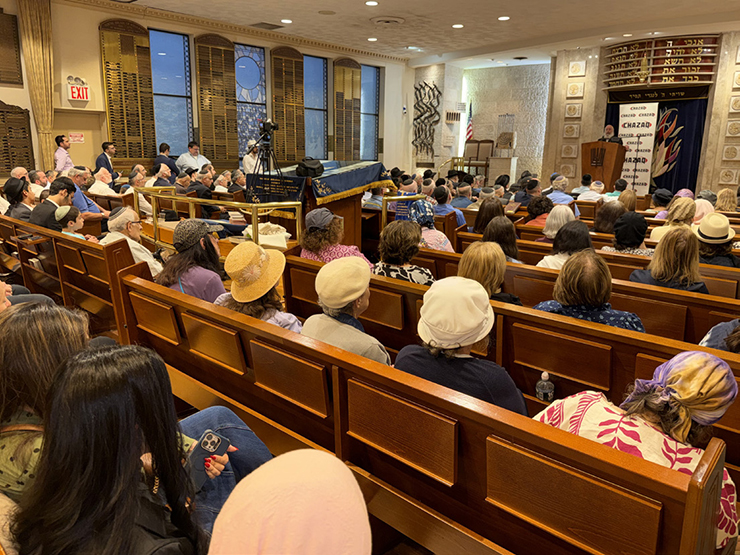
Importantly, this gathering did not stand alone, forming part of a broader Chanukah presence that included additional public menorah lightings and community celebrations across Queens. Over the course of a single night, I personally witnessed the congresswoman speak first at the menorah lighting at Yellowstone Municipal Park alongside Rabbi Mendy Hecht of Chabad of Forest Hills North, then at Federoff Triangle on Queens Boulevard with Rabbi Eli Blokh of Chabad of Rego Park, and finally with Queens’ lead shaliach, Rabbi Yossi Blesofsky of Chabad of Northeast Queens, at his lighting at the Bay Terrace Shopping Center—three distinct communities, one continuous presence. Throughout Chanukah, our Washington representative attended additional spirited celebrations and never shied away from using her official platforms to show support for the Jewish community.
By Shabsie Saphirstein