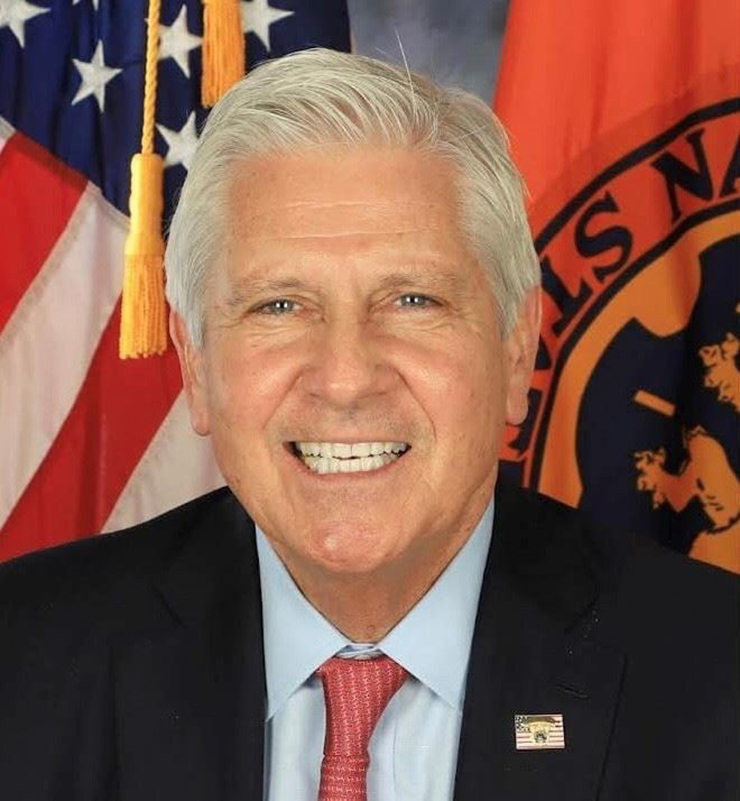

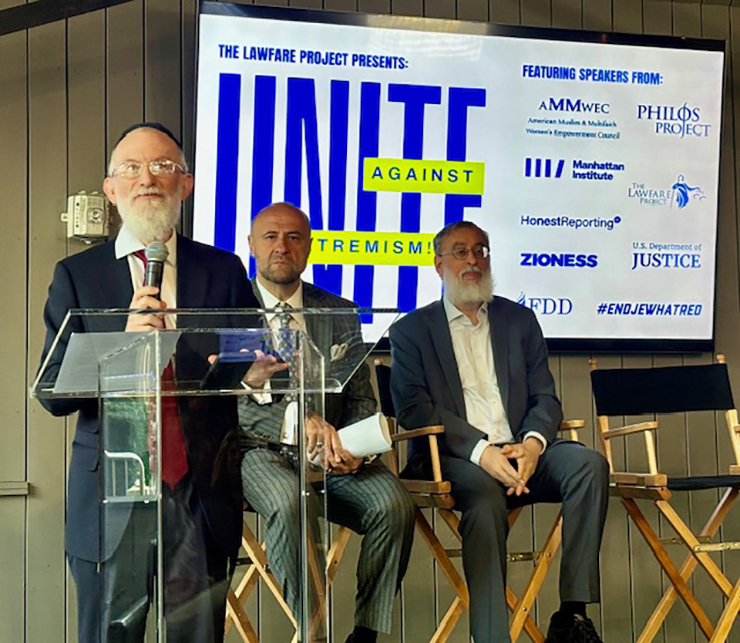
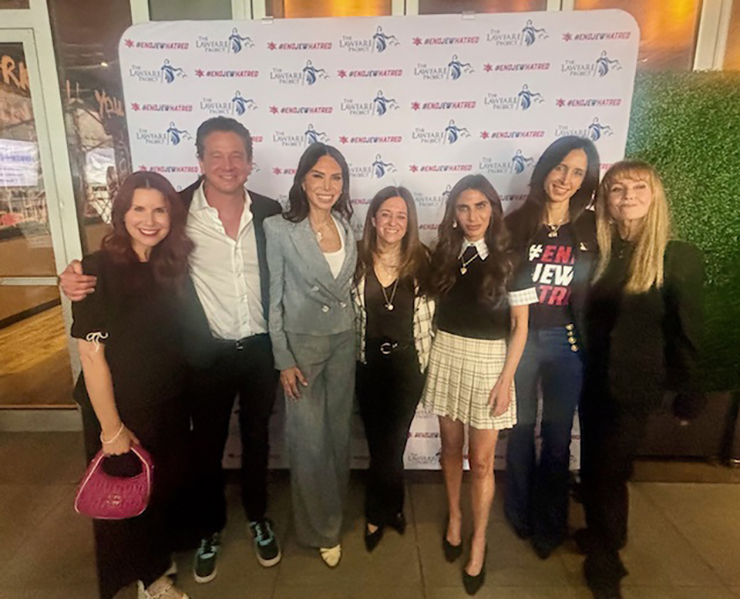
On April 29, at an exclusive Midtown rooftop location, Versa, a coalition of legal experts, federal officials, journalists, faith leaders, and digital activists gathered for the “Unite Against Extremism” summit, marking #EndJewHatred Day with a message that was anything but symbolic: The fight against antisemitism has entered a new phase—and demands action at every level of society.
Hosted by The Lawfare Project and its #EndJewHatred movement, the event brought together a wide-ranging slate of speakers who moved beyond general concern and into pointed, often uncomfortable discussions about law enforcement failures, media bias, campus radicalization, and the growing role of grassroots activism. Michelle Ahdoot, an Iranian Jewish activist and Director of the movement’s programming and strategy, emceed the program throughout, describing the mission and introducing the speakers and panel participants.
Brooke Goldstein, founder of The Lawfare Project, set the summit’s tone by rejecting the idea that the gathering was meant for reflection alone. She described it instead as the launch of a coordinated, interfaith effort to confront extremism through legal accountability and civic engagement. Gerard Filitti, senior counsel at the organization, pointed directly to the need for stronger enforcement, noting that even hosting such an event now requires extraordinary precautions.
The summit was kicked off by the singing of the American and Israeli national anthems, with opening remarks by faith leaders Bishop Robert Stearns, Rabbi Daniel Schonbuch, and Rabbi Yaakov Menken.
A highlight of the program was remarks from Department of Justice official Leo Terrell, who has been a strong pro-Jewish advocate and powerful ally in civil rights enforcement, signaling a shift at the federal level. Terrell emphasized that the government is no longer taking a passive posture, pointing to ongoing and emerging efforts to hold institutions accountable when Jewish Americans are denied equal protection. He framed antisemitism squarely as a civil rights issue, warning that failure to enforce existing laws not only emboldens extremists but erodes trust in the system itself. His message was clear: Enforcement mechanisms exist, and the federal government is prepared to use them—but public pressure and reporting remain critical to triggering action.
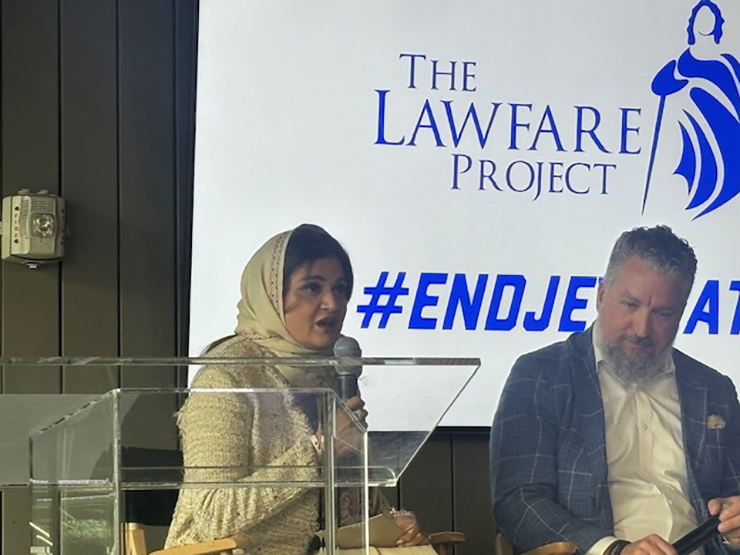
Dr. Moshe Glick’s case—a New Jersey dentist charged after defending someone outside a synagogue before later being pardoned—was cited as evidence of inconsistent protections for Jewish communities, with speakers urging stronger enforcement of the federal FACE Act. Panelists also criticized media coverage for creating “moral parity,” often equating aggressors and victims instead of drawing clear distinctions.
Panelists argued that antisemitism is still not being consistently framed as a civil rights issue within mainstream reporting, and that this gap has contributed to public confusion and, at times, justification of hostility toward Jewish communities. The solution, he suggested, lies not only with reporters but with audiences willing to demand accountability—from newsrooms, advertisers, and the platforms that shape public discourse.
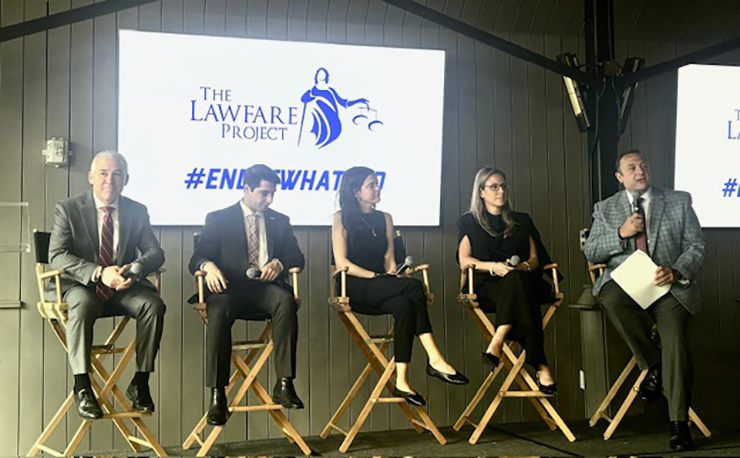
That shift in discourse has increasingly been driven not by legacy media, but by individuals building audiences online. One of the most energetic panels featured a group of social media influencers who have transformed their platforms into vehicles for advocacy in the wake of rising antisemitism, particularly following the October 7 attacks.
Notable influencers such as Lizzy Savetsky, Aliza Licht, Tanya Zuckerbrot, Lindsay Pinchuk, and others, described how they pivoted careers in fashion, branding, and lifestyle content into full-time activism—often at personal and professional cost.
Other prominent speakers included individuals from business, media, and other sectors, such as Luke Moon of the Philos Project, Jonathan Schanzer, Executive Director of the Foundation for the Defense of Democracies, Ari Ackerman, owner and partner of the Florida Marlins, Jacki Alexander of HonestReporting, American Muslim interfaith leader Anila Ali, and Lydia Moynahan, reporter for the New York Post.
Their message resonated strongly with the audience: Influence today is not confined to institutions, and visibility itself has become a form of resistance. Several explained that simply presenting as openly and unapologetically Jewish—online and in public spaces—pushes back against efforts to intimidate and marginalize. Others detailed more direct tactics, from countering misinformation in real time to organizing coordinated pressure campaigns targeting corporations and individuals who promote or tolerate antisemitic rhetoric. What emerged was a picture of decentralized activism, where individuals with even modest platforms can play a meaningful role.
Interwoven through these discussions were broader geopolitical and cultural concerns, including the spread of extremist ideologies on campuses and within certain activist movements. Speakers stressed that while the loudest voices may appear dominant, they often represent a minority—and that organized, confident opposition can shift that balance. The emphasis, repeatedly, was on participation: Showing up, speaking out, and refusing to cede public space.
What distinguished the summit was not just the diversity of its speakers, but the consistency of its conclusions. Whether coming from a federal official, a civil rights attorney, a journalist, or a social media influencer, the message converged on a single point: Passivity is no longer an option. Legal tools must be used, narratives must be challenged, and individuals must be willing to act—publicly and persistently.
“This is unfortunately part of the experience of being Jewish today,” said Filitti, pointing to recent attacks on synagogues and increasingly aggressive demonstrations targeting Jewish communities.
But the tone inside the summit was not one of fear; it was one of mobilization. Attendees left with what organizers intended: Not just a deeper understanding of the problem, but a mandate to engage. From awareness to action, the conference delivered a clear and consistent message: Everyone must bear responsibility to fight back against rising antisemitism. As history shows, what starts with the Jews never ends with them—it engulfs the entire world into conflict and chaos.
By Robert Pearl