
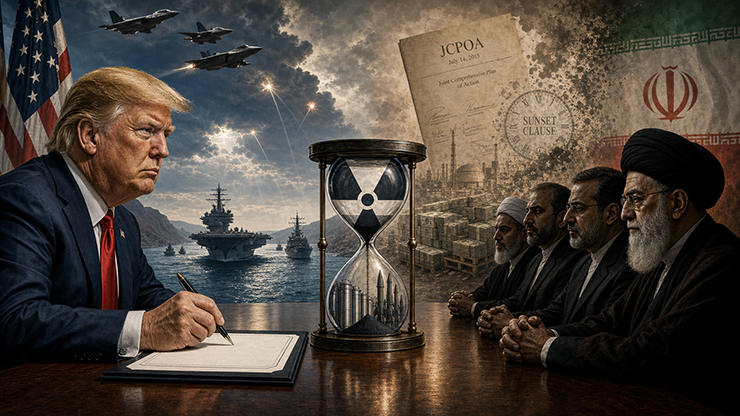
As President Donald Trump pushes to finalize what he calls an “amazing deal” with Iran, conservatives and supporters of Israel are right to ask the tough question: Is this truly different from Barack Obama’s disastrous 2015 Joint Comprehensive Plan of Action (JCPOA), and are we simply kicking the can further down the road, or is this the breakthrough we’ve all been hoping for?
Trump has every reason to boast about the pressure campaign. His administration, working alongside Israel’s decisive military actions, inflicted serious damage on Iran’s nuclear infrastructure, proxies, and economy. Unlike Obama’s approach, which showered the mullahs with sanctions relief, pallets of cash, and legitimacy while they continued their march toward a nuclear weapon, Trump entered from a position of strength after maximum pressure and battlefield setbacks for Tehran. Iran’s economy was already crumbling, its rial in freefall, and its terror network bloodied. That context matters.
Yet details remain scarce. What we appear to have so far is a memorandum of understanding: a temporary framework for a 60-day ceasefire, reopening the Strait of Hormuz for shipping, and lifting the U.S. naval blockade in exchange for Iran clearing mines and halting attacks on tankers. Nuclear issues, ballistic missiles, and terror funding are reportedly deferred for further talks. Trump and his team insist this sets the stage for a far superior permanent agreement that dismantles Iran’s nuclear program. Iran, predictably, spins it as a victory. Sound familiar?
Recall the original JCPOA. Obama’s deal placed temporary restrictions on Iran’s enrichment while blessing its nuclear infrastructure, sunset clauses that would expire, weak verification, and massive sanctions relief upfront. It did not touch ballistic missiles or terror sponsorship. Iran used the windfall to fund Hamas, Hezbollah, the Houthis, and more. By the time Trump withdrew in 2018, the regime was emboldened. Fast-forward to today: After direct conflict, has Iran’s capacity truly been broken, or are we repeating the pattern with a longer timeline?
The fact is, we don’t know. We still lack the full text. Trump claims a great temporary deal; Iran claims the opposite. A truly strong outcome requires verifiable elimination of nuclear weapons capability, halting ballistic missile development, ending terror funding, and securing the Strait of Hormuz permanently without Iranian leverage. Anything less — continued enrichment on Iranian soil, cash inflows that stabilize the regime, or deferred hard decisions — risks repeating Obama’s mistakes on a longer fuse.
In some respects, this moment is stronger than 2015. Trump’s pressure, combined with Israel’s strikes, has degraded Iranian assets in ways Obama never contemplated. The regime that once dictated terms through proxies now negotiates while reeling. No massive upfront cash infusions appear imminent, and performance-based elements could tie any future relief to actual dismantlement. That’s a meaningful departure from the JCPOA’s flawed incentives.
But the risks are real. A 60-day pause that allows Iran breathing room to regroup, maintain enrichment infrastructure, and preserve proxy capabilities is not victory; it is delay. The Islamic Republic has spent decades mastering the art of cheating under international agreements. Without ironclad verification, full removal of highly enriched uranium stockpiles, and destruction of key facilities, not just damage, we invite a breakout timeline measured in months once sanctions ease. Shapiro rightly notes that a mediocre temporary deal might leave sanctions mostly intact and avoid full economic reintegration, but even that falls short if it fails to prevent long-term reconstitution.
There is a historic opportunity here. The Iranian people have risen repeatedly against the mullahs, only to be met with slaughter. The regime’s economy was on the brink. Its terror axis suffered devastating blows. Israel demonstrated it can act decisively, with or without full American alignment. This is not the time for managed decline or another sunset clause. It is the time to finish the job: support the Iranian people’s aspirations for freedom, maintain maximum pressure until the nuclear program is verifiably dismantled, and reject any deal that props up the Islamic Republic.
There is also another possibility — equally historic, and far worse. The Iranians don’t view history in four-year terms; they view it in generations. Yes, they are wounded now, but if they survive this and are able to rebuild, then this will be seen as a delay tactic at best and a horrific loss under Trump’s watch at worst. Trump came into his administration promising low gas and no new wars. This action, while absolutely necessary, broke those promises. That is acceptable to many of his supporters because they saw the good that could arise. However, if that doesn’t come, then his legacy will be forever tarnished.
Trump has been the strongest and most effective foreign policy president since Ronald Reagan, possibly longer. Every time he has been caught in a quagmire, he manages to get himself out of it. The rule of surviving Trump is to ignore what he says and what is said about him, and focus only on what is done. Until a deal is actually signed and the language of said deal is public, judgment cannot be passed. Let’s hope that the deal is as good as it is being sold by our side, and the opposite of what is being sold by their side.
Moshe Hill is a political analyst and columnist. His work can be found at www.aHillwithaView.com and on X at @HillWithView.