
One of the great things about a car is the freedom it offers. With a valid driver’s license, registration, and gas in the tank, you’re good to go - anywhere you want, at any time of the day or night, with no questions asked. Enjoy this freedom now - because that could eventually change if federal regulators approve technology that prevents or limits driving when impairment is detected. And if it decides in the middle of a trip that you’re not up to driving, the car will pull to the side of the road and stop in its tracks. And there’s nothing at all to do about that.
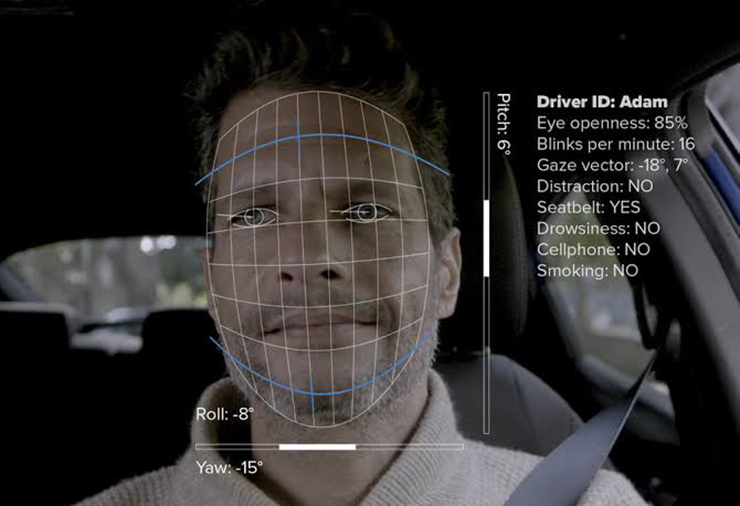
Versions of this technology are already appearing in new vehicles, although there is no federal rule requiring it in all 2027 models. NHTSA has not yet issued a final standard, and the rulemaking remains in its preliminary stages. Existing driver-monitoring systems can track a motorist’s eye and head movements, detect signs of distraction or drowsiness, and assess whether the driver is paying attention to the road.
That’s very logical. If a car senses that the driver is drunk, has fallen asleep, or is unable to drive safely, not responding to that driver’s instructions is in everyone’s best interests. But there is a problem with this technology, specifically the risk that it may violate people’s privacy. And if that seems like a minor point, it’s not.
While intended to improve safety, the law mandating this technology “raises major concerns about constant surveillance, massive data collection shared with insurers and third parties, high rates of false positives, and the erosion of personal freedom in what has long been a symbol of American autonomy,” says Roman Balmakov, a reporter with the conservative news publication The Epoch Times and host of the internet news show Facts Matter. The federal law itself does not require driver information to be transmitted to insurance companies or other third parties.
But the risks to privacy go even beyond this. According to data privacy and digital surveillance expert Harry Maugans, “Auto manufacturers want to have infrared cameras in the A-frame and the corners of your vehicle. They say that they need this to track your eye movements, your pupil dilation, and your head movement’s behavioral signals. This technology exists today and is already being utilized.”
Monitoring technology is already built into some new cars. However, the Infrastructure Investment and Jobs Act, passed in 2021, directed NHTSA to develop a standard requiring advanced drunk- and impaired-driving prevention technology in future passenger vehicles. No final standard or 2027 implementation date has been established. Meanwhile, drivers should smile when they start their engines because they’ll be on Candid Camera, and even their most minute gestures will be analyzed by the AI built into their cars.
The Eye in the Dashboard
Representative Thomas Massie, a Kentucky Republican, is among the legislators very unhappy with this new law. Addressing the House on January 22, he said, “Every vehicle manufactured will monitor your driving, and if the car thinks that you’re not doing a good job, it will disable itself. So the car’s dashboard becomes your judge, your jury, and your executioner.
“Imagine this: A snowstorm is coming, and a mom takes her kids shopping to get some groceries before the storm hits. Maybe she swerves to avoid a pothole or a neighbor’s pet, or a first responder’s vehicle goes by and she pulls over. Her car tells her she has one more swerve, and then she’ll be grounded. But then she has to avoid an icy patch in the road. The car has adjudicated her as unsuitable for driving. It disables the vehicle, and she’s stranded right there in inclement weather with her children in the back seat. My question is, how can she appeal her sentence? … There are going to be so many false positives that the technology will be unworkable. It’s a bad idea, but every vehicle manufacturer will build a kill switch into each vehicle.”
Massie was describing his interpretation of the law and a hypothetical danger; NHTSA has not adopted a rule requiring vehicles to pull over or disable themselves after ordinary swerving.
To get an even better idea of what driving a car with this technology will be like, consider this very recent post on X from a motorist who just started driving one: “The camera didn’t take its eye off of me. If I looked away from the road for just a second or two to glance at passing scenery or to switch the music I was listening to, the dashboard immediately flashed, ‘Keep eyes on road.’”
Taking Charge
Some existing driver-assistance systems can slow or stop a vehicle when a driver is unresponsive, but no federal impaired-driving standard currently requires cars to pull onto the shoulder or shut off their engines.
NHTSA is considering several possible approaches, including driver-monitoring systems, analysis of vehicle behavior, and technology that directly measures alcohol levels. These technologies will track eye movements, blinking rate, and even the position of the driver’s head. If the system senses that his or her gaze is wandering from the road, it will take steps to fix that.
Researchers are developing touch-based sensors that could measure alcohol through the skin and might eventually be incorporated into a start button, gear selector, or steering wheel. Another sensor may analyze the air in the car in order to detect alcohol molecules being exhaled by the driver. And if your driving patterns match the profile of someone who is intoxicated, a future system could prevent or limit vehicle operation, depending on the requirements of the eventual final rule. Some driver-monitoring systems analyze steering behavior and lane position.
It remains to be seen how insurance companies will respond to these data.
According to Balmakov, “If you think this through, the AI in the car will always be watching you, and this technology, which will be included as a safety feature in new models, will become the industry standard very soon.” Whether owners will be able to disable or remove the technology will depend on the final federal standard and applicable state laws.
So, how does this make you feel? Are you happy to learn that this technology could eventually become standard in new cars covered by a final federal rule? Or are you starting to think back nostalgically to the days of the horse and buggy?
Sources: forbesbreakingnews.com; theepochtimes.com
Gerald Harris is a financial and feature writer. Gerald can be reached at This email address is being protected from spambots. You need JavaScript enabled to view it.