
Communism and Americanism represent fundamentally opposing ideologies, rooted in contrasting views on human nature, society, economy, and governance. While Americanism embodies the principles enshrined in the U.S. founding documents like the Declaration of Independence, the Constitution, and the Federalist Papers, communism prioritizes collective ownership and state control. Americanism is deeply tied to capitalism, where private property rights, free markets, and entrepreneurship drive prosperity, fostering innovation, competition, and upward mobility as seen in the American Dream. Communism, in contrast, seeks to eliminate private property and class distinctions, advocating for the means of production to be owned collectively or by the state, which centralized planning often stifles individual incentive and leads to economic stagnation.
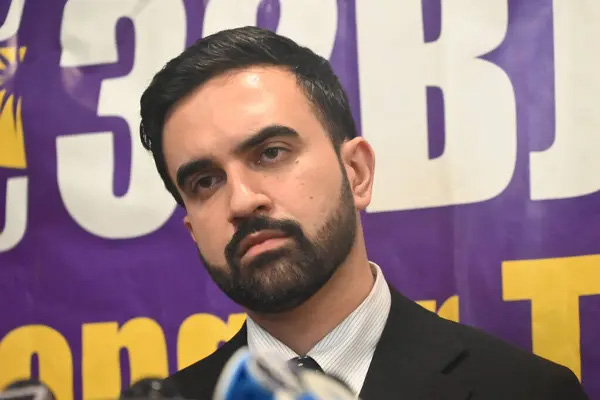
So the adverse reaction to Zohran Mamdani’s inaugural address is entirely justified by any American. “We will replace the frigidity of rugged individualism with the warmth of collectivism,” the new mayor declared, signaling a shift toward policies that prioritize communist goals over personal freedoms. This rhetoric echoes communist ideals, framing individualism as cold and alienating while romanticizing collectivism as nurturing—something that the millions who fled communist countries and the hundreds of millions who have been killed during those brutal dictatorships may disagree with.
It’s not just Mamdani’s words that raise alarms, but the company he keeps. His associations with radical socialists and activists suggest a broader network intent on reshaping New York in a collectivist image. For instance, Mamdani has been endorsed by figures like Bernie Sanders, who praised his “grassroots campaign” against “oligarchs,” and has ties to the Democratic Socialists of America (DSA), a group that openly advocates for socialist policies. Posts on X highlight his alliances with DSA members like JP Lyninger and others who push for primarying non-socialist Democrats. He’s also congratulated Seattle’s socialist mayor-elect Katie Wilson, signaling a “coast-to-coast partnership” for progressive agendas.
A prime example is Cea Weaver, appointed as his Tenant Director, whose resurfaced comments have sparked outrage. In a widely shared video on X, Weaver stated, “We’ll transition from treating property as an individual good to a collective good. Whites especially will be impacted,” advocating for a redefinition of property rights that critics decry as racially targeted and anti-capitalist. She has also called private property, especially homeownership, a “weapon of white supremacy.” It’s not a matter of “if” the Mamdani administration will try to take government ownership of private property, only “when.”
Mamdani is also connected to anti-Israel activists like Linda Sarsour, whom he’s praised amid controversies over “globalize the intifada” rhetoric. This connection isn’t circumstantial, nor is his background of being an anti-Jewish activist. So it is not surprising that Mamdani’s actions in his first week are designed to lower government protection of Jewish communities.
He revoked predecessor Eric Adams’ executive orders, including the adoption of the International Holocaust Remembrance Alliance (IHRA) definition of antisemitism, which helps identify anti-Jewish hatred, and lifted restrictions on protests near houses of worship like synagogues.
Additionally, he deleted old mayoral social media posts expressing solidarity with the Jewish community, actions that some argue may violate public records laws by erasing official communications without proper archiving. The Anti-Defamation League and others have called this “tone-deaf” and “shameful,” especially given the timing amid heightened tensions. This is not about supporting Israel; this is about protecting a Jewish community that is unsafe because of the rhetoric that Mamdani and his allies espouse.
This is only the first week of Mamdani’s four-year term, yet it already previews a challenging period ahead. When Mamdani talks about the “warmth of the collective,” he is not referring to anything but his ideology. When he wants everyone to eschew their individualism, he doesn’t mean the people he agrees with, only those who don’t want to embrace his radicalism. Anyone who thought that Mamdani would govern differently than he campaigned, or that the mayoral office would mature him somehow, is sorely mistaken.
Moshe Hill is a political analyst and columnist. His work can be found at www.aHillwithaView.com and on X at @HillWithView.