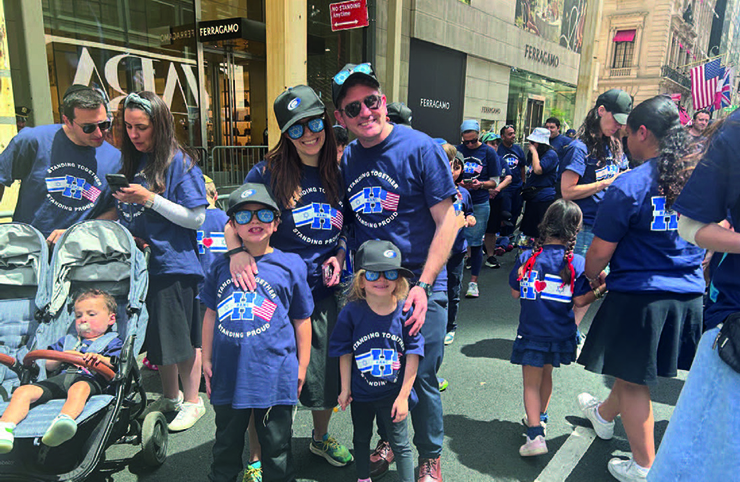

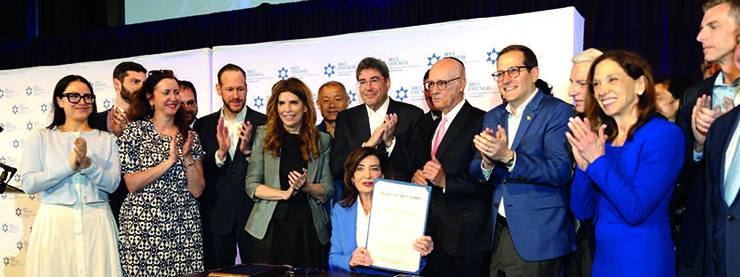
Governor Kathy Hochul formally signed New York’s new Buffer Zone Bill before more than 600 elected officials, clergy members, and communal leaders gathered Sunday morning at Met Council’s Annual Legislative Breakfast at Cipriani 42nd Street. The breakfast, held annually before the Israel Day on Fifth Parade, has become one of the premier gatherings of Jewish communal leadership and public officials in New York.
The annual gathering also highlighted Met Council’s extensive work as America’s largest Jewish charity, serving more than 350,000 vulnerable New Yorkers. Met Council CEO David Greenfield reminded attendees that the organization’s core mission remains assisting families during their hardest moments through an expansive array of safety-net initiatives. Across its regional operations, the charity combats food insecurity, coordinates emergency housing assistance, manages comprehensive senior programs, and runs a dedicated network for domestic violence survivors, alongside direct aid for Holocaust survivors living in poverty.
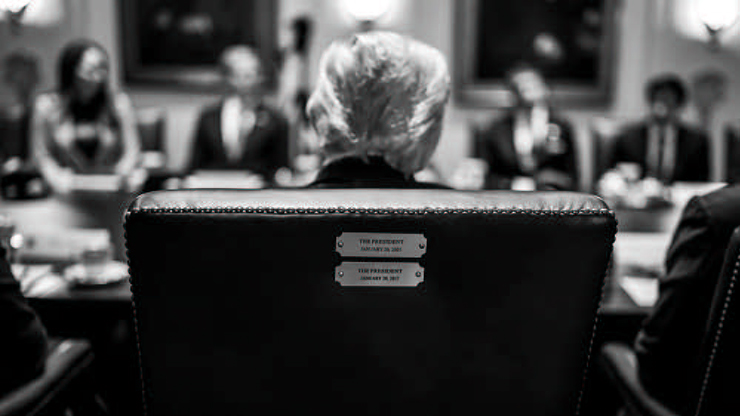
The focus shifted to public safety as Governor Hochul signed the legislation. The law creates a 50-foot buffer zone around houses of worship, religious schools, and community institutions, making it a misdemeanor to intentionally harass or intimidate individuals within that protected area.
“Everyone should be able to walk into their place of worship without fear of harassment or intimidation,” Hochul said before signing the measure.
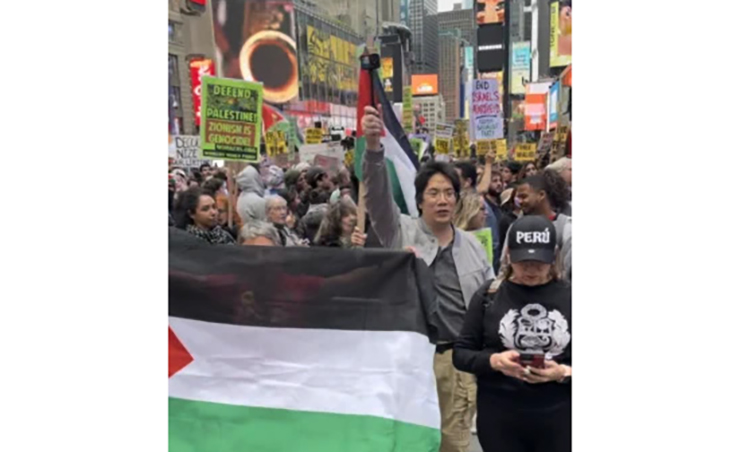
The legislation came after months of debate over how best to protect worshippers while balancing constitutional concerns regarding protest activity. Disruptive demonstrations outside local houses of worship had intensified across the city, including prominent incidents outside Park East Synagogue in Manhattan and Young Israel of Kew Gardens Hills right here in Queens. In the centerpiece of her speech, Hochul expressed deep frustration with the recurring acts of antisemitic hate.
“I’ve had enough,” Hochul exclaimed. “I’ve had enough of having to put out social media posts condemning the latest symbol of hate being etched on a wall in a synagogue or a yeshivah. I’ve had enough of people being harassed on the streets and in our subways. This is how we say enough is enough. We put an end to it right here in the State of New York. You have no right to harass someone walking into a synagogue with their family. That is wildly un-American, and it’s definitely not how we do it in New York.”
The political dynamics of the room were further underscored by the timing of the parade. Mayor Mamdani did not attend the annual pre-parade gathering and announced that he would skip the parade itself. Greenfield noted that Mamdani had not been invited, citing prior remarks that he believed contributed to division within the Jewish community.
While the mayoral seat remained empty, NYPD Commissioner Jessica Tisch’s appearance carried an added personal dimension. Her parents, Dr. Merryl and James Tisch, were recognized among the event’s sponsors, while her brother Ben Tisch serves as Co-President of Met Council alongside Joseph Abrahams. Commissioner Tisch spoke emotionally about her deep-rooted identity and her commitment to securing the city.
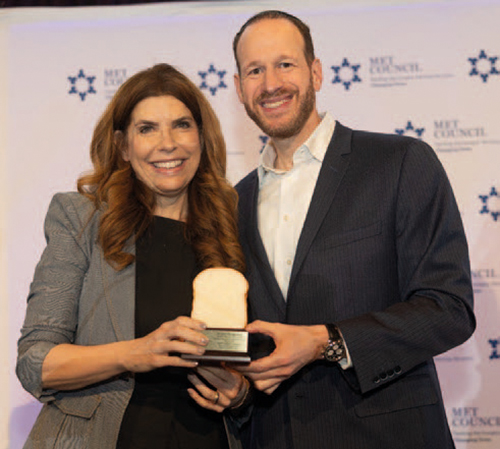
“My Jewish identity is not something that I put on and that I take off. It is who I am and who I will always be,” Tisch said. “I know how meaningful it is for so many of you to have a Jewish police commissioner. It is a responsibility that I feel deeply in my mind, in my bones, and in my heart.”
Addressing parade security amid heightened concerns since October 7, Tisch promised the most robust security plan the NYPD has ever deployed for the event, adding, “It is the mayor’s decision not to march, and it is my decision to march proudly.”
With critical election cycles looming, the podium featured rapid-fire remarks governed by a strict 90-second countdown clock implemented by Greenfield to manage the packed roster of dignitaries. Senate Minority Leader Chuck Schumer used his allotted time to deliver an impassioned warning about the resurgence of anti-Semitism. He also highlighted tangible federal support for Met Council’s infrastructure, noting that he secured a $1 million federal earmark specifically for food distribution to high-need neighborhoods.
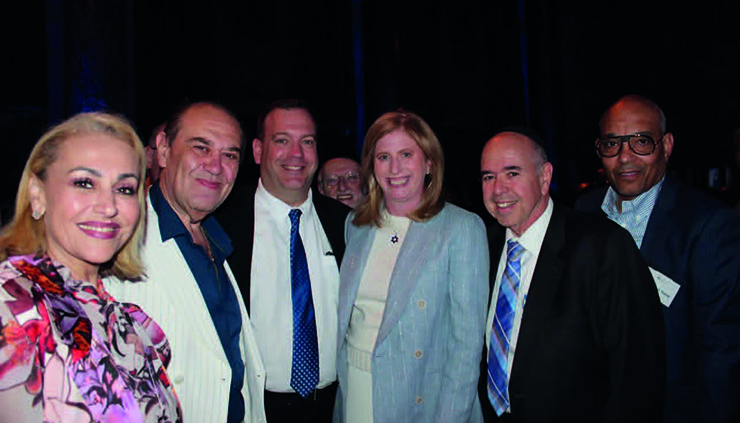
New York City Council Speaker Julie Menin framed the current moment as a defining challenge for New York’s Jewish community, proudly highlighting her position as the first Jewish Speaker of the New York City Council. Menin also highlighted the Council’s efforts to expand Holocaust education in public schools.
“We gave $1.25 million to the Museum of Jewish Heritage to build a program that I launched two years ago where we’re bringing every eighth-grade public school student to the permanent Holocaust exhibition,” Menin said. “Why? Because studies show 34 percent of young people in this great city believe the Holocaust was a myth or was exaggerated. Thirty-four percent!. As the daughter of a Holocaust survivor, this is shameful, it’s unconscionable, it’s unacceptable, and I can assure you we are reversing that.”
The concern over anti-Semitism spanned the political spectrum. Congressman Dan Goldman delivered a clear statement of personal and political identity. “I stand before you as a proud Jew and a proud Zionist,” Goldman said. “Those of us who feel that way can never waver.”
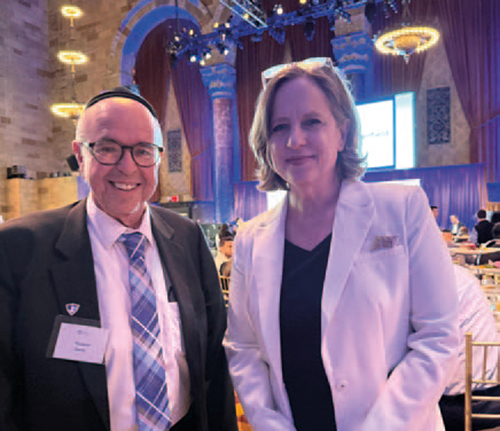
On the other side of the aisle, Congressman Mike Lawler challenged the room to move past easy platitudes, demanding that lawmakers actively confront anti-Semitism on both ends of the political spectrum. “It is imperative – not just to be here, not just to say that we support a strong US-Israel relationship, not just to speak out against anti-Semitism, but to root it out,” Lawler said.
Attorney General Letitia James reiterated her commitment to combating anti-Semitism throughout New York, standing alongside State Comptroller Tom DiNapoli. She emphasized that combating anti-Semitism cannot fall solely on the Jewish community.
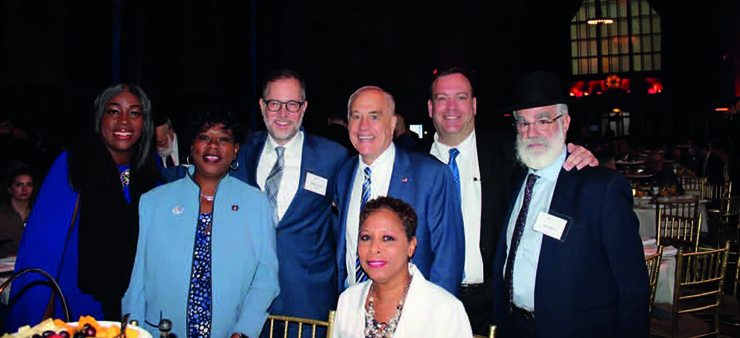
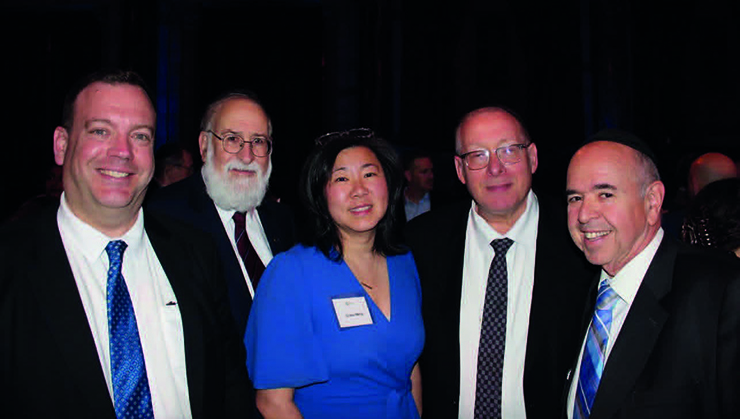
The gathering brought together an unusually broad, unified front of public officials, including Congresswoman Grace Meng, Bronx Borough President Vanessa Gibson, Council Members Eric Dinowitz, Lynn Schulman, Gale Brewer, Harvey Epstein, Chris Banks, and Deputy Speaker Natasha Williams. Also in attendance were Assemblymembers Alex Bores, George Alvarez, Tony Simone, Andrew Hevesi, and David Weprin, alongside UJA-Federation CEO Eric Goldstein and JCRC-NY CEO Mark Treyger.
Despite the broad institutional support inside the room, the new law faces immediate legal scrutiny outside of it. Donna Lieberman, executive director of the New York Civil Liberties Union (NYCLU), issued a statement warning that the 50-foot perimeter risks chilling free expression and public activism, predicting swift courtroom challenges. Governor Hochul has stated she is fully prepared to defend the law’s constitutionality.
By Shabsie Saphirstein