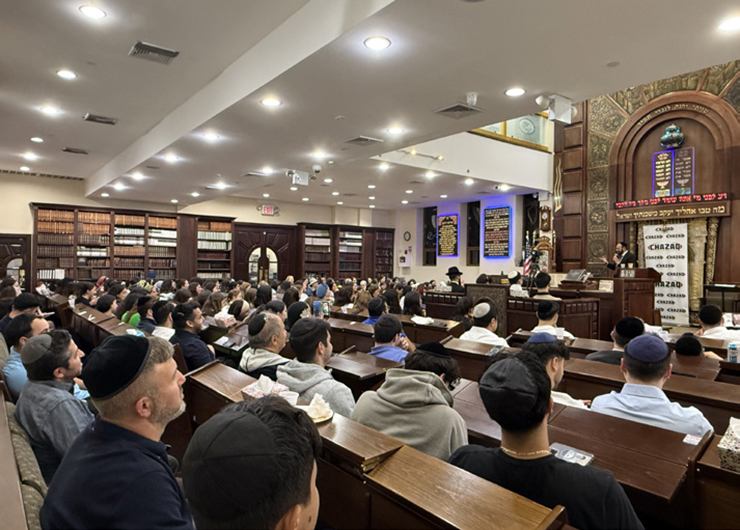

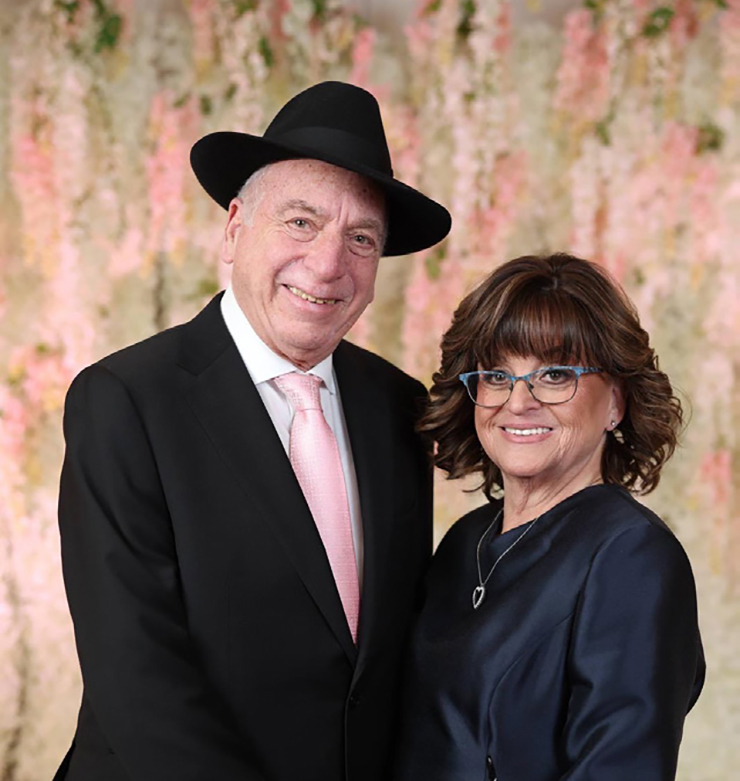
Avrumie Itzkowitz Hy”d was my personal friend – someone I was privileged to daven alongside on the Yamim Nora’im at the Agudath Israel of Kew Gardens Hills. Throughout the year, his steady place of t’filah was Rav Noach Isaac Oelbaum’s Khal Nachlas Yitzchok, where his presence was part of the daily rhythm of the k’hilah.
That is where this story must begin.
Not at the lake. Not with the police tape. Not with the headlines that tried to summarize a life in a few cold facts. It must begin with Avrumie as people knew him: a husband, father, zeidy, brother, friend, neighbor, bakery man, mispalel, and baal chesed. A man who did not need attention to make an impression. A man whose smile made people feel seen. A man whose goodness was steady enough that many only realized how much he carried once he was no longer there.
Public reports identified him as Albert Itzkowitz, 75, a former kosher bakery owner and longtime Hatzalah volunteer, found deceased near the shoreline of Kissena Lake in Flushing on Monday, May 18. Police said he had suffered gunshot wounds to the back and neck. The Office of Chief Medical Examiner ruled his death a homicide, and as of the public reports that followed, no arrest had been announced.
To Kew Gardens Hills, he was Avrumie.
Kissena Lake is not some distant, unfamiliar place to families from Kew Gardens Hills. It is right up 164th Street, a peaceful destination for generations of neighborhood residents. Avrumie himself was one of those people who would often go there. That this occurred in broad daylight, in a park many families considered serene and ordinary, only deepened the community’s alarm.
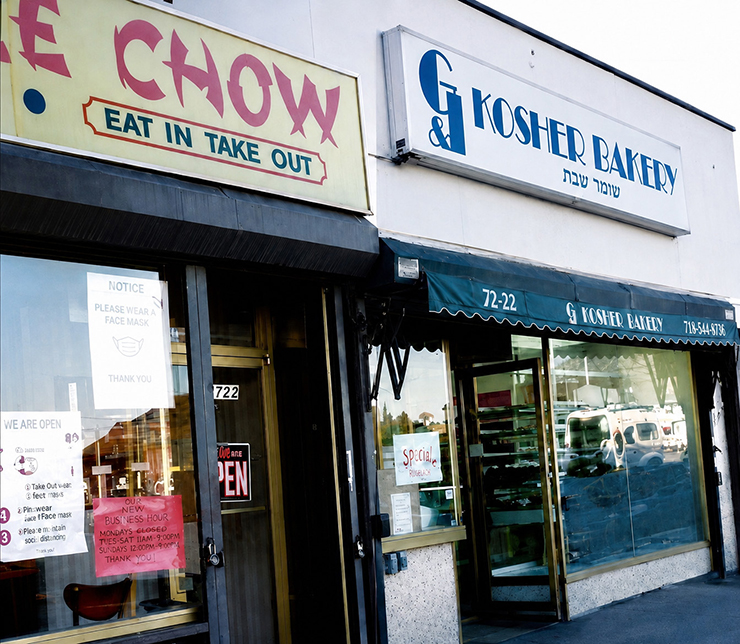
Many public reports described Avrumie as the longtime owner of the now-closed G&I Kosher Bakery. That is true, but it does not capture the fuller Main Street story.
Avrumie’s store was at 72-22 Main Street, eventually sold to Mendy’s Bakery and currently operating as Holy Schnitzel. Even with the change in storefront, the space still held deep meaning. Eric Ilyau, the manager, recently recalled how Avrumie and his son Tzvi Yonie stopped in shortly before his beloved eishes chayil, Malkie Itzkowitz a”h passed away. Ilyau showed them around and remembered tears coming to Avrumie’s eyes. “Thank you,” Avrumie told him with a smile, “you’re bringing my memories back.”
A second G&I branch was operated by Avrumie’s brother, Moishe Itzkowitz, farther north on Main Street at 69-72 and later 69-40 Main Street. The roots of the Itzkowitz neighborhood history go back even further. Page 19 of the April 13, 1962 edition of Der Tog (The Day), a prominent Yiddish daily newspaper, featured a historical advertisement listing the family patriarch, Israel Itzkowitz, operating G&I Kosher Bakery out of a 69-38 Main Street storefront using the classic phone exchange BO3-2030. This archive confirms the foundational footprint of Israel’s operation as the very first kosher bakery on Main Street.
For generations of observant families, the bakery was a deeply valued cornerstone, particularly as a reliable provider of goods with strict Yashan certification. Even after the sale of his physical bakery, Avrumie continued to work within the food sector, quietly serving as the dedicated mashgiach at The Grand Rehabilitation and Nursing at Queens.
Public family recollections add the texture that records cannot. Avrumie’s nephew, Andrew Itzkowitz, recalled watching thousands of dough balls being shaped into double and triple braids. Tzvi Yonie remembered the back of the G&I bakery as his childhood playground, sneaking spoonfuls of frosting directly from the piping bag. Tzvi Yonie’s uncle – Andrew’s father – Shabsie (Sid) Itzkowitz, was in a white apron on the production floor. As Shabsie’s wife Cindy once noted, his recipes were never just on paper – they were in his hands and in his head.
Even in his final hours, Avrumie was still doing what he had done throughout his life. One of his last mitzvos was going with Tzvi Yonie to be menachem aveil Avi and Leibish Hershkowitz on the loss of their father. A man who had just lost his own wife only weeks earlier still found room in his broken heart to enter another home of mourning.
As the investigation unfolded, another part of the story took place quietly to ensure kavod ha’meis. At the scene that Monday night, Rabbi Zvi Gluck, founder and CEO of Amudim, and Richie Richter helped ensure the scene was handled with sensitivity, preventing rumors from leaking before the family could absorb what happened. As midnight approached, I went to the scene on behalf of Misaskim of Queens to convey to the officers what to expect regarding the work of chesed shel emes. The NYPD 109th Precinct was directly involved in the response, with the Police Commissioner’s office engaged to ensure proper attention.
Funeral Director Jennifer Martin worked painstakingly to prepare for a Tuesday taharah and l’vayah, while also managing complicated logistics for a k’vurah at Wellwood Cemetery. The hope was to move quickly, but the Medical Examiner’s Office did not release the niftar until after 4 p.m. on Tuesday, making any realistic path to Wellwood that day improbable. Special thanks are due to Meyer Weill, Misaskim president, who remained at the Medical Examiner’s Office throughout Tuesday to ensure Avrumie was treated with the dignity owed to him.
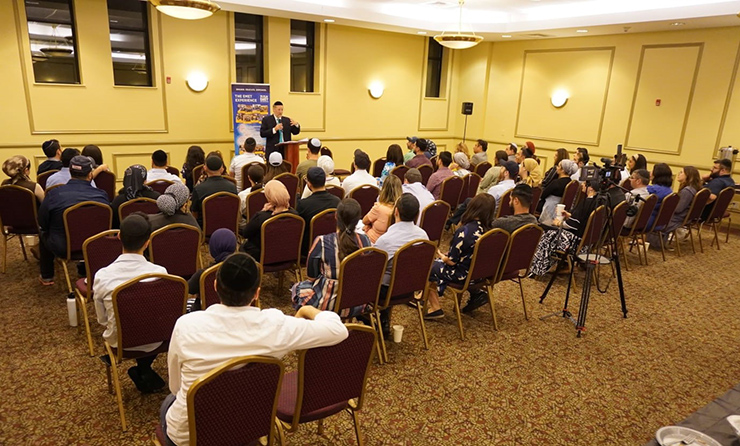
The l’vayah was held Wednesday morning, May 20, at Schwartz Brothers-Jeffer Memorial Chapels. The community gathered in large numbers. Inside, the room carried the pain of a family struck twice in a short time. Malkie Itzkowitz had passed away only 19 days earlier.
Rav Noach Isaac Oelbaum, Mara D’Asra of Khal Nachlas Yitzchok, delivered the main hespeid.
“What are we doing here today?” Rav Oelbaum asked. He described the shock as the sun setting in the middle of the day. When a life is taken before its time, it feels as if the sun has set while the day is still bright.
Rav Oelbaum noted that just the previous week, he had invited Avrumie, who lived across the street, to eat with him every Shabbos. Avrumie happily accepted. The Rav added that it seemed that HaKadosh Baruch Hu had also invited Avrumie – and Avrumie had accepted that invitation as well.
Rav Oelbaum spoke about Avrumie’s heart of gold. When he had the bakery, Avrumie donated the challah every Shabbos for shalosh seudos in shul. “Usually, when something is given for free, the recipient is expected to do the schlepping,” the Rav noted. “Avrumie not only gave; he did the carrying, too.”
The Rav emphasized that the highest level a human being can strive to reach is to live a full life without hurting another person. A person can keep every chumra, but the pinnacle of human achievement is to go through life without causing pain to others. That, Rav Oelbaum said, could be said about Avrumie.
The Rav urged every person in the room to take on a personal kabbalah – more care in t’filah, more shalom, more ayin tovah – so that the tragedy would not be for nothing.
Avrumie’s brother, Moishe Itzkowitz, spoke next, sharing how his understanding of Avrumie changed when they were students at Yeshiva Ohr Yisrael. At lunchtime, the boys would race down a large metal staircase to the baseball fields below. One day, a classmate was struck over the head by local gang members. Avrumie heard what happened, saw the blood, grabbed a baseball bat, and ran down alone to chase the attackers away.
“There was no speech. No calculation. No hesitation,” Moishe said. That moment revealed what was beneath Avrumie’s carefree exterior: the courage to act for others who could not act for themselves.
Avrumie’s son Simcha Itzkowitz then gave the room a portrait of his father’s consistency. Every morning before Avrumie left for the 7 a.m. Shacharis minyan at Rav Oelbaum’s shul, there was the sound at 6:50 of his father mixing his coffee. Then, at 6:55, the sound of the front door closing. Simcha remembered being sent with a tape recorder to record Rav Oelbaum’s Daf Yomi shiur long before Torah was digitally available. His avodas Hashem was so steady that Rav Henach Savitsky recently borrowed Avrumie’s t’filah card, filled with kavanos, and told Simcha, “You don’t understand the tzadik your father is.”
Simcha noted that his father would go nightly to a particular shul because the k’hilah struggled to make a minyan, sometimes hitting two in one night. He was also one of the original Queens Hatzolah members in the 1980s, quietly responding to medical emergencies at all hours.
Avrumie’s son, Tzvi Yonie Itzkowitz, addressed the crowd last. Anyone who knew Avrumie knew he was happy-go-lucky. Tzvi Yonie shared a story from Camp Munk, when he was around eight years old, wearing a Mets-style shirt with “Itzkowitz” written in big letters. A rabbi ran toward him – Rabbi Ammi Kohn – and asked whether he was related to Avrumie. Upon hearing that he was his father, the rabbi’s face lit up, asking him to send regards to “the nicest man in the world,” remembering Avrumie from his days as a camp driver some 30 years earlier.
Avrumie exemplified the purest emunah p’shutah. When Malkie was lost just two and a half weeks earlier, Avrumie simply said, “Gam zo l’tovah.” Tzvi Yonie gave the line that should remain with every person who knew Avrumie: “Our job now as a family whom he loved so much, and a greater Kew Gardens Hills community that he was an adored fixture of for his entire life, is to remember not the fact that he was killed, but the way in which he lived.”
Tzvi Yonie said that there is already a growing number of family members who take Daddy and Zeidy’s simchah and pass it on, noting that just the previous week, his son Zachariah declared unprompted that he wanted to be “a Daddy” when he grows up.
Avrumie is survived by his brothers, Hersh Mayer, Moishe, and Shabsie; his sister, Gitty Lieberman; his children, Simcha Itzkowitz, Debbie Abramchik, Leah Livshitz, Tziporah Rosenthal, and Tzvi Yonie Itzkowitz; and his beloved grandchildren.
As the family rose from shiv’ah, the neighborhood was left with an agonizing reality. The investigation remained open. Crime Stoppers has offered a reward of up to $3,500 for information in the case. That number feels painfully small against the life that was taken. If doubling it would help even one person understand how seriously this community wants answers, I would gladly add another $3,500 – and I am sure many in the neighborhood would do the same. This is about justice, safety, and ensuring that a beloved husband, father, grandfather, and neighbor’s life is not taken in silence. Anyone with information – even something that seems small – must come forward.
But the greater danger is that the final act done to Avrumie could become the headline of his life. It must not.
His life was the coffee at 6:50 and the door closing at 6:55. It was the challah for shalosh seudos, and the extra effort of carrying what he gave. It was a son sent with a tape recorder so Torah could fill the home. It was a Hatzalah call answered with humility. It was going with Tzvi Yonie to be menachem aveil another family while his own heart was still freshly broken.
That is the life the community must carry forward.
Rav Oelbaum asked every person to take on a kabbalah. Come earlier to davening. Guard another person’s dignity. Give without making someone else carry the burden. Help a minyan. Smile at someone who needs to feel seen.
Let the investigation move forward with strength. And let Avrumie Itzkowitz be remembered not by the violence that took him, but by the emunah, humility, warmth, and quiet goodness with which he lived. Y’hi zichro baruch!
By Shabsie Saphirstein