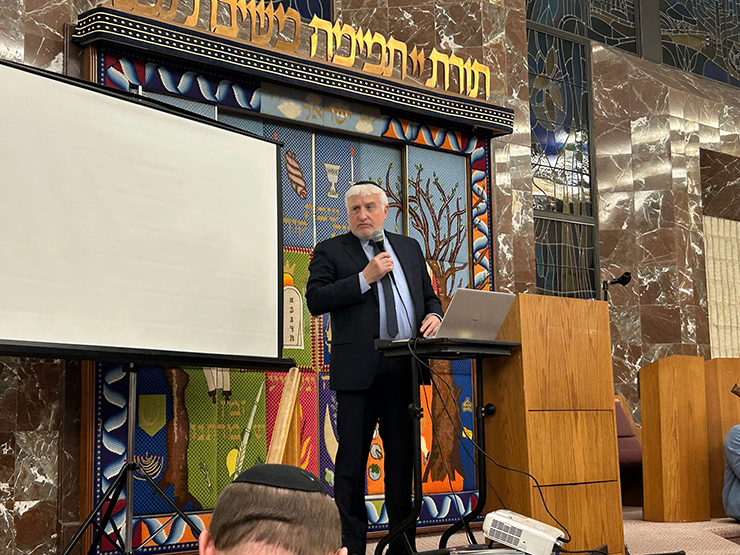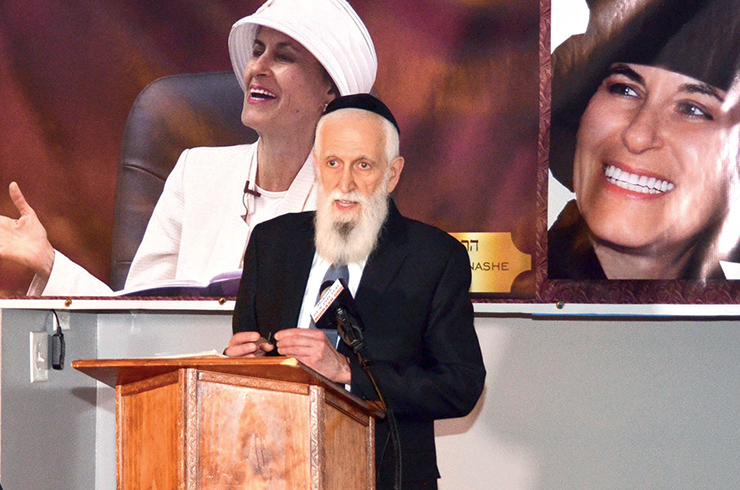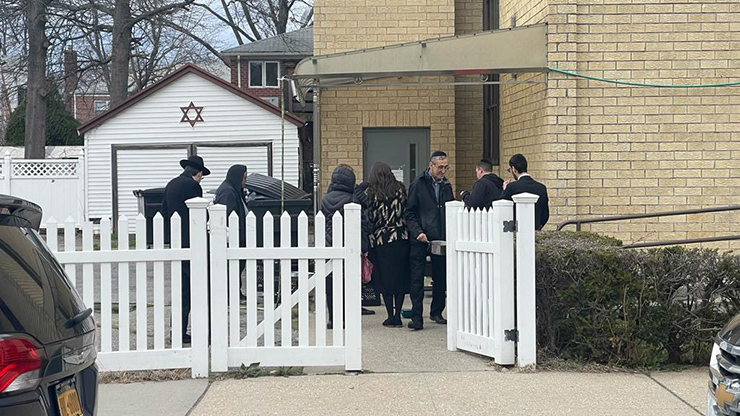
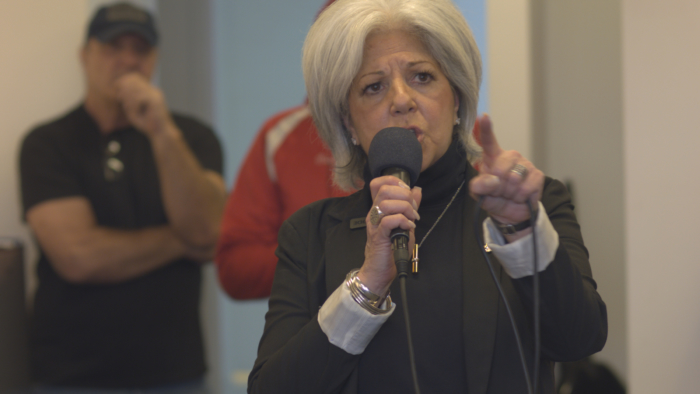

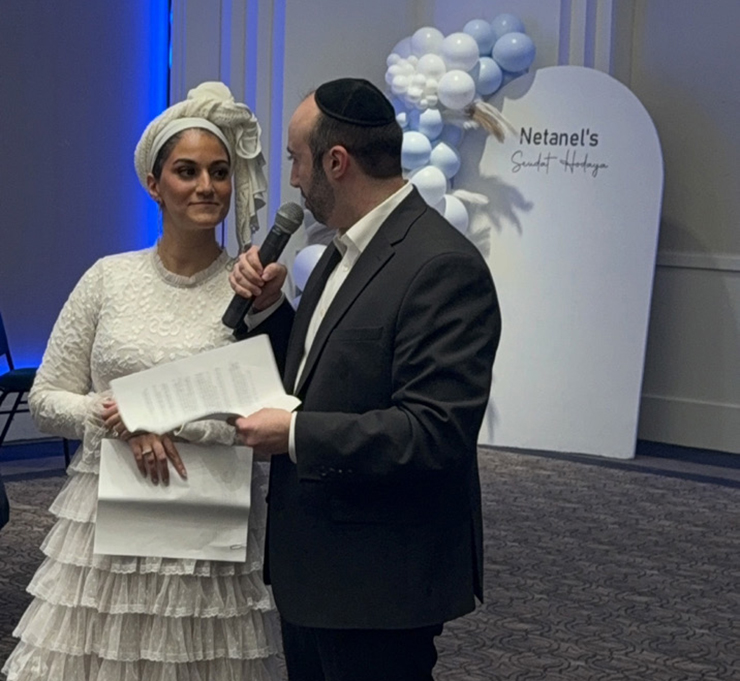
Family and friends gathered at Shaare Shalom in Great Neck on Thursday evening, February 26, for a deeply moving Seudas Hodayah hosted by Eden and Mayan Yaghoubi in honor of their son, Netanel. Standing before the crowd, Eden described the past months as a roller coaster of faith, fear, and gratitude.
Before recounting their son’s story, the couple expressed heartfelt appreciation to their parents, in-laws, and extended family for standing beside them throughout the ordeal. They also thanked the many friends and community members who brought meals, called, texted, knocked on their door, and continuously recited Tehillim for Netanel during the most difficult moments.
“We wouldn’t be here without all of you,” Eden said. “Thank you for everything you’ve done for us.”
The story began on August 26 when Mayan went for what was supposed to be a routine obstetrics appointment at 28 weeks of pregnancy. Instead, doctors determined that an emergency C-section was necessary.
Their son Netanel was born extremely premature and rushed immediately to the NICU, where he would spend the next 66 days fighting for his life.
For more than two months, the young parents lived between hope and uncertainty as their newborn struggled to gain strength. Slowly, progress came. His heart strengthened, his lungs began functioning more independently, and his tiny body gained the strength it needed.
After more than two months in the NICU, Netanel was finally able to come home.
“We thought the miracles had reached their peak,” Eden told the audience. “But Hashem wasn’t done.”
The couple explained that they named their son Netanel—meaning “Hashem gave”—because his life felt like a direct gift from Heaven. The name also honors Mayan’s grandfather, affectionately known by his grandchildren as Sadzi, whose Persian name carries the same meaning.
Yet only weeks after bringing their son home, another frightening moment unfolded.
Mayan described how she and Eden were driving with their daughter Tamar and baby Netanel in the car. Tamar insisted that her mother sit beside her and the baby in the back seat—something Mayan initially resisted because the middle seat between two car seats was tight and uncomfortable.
Minutes later, Mayan glanced toward the baby and saw that he had suddenly turned completely blue. She screamed for Eden to pull over.
Eden immediately stopped the Tesla along Northern Boulevard. In that terrifying moment, he noticed a nearby vehicle bearing the Shmira logo.
Inside the vehicle were Rabbi Yaniv Meirov of Chazaq and this writer, who had just finished visiting a local office as part of Rabbi Meirov’s weekly initiative. Every Wednesday and Thursday, Rabbi Meirov travels to businesses throughout Queens and Great Neck to share brief words of inspiration on the weekly parshah with businessmen in their workplaces.
We had just concluded one such visit and were preparing to leave. Moments later, a man rushed toward the vehicle. At first, I assumed he recognized Rabbi Meirov. Within seconds, it became painfully clear that something was terribly wrong. “The baby is blue!” the father cried out.
Eden had noticed the Shmira vehicle and rushed over carrying his infant son. He quickly placed the baby in the front seat of the vehicle and began attempting to revive him.
Both Rabbi Meirov and I immediately called Hatzolah of Queens & Great Neck. Rabbi Meirov reached the dispatcher and handed his phone to the father so he could follow the dispatcher’s instructions directly. Eden continued performing CPR on his newborn while listening carefully to the guidance being given over the phone. Meanwhile, Rabbi Meirov stepped to the side and began reciting Tehillim.
Within minutes, one of the responding officers quickly assessed the situation and, using a trained maneuver, briefly swung the infant in the air in an effort to clear the airway. Immediately, life returned to the baby’s face as Netanel began breathing again—a moment the family and those present would later describe as nothing short of an open miracle.
Shortly afterward, volunteers from Hatzolah Queens & Great Neck arrived. Their ambulance transported the father and baby to the hospital for urgent care.
At the hospital, Netanel was placed on a ventilator and closely monitored by doctors for several days. He stabilized and continued to improve. Because of the medical complications, he remained in an incubator for some time afterward. Only the week before the Seudas Hodayah was he finally strong enough to undergo his bris milah, which took place in the hospital.
Reflecting on the events of that day, I shared with those gathered a story often related by Rabbi Shlomo Farhi that beautifully illustrates the concept of hashgachah pratis—Divine providence.
A man in Israel once discovered that his car had been stolen. Days later, Israeli police stopped a suspicious vehicle at a checkpoint. The car had already passed through one checkpoint unnoticed, but at a second checkpoint something caught the attention of the officers: a bumper sticker on the back of the car that read “Ein Od Milvado”—there is none besides Him.
The phrase stood out so clearly that the officers began checking the vehicle more carefully. Within moments, they realized the car had been reported stolen.
When the vehicle was returned, the owners asked the police how they had known to stop the car. “The bumper sticker,” the officers explained. Only then did the owner remember how that sticker had gotten there.
Not long before the theft, Jewish outreach volunteers had visited his home and invited him to put on tefillin. The man politely declined. They suggested another mitzvah, which he also declined. Finally, they asked one last question: “Would you at least be willing to put this bumper sticker on your car?” That request he accepted.
At the time, it seemed like a small and insignificant gesture. Yet that very sticker—declaring Ein Od Milvado—ultimately became the reason the stolen car was recognized and returned.
While sitting beside her baby in the hospital over Shabbos, Mayan made a promise. “I looked out the window and told Hashem that if my baby gets better, I will share this story so the world can see how incredible You are.” The Seudas Hodayah was the fulfillment of that promise.
Addressing her infant son, she offered a heartfelt blessing: “Netanel, your name is your story—Hashem gave. May you grow to be a light for others, reminding them that even in the darkest places Hashem never abandons us...”
By Shabsie Saphirstein