
On Tuesday afternoon, January 27, in Forest Hills, as snow from the weekend storm still blanketed the sidewalks and curbs, a routine walk to work turned into a violent anti-Semitic assault – and a powerful example of resolve and communal action in Queens.
Rabbi David Shushan, a respected educator and youth leader at the Bukharian Jewish Community Center, was walking near the intersection of Yellowstone Boulevard and Queens Boulevard, by Jewel Avenue, shortly after 2:00 p.m., when a stranger dressed from head to toe in black with a black hoodie over his head suddenly approached him, shouting anti-Semitic slurs.
Without warning, the verbal harassment escalated into physical violence.
“He punched me in the stomach,” Rabbi Shushan recounted. “I didn’t know him. There was no interaction beforehand.”
Instinctively, Rabbi Shushan defended himself. The two men began fighting, and soon, they were grappling on the ground as pedestrians and motorists looked on – an unsettling scene unfolding in broad daylight in one of Forest Hills’ busiest corridors.
“There were a lot of people around,” Rabbi Shushan said. “But no one wanted to get involved.”
The confrontation ended when a passing driver abruptly stopped and stepped in, forcing the two men apart. The attacker bolted from the scene – but not before the rabbi deliberately recorded clear, unmistakable video of him. In a brazen move, the assailant made no effort to hide his face. That footage would soon become pivotal.
Rabbi Shushan immediately sought police assistance. Despite being mere blocks from the local 112th precinct, officers were not immediately present. Determined not to let the assault go unanswered, he eventually located patrol officers and began coordinating next steps.
At the same time, Rabbi Shushan sent the video to trusted community members. Their response was swift.
Roughly ten minutes after the initial assault, the attacker reappeared briefly in the area.
“He came back,” Rabbi Shushan said. “I wasn’t afraid. I went toward him again – but this time, he motioned with his hand as if he had a gun.”
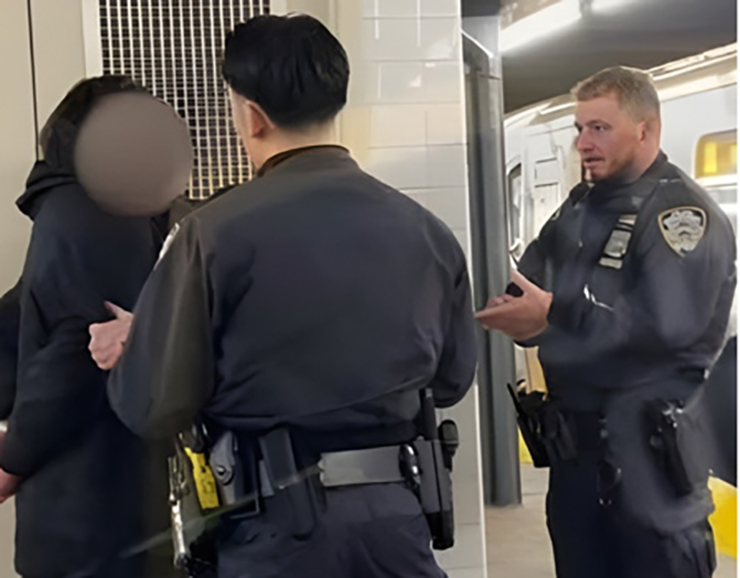
The man turned and fled along Queens Boulevard. Within minutes, a community member identified the suspect and tracked him heading toward the subway. The vigilante immediately called Rabbi Shushan, urging him to come with police to the subway station where the perpetrator had been spotted. Guided by real-time updates from the community member, Rabbi Shushan and police rushed to the station.
What happened next bordered on the extraordinary.
Police managed to stop a subway train in a highly targeted manner. The doors of all the cars opened – except one.
“The car he was in stayed closed,” Rabbi Shushan said. “Every other door opened.”
As Rabbi Shushan arrived on the platform, that single door finally opened. The attacker stepped out – and froze.
“He was shocked to see me,” Rabbi Shushan recalled. “He couldn’t believe I had been found again.”
Seconds later, multiple officers converged, handcuffing and arresting the suspect on the spot. From the initial punch to the arrest, less than 30 minutes had elapsed.
“If we hadn’t kept pushing,” Rabbi Shushan reflected, “if the community hadn’t helped track him, he would have disappeared.”
The incident stands as a sobering reminder of the dangers facing visibly Jewish New Yorkers, but also as a testament to vigilance and coordinated communal response. Rabbi Shushan credits the video footage, the rapid actions of community members, and clear hashgachah pratis for the outcome.
“We need Torah every day,” he said quietly at the close of the interview. “Every single day.”
Rabbi David Shushan’s response to violence reflects a life shaped by faith and service to klal Yisrael.
Born in Paris to Moroccan parents, Shlomo and Sarah Bracha Shushan, his family embraced the teachings of the Lubavitcher Rebbe and later relocated to Aubervilliers, outside Paris. The youngest of four siblings, Rabbi Shushan excelled at one of France’s largest Jewish schools before continuing advanced Torah study in Crown Heights.
There, he became a skilled sofer, producing t’filin and mezuzos, and trained as a mohel. After marrying his wife Hanna at age 23, he continued learning in kollel, teaching Gemara in French and earning recognition for his clarity and warmth. He later received Yadin Yadin semichah through advanced rabbinic study.
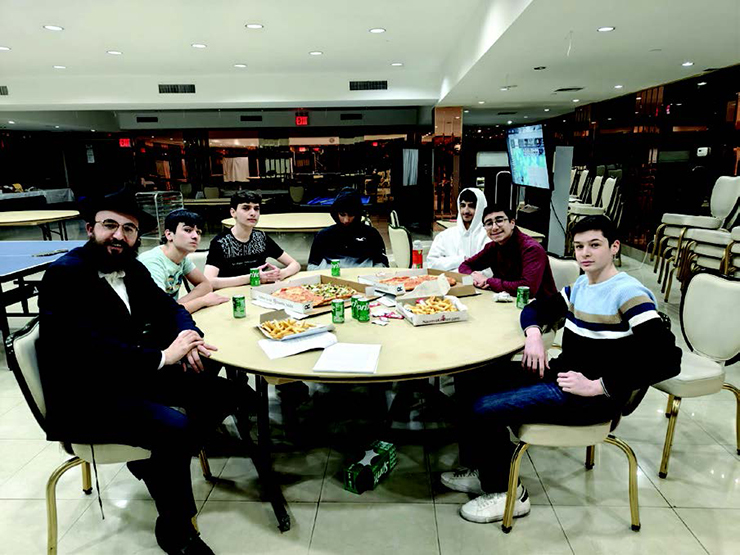
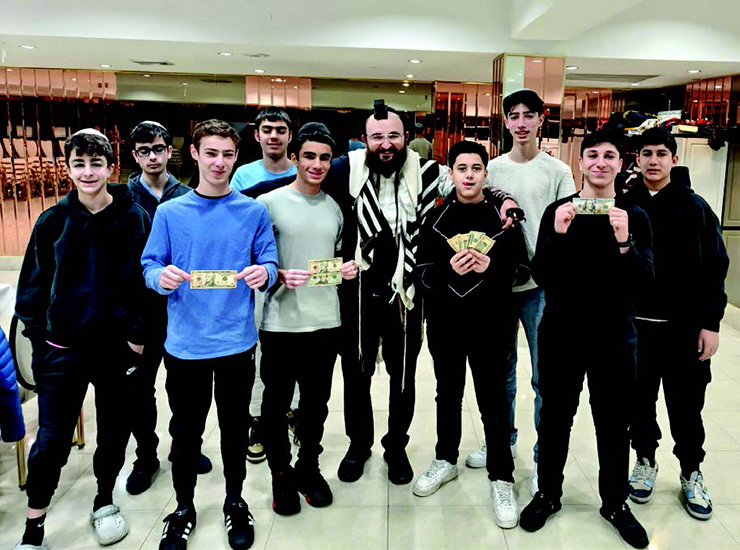
In 2022, Rabbi Shushan joined the Bukharian Jewish community of Forest Hills, where he established the BCteens program, launched initiatives connecting public school students to their Jewish heritage, and began leading a weekly Shabbos minyan at the Bukharian Jewish Community Center.
What occurred this past Tuesday was not just an attack on one rabbi; it was an attack on the visible Jewish presence in Queens. Rabbi Shushan’s refusal to retreat, combined with swift community coordination, ensured that anti-Semitism did not slip into anonymity.