
People read my column for different reasons. Some enjoy the personal stories and others the politics. This is going to be a bifurcated column: the first part is story, and the second part is politics.
A couple of weeks ago, Beth and I went to pay a shiva call in New Jersey to a friend who was one of my law school classmates. Before we left, I said, “I wonder if we will see [a particular person],” whom we both know. He lives in their neighborhood, and I have known him since high school—he was a year behind me. As it turned out, he was there. There was also a younger couple who came whom we did not know. Through conversation, we found out that she is a physician and he is a lawyer. More on this later.
On February 8, I felt like I went through the life cycle. It was my father-in-law’s yahrzeit. Since he had no sons, I especially felt it was important not only to say Kaddish but to daven for the amud (lead the service). Then I went to a bris for the grandson of the person who gives the Monday night Chaburah (interactive shiur) that I am part of.
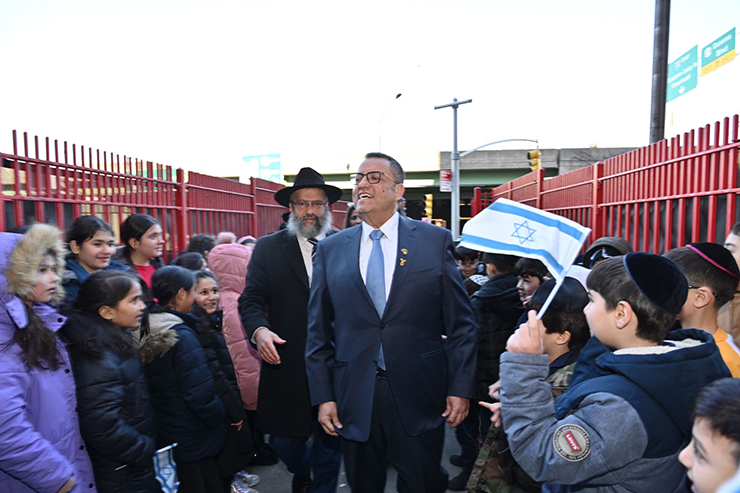
I could not stay for the meal after the bris since I had to be at the Queens Jewish Community Council breakfast. I am a board member and wanted to make sure I got there in time for the “swearing in” of the board. I thought that due to the extreme cold many people would not come. Some did not show up. However, the place was packed, and the program ran overtime because so many elected officials attended and spoke.
I was asked to drive someone home who lives near me. I have known him from around the community. We were talking on the way home, and I found out that his mother taught at the middle school I went to during the time I was there. Her name was not familiar, but that does not mean too much since I do not remember the names of the teachers I had while I was there.
For Mincha, I davened for the amud. Afterward, Beth and I went to the wedding of the son of my former high school roommate. We were also in the same apartment in yeshiva in Israel. The husband of another couple at our table was also someone I had gone to yeshiva with in Israel. It turns out that it was his son and daughter-in-law who were the young couple at the shiva.
To put it in context how long I have known my former roommate: When we were roommates, the United States was celebrating a historic milestone—the 200th anniversary of the founding of the country. He signed the Ketubah at my wedding, and I signed the Tenaim at his son’s wedding. There were people I had not seen for many years. Some of them look the same, and others have aged and I did not recognize them. When you see people frequently, there is less of an impact.
Although our lives have changed since high school and we may not be in touch as much as we should, the fact that we still have a relationship after so many years is something to cherish. On the other hand, there are people I was very friendly with at some point, but if I saw them today, I would have little in common with them.
With some people—especially those you infrequently have contact with or were at one time very close with—it is like you are in a time warp. When you think of them, it is back to the time when you had frequent interaction with them.
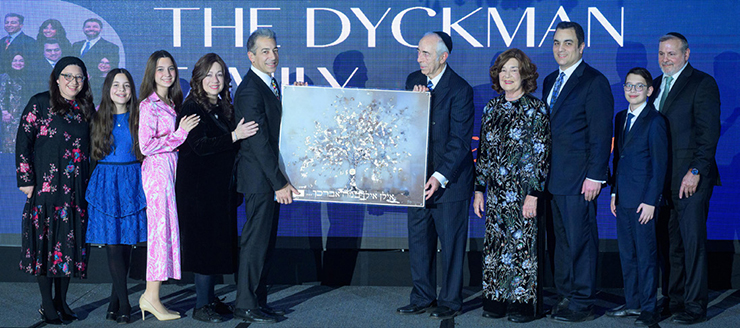
I can give two examples of this, both of whom are being honored. The first is Ron Strobel. I knew him as Ronnie. When I think of him, I remember the days we both davened in the Bayside Jewish Center’s Etz Chaim Teen minyan in the 1970s. The same applies to Dr. Boruch Hochster. I know him as Howie, who became involved in the minyan before his Bar Mitzvah, following in the footsteps of his older brother Alan. I see Alan all the time, so I look at him differently—not so much as the teenager from my youth.
Now to the political portion of the column. I remember the 200-year celebration of the United States in 1976. The country had gone through Watergate, leading to the resignation of President Richard Nixon, and defeat in the Vietnam War. It was time to turn the page. At that time, people thought Jimmy Carter was the antidote. He was a peanut farmer from Plains, Georgia, with a young child. He was a former governor.
The country felt that it had gone through a lot but was stronger as a result. This feeling of resilience was perfect for the 200-year celebration of the country. I remember ships passing through Little Neck Bay near Fort Totten in Bayside as part of the celebration.
For the Jewish community, the celebration was overshadowed by the hijacking of a plane by the Popular Front for the Liberation of Palestine, which led to the successful raid by Israeli commandos to rescue the hostages on July 4, 1976.
In contrast, now there seems to be little enthusiasm to celebrate our country’s 250th birthday. The United States is divided with no end in sight. There is fear as to what will happen in the 2026 mid-term elections. The feeling of many is that the country is heading in the wrong direction.
I have no doubt that Trump, the great showman, will make sure there will be ostentatious celebrations. The question is who will be there. Last year’s military parade through the streets of Washington, DC, was a dud.
One way to try to increase the enthusiasm is to make the programs apolitical and ensure that it is not a way for Trump to bask in his glory, as he desperately needs. Unfortunately, I doubt it will happen, and this will be another missed opportunity to try to bring people together for a common cause.