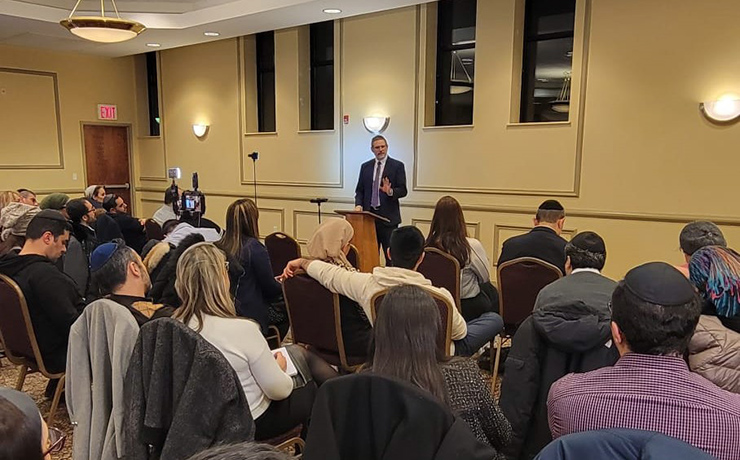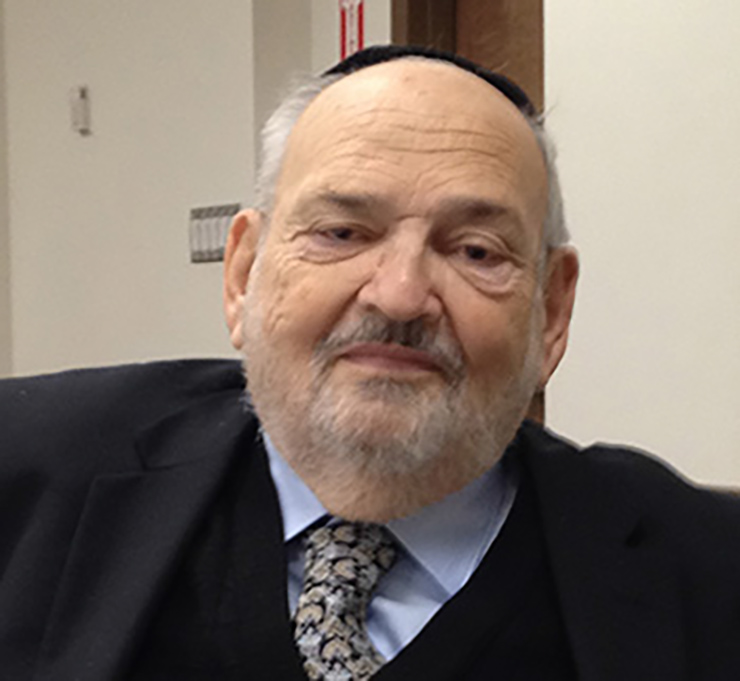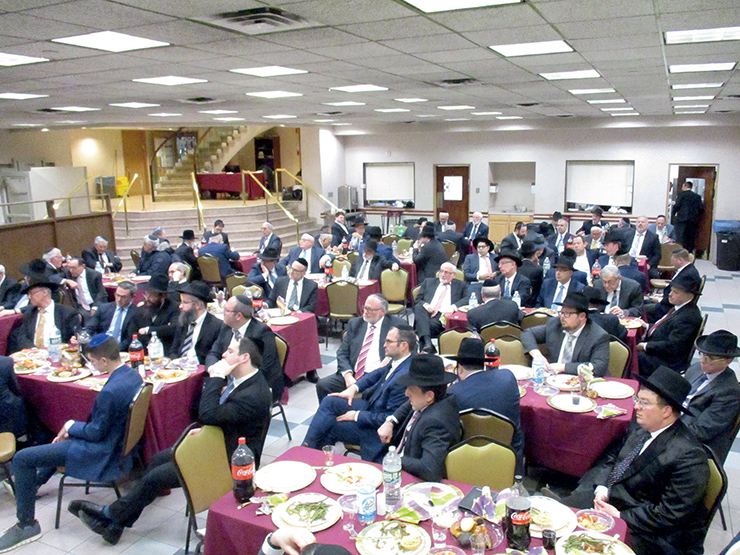

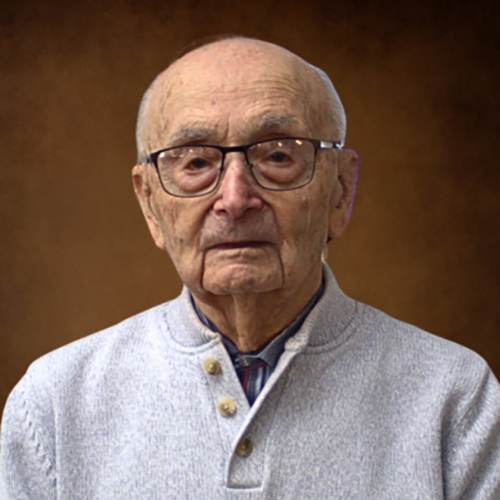
The Young Israel of Jamaica Estates, in partnership with the Young Israel of Holliswood, hosted a Yom HaShoah V’Hagvurah observance on Tuesday, April 14. The event featured guest speaker John Woolf, born in 1928, who recounted his family’s transition from a village mill in Bustino to their 1944 deportation to Auschwitz.
Before the deportations began in 1944, the family lived in a world of prestige, providing the very electricity that powered their village. That world vanished when local police banged on the door, demanding their life’s savings. In a final, private act of defiance, young John grabbed his father Herman’s gold Omega watch and his mother Kató’s ring, thrusting them into a hidden crevice behind a tile oven. It was a secret cache buried in the walls of a home they were forced to abandon for the rain-soaked Mátészalka ghetto, where they spent three agonizing days sleeping among the headstones of a Jewish cemetery.
The true descent began when the boxcar doors screeched open at Birkenau. Eighty people had been crammed into a space barely 30 feet long; those who fell asleep did so standing up, held upright by the sheer density of the crowd. Greeted by the sickeningly sweet stench of the crematoria, Herman pulled out a vial of poison, offering his wife and son a mercy killing to escape the nightmare ahead. John looked at the chimneys and then at his father. “We survived the ghetto, we survived the train,” he insisted. “Maybe we will survive the rest of it.” It was a gamble on an uncertain future, but it was enough to tip the scales. They chose life, tucking the poison back into a pocket – a silent pact to endure whatever lay beyond the gate.
Sent to the “right” by Dr. Josef Mengele, John and Herman were initially assigned to the grueling labor of a stone quarry. They negotiated their survival in the perilous shadows of the camp laundry. By working the night shift, they entered a high-stakes barter system, trading clean linens for life-saving potato peelings. Crucially, the night shift offered a grim shield. It kept them out of the barracks during the 10:00 p.m. SS selections – deadly inspections where guards forced emaciated men to jump and touch a suspended string. Those who failed this cruel test of fitness were marked for the gas chambers the following morning.
As the Eastern Front collapsed in January 1945, the SS forced the prisoners onto a winter death march. Herman, his body finally breaking, went to an Oranienburg infirmary, refusing to let his son watch him die. John pressed on alone, eventually collapsing from typhus in the woods near Flossenbürg. As the guards fled and stripped off their uniforms to hide among the civilians, the frozen ground began to vibrate. An American tank rolled into view, its white star a beacon against the gray trees. A soldier opened the hatch and asked in broken Yiddish, “Are you Jews?”
With a whispered “yes,” their liberation had finally arrived.
The aftermath was a sequence of near-impossible reunions. John recovered in an American military hospital and spent months scouring casualty lists across a broken Europe. Through a series of improbable encounters – including a frantic sighting of an uncle from a moving train window – John tracked his mother to Bucharest. One week later, Herman arrived. He had survived his own march to Sachsenhausen and a harrowing recovery in a Czechoslovakian sanatorium.
The family eventually immigrated to New York, anglicizing their original surname, Wolf, to Woolf as they stepped into a new life. Herman’s 1945 hospital memoir, a 72-page testament to their endurance, was later translated by John and now resides in the United States Holocaust Memorial Museum.
Standing before the Jamaica Estates congregation, John stood as a living bridge between the Wolf family’s past and a future without prejudice. With his original striped camp uniform displayed as a physical testament to the unthinkable, he continues to bear witness and to light a path for generations yet to come.
By Shabsie Saphirstein