
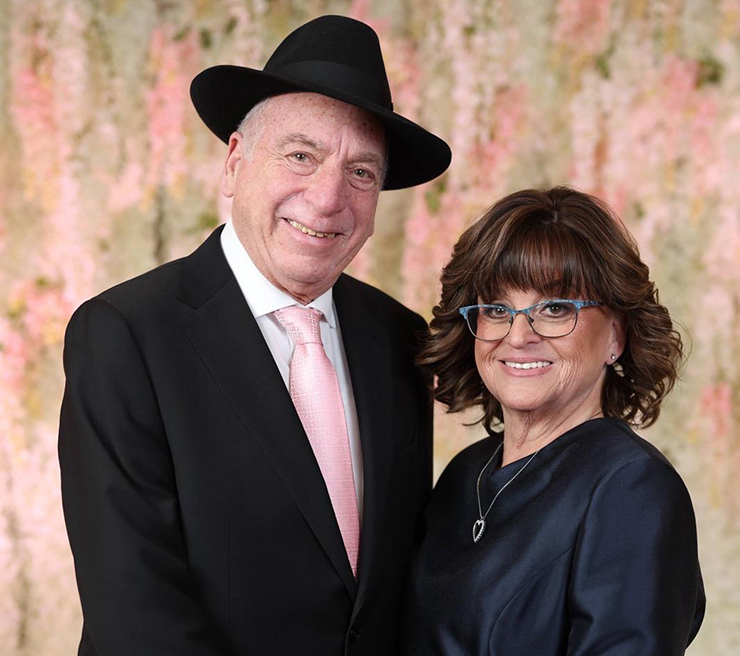
The Kew Gardens Hills kehillah is reeling from the petirah of Mrs. Malkie Itzkowitz, a”h—a woman of rare tznius, unwavering bitachon, and legendary mesirus nefesh. Mrs. Itzkowitz returned her neshamah to her Creator on April 30 at the age of 74, leaving behind a family and community forever shaped by her warmth, generosity, and fierce devotion to those she loved.
Born on June 1, 1951, Malkie was a bridge to a previous generation, embodying the values and midos of her parents, Rabbi Shimon and Mrs. Chaya Friedman, z”l. She carried the warmth, refinement, and close family bonds of an earlier era into the heart of Kew Gardens Hills. Throughout nearly forty years in the neighborhood, she became far more than a familiar face. Known to many simply as “the most motherly mother,” her instinct was always to nurture, protect, advocate, and give.
Her levayah was held at Schwartz Brothers Chapel in Forest Hills on erev Shabbos. It was marked by emotional tributes reflecting the extraordinary impact she had on so many lives. Delivering heartfelt hespedim was Harav Noach Isaac Oelbaum, Mara D’Asra of Khal Nachlas Yitzchak, whose family had shared a close relationship with the Itzkowitz family for decades.
Harav Oelbaum described Mrs. Itzkowitz as a “powerhouse of midos” and a woman who truly lived by the teaching of Rav Chaim Volozhiner: that a person was created not merely for himself, but to benefit others.
Living directly across from the shul, Mrs. Itzkowitz became a quiet guardian for neighbors and friends alike. She held keys, accepted deliveries, and greeted those seeking the Rav when his family was away. She would even enter neighbors’ homes before they returned so the air conditioning would already be cooling the house. Friday nights often flowed naturally between neighboring homes, reflecting her constant desire to create connection and comfort.
Her chesed extended naturally from her home into every corner of the lives she touched. For years, she sat with Mrs. Gitty Lieberman so that Mrs. Lieberman’s husband could attend shul. She brought gifts to workers at Wasserman’s simply to brighten their day. As Harav Oelbaum noted, “She was a giver, always ready to help and do for others.”
In an age dominated by constant digital noise, Mrs. Itzkowitz famously chose not to own a cell phone, believing it helped preserve the sanctity of speech and avoid lashon hara. Despite avoiding technology, she remained deeply connected to the people around her. Through her beloved steno pad and lengthy conversations on the family landline, she kept track of the needs of everyone in her circle, always knowing who required a phone call, a favor, or simply a listening ear.
Her children recalled how deeply she cherished family bonds. She often described her siblings as her best friends and repeatedly expressed the hope that her own children would remain just as close throughout their lives. Nothing brought her greater joy than seeing her family together.
Mrs. Itzkowitz exemplified kibbud av va’eim in every sense. Even as a grandmother herself, she remained devoted to caring for her own parents with extraordinary dedication. Family members recalled how she regularly brought Shabbos food to her mother and tended to her needs until the very end. Harav Oelbaum connected this devotion to the unique z’chus of honoring parents, describing how Mrs. Itzkowitz’s life became a living example of this sacred mitzvah.
That devotion came full circle during her final months. Debbie and Amir Abramchik’s home became a sanctuary of round-the-clock care, quiet singing, late-night schmoozes, and constant companionship, surrounding Mrs. Itzkowitz with warmth and dignity.
Diagnosed only this past January, Mrs. Itzkowitz fought her illness with remarkable strength and emunah, continually surprising doctors by enduring far longer than expected. Her children transformed the Abramchik home into what family members lovingly described as a combination of a hospital, rehab center, hotel, café, and sanctuary of care. The entire family rotated in shifts, creating an atmosphere of unity and devotion around her bedside.
To her grandchildren, Mrs. Itzkowitz was both a loving Bubby and the family matriarch. She famously organized her 21 grandchildren into what she affectionately called “batches,” as though sorting precious diamonds. Though family members jokingly competed over who was her favorite, each grandchild walked away feeling uniquely treasured.
One grandson recalled how she proudly introduced him as “the one who made me a grandmother.” Another remembered how she treated her grandchildren like royalty—preparing elaborate breakfasts, bringing endless snacks and popcorn, and insisting they remain comfortably seated while she personally took care of everything.
Her playful bond with her grandchildren often revealed another side of her warmth. One grandson fondly remembered telling friends that his Bubby took him to horror movies, earning her the reputation among his peers as the “coolest grandma.”
Even in her final weeks, Mrs. Itzkowitz continued bringing her family closer together. Grandchildren described late-night conversations and the deep sense of unity that emerged through caring for her. Each child held a unique place in her heart: Simcha was proudly introduced as the bechor, while Tzvi Yonie remained forever “my baby,” a title she lovingly insisted she had every right to continue using.
The outpouring of Tehilim and prayer during her illness deeply moved her. Though unfamiliar with WhatsApp, she was astonished to learn that hundreds of people had joined groups dedicated solely to davening for her recovery. Family members recalled how she had a personal story or memory connected to nearly every individual whose name appeared on those lists.
As she was brought to her menuchah at Wellwood Cemetery, speakers reflected on the symbolism of her life. Her levayah took place on erev Shabbos during the week of Parshas Emor. Just as she spent decades preparing for others and creating shalom bayis, she now entered the eternal Yom Shekulo Shabbos.
Mrs. Malkie Itzkowitz, a”h, is survived by her devoted husband, Avrumie Itzkowitz; her children, Simcha Itzkowitz, Debbie Abramchik, Leah Livshitz, Tziporah Rosenthal, and Tzvi Yonie Itzkowitz; her siblings, Rifky Friedman and Yossi Friedman; and generations of grandchildren and great-grandchildren who continue carrying forward her legacy of Torah, chesed, and unconditional love.
Tehei nishmasah tzerurah b’tzror hachaim. May the memory of “the most motherly mother” continue to inspire her family, friends, and community for generations to come.