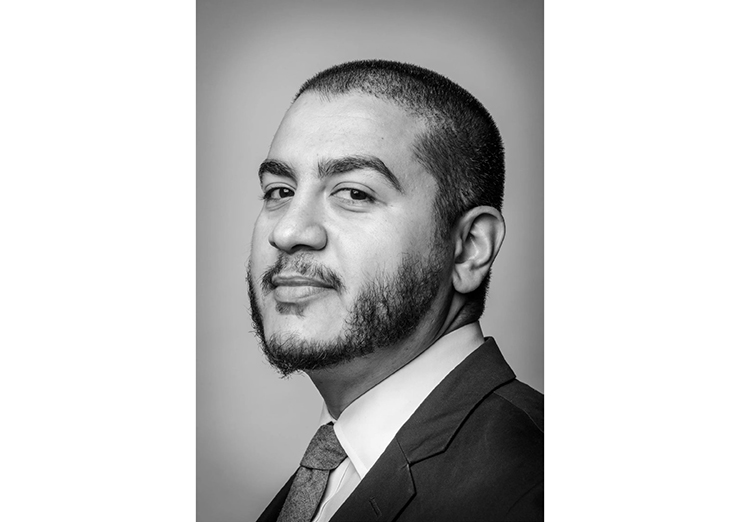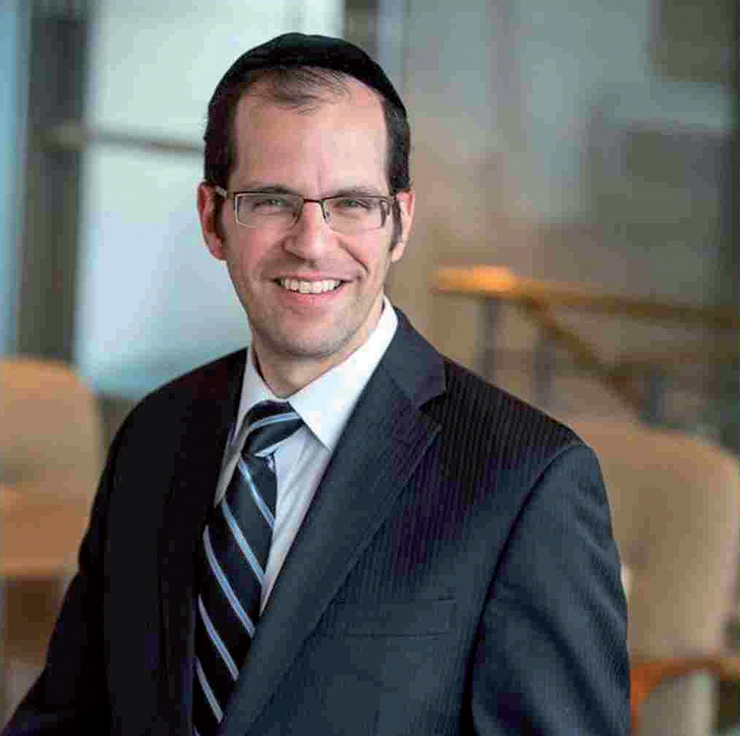


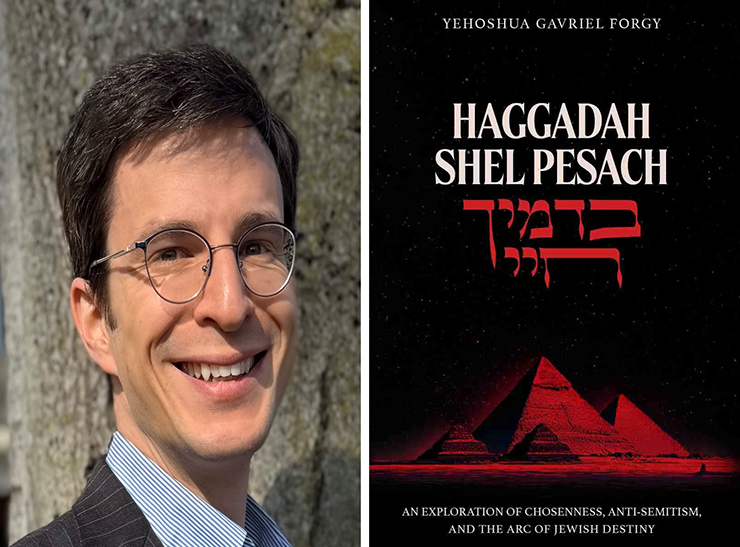
International hostility towards Israel as it defended itself against Hamas awakened many Jews to the antisemitism that emerged into the open. Joshua Forgy felt the message of ongoing hostility towards Jews in the message of the Haggadah, along with themes of Jewish peoplehood and resiliency. Earlier this year, he wrote Haggadah shel Pesach – B’Damayich Chayi, published by Mosaica Press.
“Students for Justice in Palestine made a day of resistance and rage. The people had it completely backwards. It was victim-blaming that I’ve never seen before,” Forgy said. “It shattered my view of civilized society and our place as Yidden in a civilized society.”
A practicing lawyer with an accounting degree, Forgy always had a detailed approach towards research and writing. With the Haggadah, he took his professional experience and leaned back into his earlier years as a full-time learner at Yeshiva Bais Yisroel in Yerushalayim, where he learned for six years and got married, followed by another two years in a smaller halachah kollel before settling in Kew Gardens Hills. He graduated law school in 2022. A couple of years ago, he moved to West Hempstead, following many of his friends and neighbors.
“My two best friends in law school were not Jewish. I was comfortable in galus.” In the aftermath of the Oct. 7 attacks, he noted that most students in his law school were either silent or hostile towards Israel.
“We are inescapably different. I was ruminating on these thoughts. And then there was the genocide charge, and I’ve just lost it,” he said. “It clicked in my brain that the Haggadah might be uniquely predisposed to these things. As it says, ‘In every generation.’”
Forgy felt that this phrase was important enough to include in the Haggadah, which otherwise focuses on events leading to slavery, the Ten Plagues, and the Exodus. “It’s not only the sipur yetzias Mitzrayim, it’s our broader relationship with the nations in general.”
Forgy then sought to connect that message with Jewish history and recent events. “Where do we find this theme of Jewish identity vis-à-vis the nations? So I opened it up to see if I could interpret, elucidate, elaborate, and it worked far better than I expected.”
As he delved into the relationship between Yaakov Avinu and Lavan, the evils done by the Egyptians against Bnei Yisrael, he noted the soft approach of antisemites that eventually led to slavery and mass murder. In his notes on the Egyptians “dealing wisely” with Jews by encouraging them to stay and build, Forgy offers a comparison to today’s gaslighting by antisemites who redefine antisemitism to fit their narrative. “It’s not enough that people hate us,” Forgy writes. “They hate us and insult our intelligence by lying about it.”
Knowing Forgy as a consumer of knowledge, I was not surprised to see this sefer offering examples of antisemites and philosemites among the gentiles, while the text of the Haggadah is bolstered by numerous sources in the Tanach, midrash, and centuries of rabbinic commentary.
“Each bit is a self-contained little essay. The whole is greater than the sum of its parts,” he said. “I started with a darker vibe on antisemitism, but after a few rounds of editing, it’s not all about antisemitism; it’s about Jewish peoplehood, what our mission is in this world: passion, vitality, life, energy.”
Although I’ve known the author as Josh, the byline here is Yehoshua Gavriel Forgy, fitting with the s’michah that he earned and the depth of this book.
“I take pride in my writing. I’ve submitted numerous documents in court as a litigator, cases worth millions of dollars. The stakes were high. The number of times that I’ve edited this book is tens of times more, the pursuit of perfection.” He credits his rebbeim at Beis Yisroel for inspiring him, and in turn, their teacher, Rav Moshe Shapira zt”l.
He also offers a page of tribute for his wife, Nili, their five daughters, and everything that they do as he learns and works.
“I want it to be clear, easier for the reader to understand, and not be misinterpreted. For 18 months, I was going over the same pieces to be streamlined and concise, fine and engaging.”
By Sergey Kadinsky