
David,* a secular Jew, went with friends to hear a shiur on the Torah of Rebbe Nachman of Breslov. The rav explained that every Jew can serve Hashem by focusing on what he can do today without worrying about tomorrow or the next day – one day at a time. David was intrigued. After the shiur, he went over to the rav and asked if that idea applied to someone who wasn’t religious. The rav assured him it applied to every Jew.
David shook his head, saying he wasn’t ready to commit to keeping Shabbos every week. “Can I keep just one Shabbos?” he asked. When the rav said yes, David burst into tears. He had always wanted to experience Shabbos but thought it was an all-or-nothing commitment, out of his reach. He was thrilled to learn that he could observe just a single Shabbos. David kept Shabbos that week – and has been keeping it ever since.
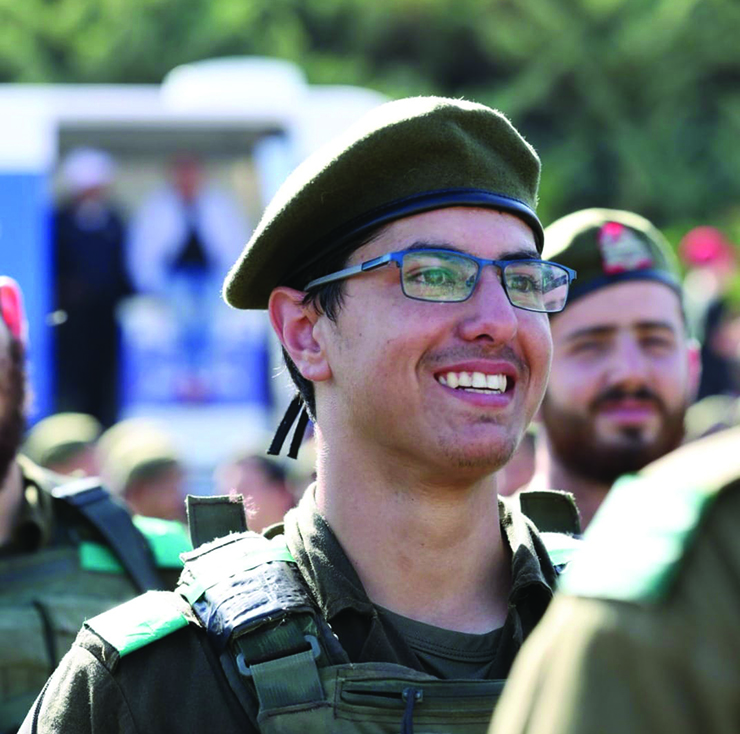
This is just one of the many stories coming out of HaPinah (“The Corner”), an initiative established in memory of Ofir Testa Hy”d by his parents, in partnership with Hashiveinu, a kiruv organization. Ofir fell on October 7 at the age of 21. He served as a loader in a Merkava tank. He and his comrades fought bravely, killing many terrorists until a grenade exploded inside their tank, throwing them all into the air. Though seriously injured in the blast, Ofir continued to fight.
When they reached Re’im, the site of the Nova Festival, Ofir noticed a sadran (an usher) fighting off terrorists with his bare hands. Realizing his own injuries prevented him from firing effectively, Ofir climbed out of the tank and handed his weapon to the sadran, believing the man could put it to better use. As Ofir turned to re-enter his tank, he was shot and killed.
Ofir once said: “I am not just Ofir. I am am Yisrael. If I have to die al kiddush Hashem, I’ll die al kiddush Hashem.” He never hesitated to do what had to be done, regardless of the risk.
In the years before he fell, Ofir was searching – asking big questions about life and his identity. Since October 7, a similar search for meaning and Jewish identity has taken hold on a national scale, as many young Israelis look to reconnect with their tradition and with Hashem. With this in mind, Ofir’s parents opened HaPinah as a place where anyone can come, learn, and connect.
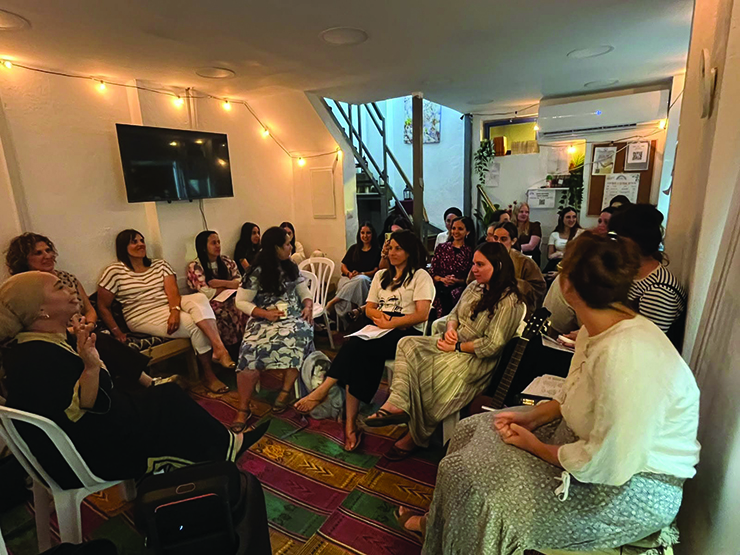
Located inside Shuk Machaneh Yehudah in Yerushalayim, HaPinah is a unique space where people from all walks of life gather for shiurim, chavrusos (partner learning), farbrengens (inspirational gatherings), niggunim (soulful melodies), and one-on-one conversations in a warm, accepting environment. Some appreciate the shiurim more, some the niggunim. But there’s something for everyone.
I spoke with Shai Shlomo Ben-Chaim, a teacher and manager at the center. He explained that many visitors arrive looking to connect to the Torah. Their backgrounds vary widely: Some have little Jewish knowledge, others were frum in the past, and some are skeptical but curious. Yet Shai and the staff at HaPinah have watched remarkable changes take place. Visitors become chozrim bi’t’shuvah, each in their own way and at their own pace. As one visitor noted, HaPinah, located in the Shuk, helps people look beyond the Shuk. It helps people look toward something deeper and more meaningful.
One young man was planning a trip to Thailand and asked for guidance regarding kashrus. The rabbis at HaPinah have a cardinal rule: They never tell anyone what to do. Instead, they helped him plan his itinerary and connected him with Chabad in Thailand. Everything was arranged, but on the morning of his flight, the young man canceled his trip. He decided he preferred to stay in Jerusalem at HaPinah to continue growing.
On a typical evening, around 20 visitors attend shiurim at HaPinah, while Thursday nights can draw up to a hundred people. The rabbis regularly open their homes for Shabbos meals and organize off-site trips. A popular shiur on relationships has even led several older singles toward marriage.

As the rabbis explain, the traditional beis midrash doesn’t reach everyone. HaPinah goes to where the people are – in the heart of the Shuk – and brings the Torah directly to them.
One regular shared how he and his friends used to spend every Thursday night in the Shuk going to bars. He had deep questions about emunah but nowhere to express them – until he found HaPinah, where he could speak openly and without judgment.
Rav Giami, head of Hashiveinu, sums it up: “Ofir embodied a movement of spiritual growth and t’shuvah; therefore, HaPinah – which focuses on t’shuvah – is a direct continuation of his life.” Ofir’s mother agrees: “If there’s anything Ofir would have wanted, it would be to spread the light of Torah with love.” That is exactly what HaPinah does so well.
*Pseudonym
Anyone who would like to support this initiative can make a donation through the following link: www.pefisrael.org/charity/metukim-midvash-jerusalem.
Suzie Steinberg, (nee Schapiro), CSW, is a native of Kew Gardens Hills and resident of Ramat Beit Shemesh who publishes articles regularly in various newspapers and magazines about life in general, and about life in Israel in particular. Her recently published children’s book titled Hashem is Always With Me can be purchased in local Judaica stores as well as online. Suzie can be reached at This email address is being protected from spambots. You need JavaScript enabled to view it. and would love to hear from you.