
Three reservists, at their own expense, bring battlefield evidence to a global audience that only heard one side
An anti-tank explosive beneath a child’s bed. Mortar shells beside a baby’s crib. A tunnel entrance concealed among stuffed animals. These are among the discoveries Israeli commanders describe in Naza: The Real Story, a documentary challenging allegations about Israel’s conduct in Gaza.
The 49-minute film features IDF reserve commanders and intelligence officers recounting encounters with Hamas terrorists who, they say, disguised themselves as civilians, stored weapons in homes, and exploited restrictions intended to protect noncombatants. Their interviews are accompanied by battlefield recordings, photographs, and military documents.
The film answers NAZA, directed by Israelis Yuval Abraham and Rachel Szor and produced by The Guardian and JW Films. Based on testimony from 24 anonymous Israeli military personnel, the original alleges that strikes were approved despite anticipated civilian casualties. Both titles draw on nezek agavi, the Hebrew military term for collateral damage. The IDF disputes the original film’s depiction of its targeting procedures.
After winning the Special Jury Prize at September’s Venice Film Festival, NAZA secured distribution in more than 50 countries. Its American rollout began September 30; distributor Neon announced its involvement in October.
Three Israelis decided to offer a competing account at their own expense. Roi Danino, an entrepreneur and IDF reserve lieutenant colonel, served more than 600 days with the Nahal Brigade during the war. Ariel Averbuch, an attorney and reserve major, chairs Sword of Gideon, an organization combating antisemitism internationally. Hagay Gutman, a director and television editor, brought professional filmmaking experience. They say neither the government nor the IDF knew of their project until its completion and that soldiers independently supplied some previously unpublished footage.
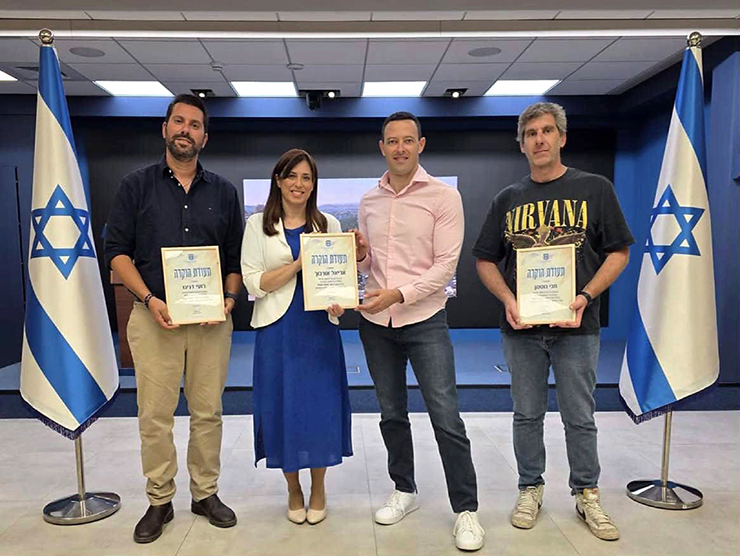
On October 8, their work received official recognition. Tzipi Hotovely, director of Israel’s National Public Diplomacy Directorate, presented the three with certificates honoring their contribution to Israeli public diplomacy. “The film presents Israel’s truth and the morality of IDF soldiers,” she said in a statement from the Prime Minister’s Office. As of this writing, the filmmakers’ website reports 45,499,757 views, a contested tally.
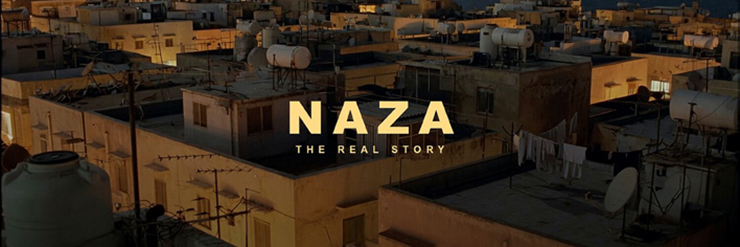
Filmed at night on Tel Aviv rooftops, as was the original NAZA, the documentary identifies officers by their military responsibilities while concealing their faces.
One commander recalls entering an ordinary home with no intelligence indicating weapons inside. A Hamas flag prompted a search. Beneath a child’s bed lay an anti-tank explosive; toys were nearby. In the parents’ bedroom, soldiers reportedly found about 30 mortar shells beside an infant’s crib.
Another describes a tunnel shaft beneath a child’s sleeping area, surrounded by stuffed animals and connected to an underground fighting position. The soldiers returned to headquarters shaken. They knew Hamas terrorists operated from homes; they had not expected a tunnel beneath a child’s bed.
Weapons and tunnels were also reportedly found in schools, mosques, and clinics. Near a kindergarten adjoining a Hamas training compound, an officer recounts two terrorists emerging from a tunnel and firing a rocket-propelled grenade at Israeli troops. The filmmakers’ published account says five soldiers were wounded; the incident has not been independently matched to a military casualty report.
The dangers were not confined to hidden explosives. Officers describe Hamas terrorists discarding uniforms, moving between buildings in civilian clothing, and retrieving concealed weapons before attacking. After a firefight with six terrorists, soldiers reportedly found one wearing a garment resembling an Israeli hostage’s tzitzis, apparently as a disguise.
At a screening point, a man approached holding the hand of a barefoot child, perhaps three or four years old. Soldiers first took the youngster to an area with women and other civilians. Only then did they question the adult, whom an officer says was identified as a Hamas Nukhba terrorist involved in the October 7 massacre.
The child was brought to safety. For the soldiers, the man’s appearance posed a frightening question: Was he an innocent father or an operative using a child to avoid scrutiny? Similar uncertainty arose when troops screened people sheltering in schools and, according to the officers, identified suspected terrorists among displaced families.
The documentary also scrutinizes decisions not to fire. Commanders describe intelligence reviews, legal advisers, and special authorization for strikes near hospitals, schools, mosques, and other sensitive sites. One recalls protective distances of roughly 200 to 300 meters around certain buildings. Even abandoned structures could remain restricted, while requests for clearance sometimes took hours or days.
An officer remembers an aircraft tracking men leaving a building from which Israeli soldiers had been attacked. They emerged without visible weapons. Although suspected of involvement, they were not struck. The filmmakers show what they describe as recordings of other aborted attacks. These accounts detail safeguards the officers say they followed; they do not establish that every operation complied with those procedures.
Several commanders accuse Hamas terrorists of obstructing civilian evacuations. One recalls residents moving away from advancing troops, only to be stopped at a roadblock and turned back. Others describe terrorists hiding among displaced families or using their movements to observe Israeli positions.
Officers also allege that armed Hamas terrorists commandeered aid trucks and diverted supplies. The film shows packages with United Nations agency markings inside a building identified by soldiers as a Hamas position, although that alone cannot establish the scale of diversion. One officer recalls arranging medicine for individual Israeli hostages but says he knew of no released captive who confirmed receiving it. Commanders also describe withholding strikes where hostages might have been held, even when suspected terrorists were nearby.
The two films present conflicting military testimony. NAZA alleges grave failings in Israel’s targeting system; Naza: The Real Story emphasizes Hamas’s tactics and the restraints commanders say governed their decisions. Neither alone settles every disputed account of the war or the suffering of Gaza’s civilians.
Available free online, the Israeli filmmakers’ response is dubbed in eight languages and subtitled in 39. Its creators want viewers to consider what soldiers found before the images of ruined buildings reached the world: a weapon beneath a bed, a tunnel inside a child’s room, and a decision to withhold fire when the person approaching might have been innocent.
Watch The Documentary At: www.nazadocumentary.com