
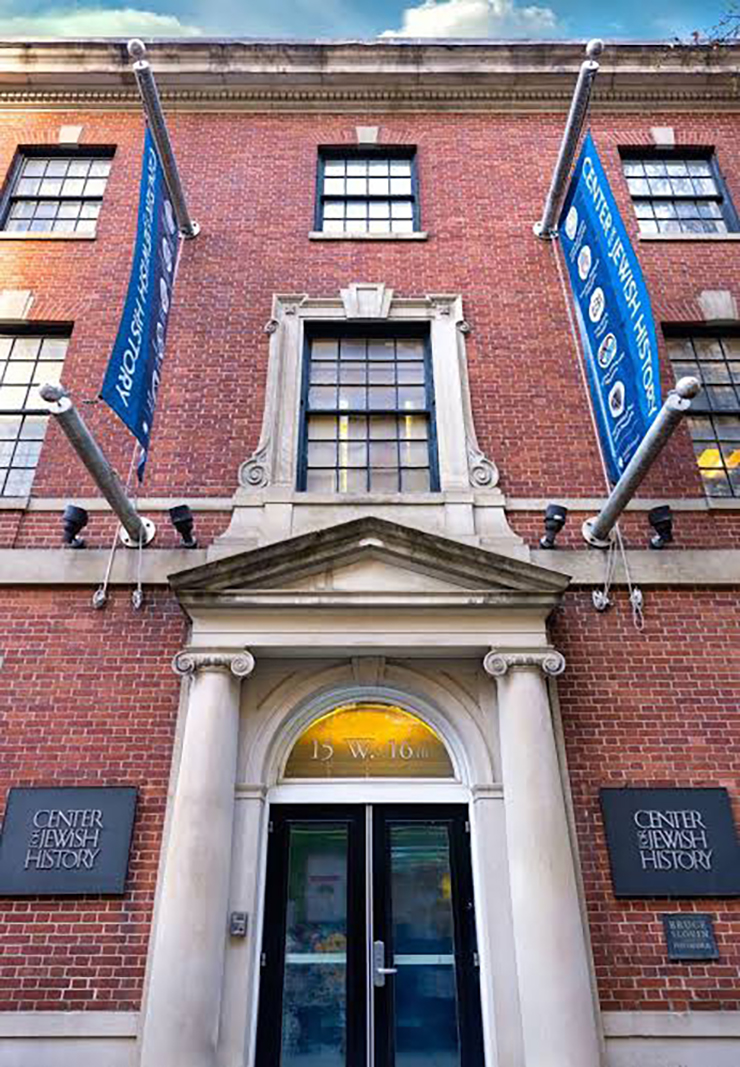
Security staff at Manhattan’s Center for Jewish History discovered a notecard near the institution’s front entrance bearing the message “Nuke Jews, Save Lives,” according to an October 16 essay by its president, Gavriel D. Rosenfeld, published in The Forward.
Rosenfeld, a historian of Nazi Germany and historical memory, described the discovery as a reminder of the anti-Semitism confronting an institution devoted to preserving Jewish history. The Center, located near Union Square, houses more than 65 million documents and artifacts collected by five partner organizations, including the YIVO Institute for Jewish Research.
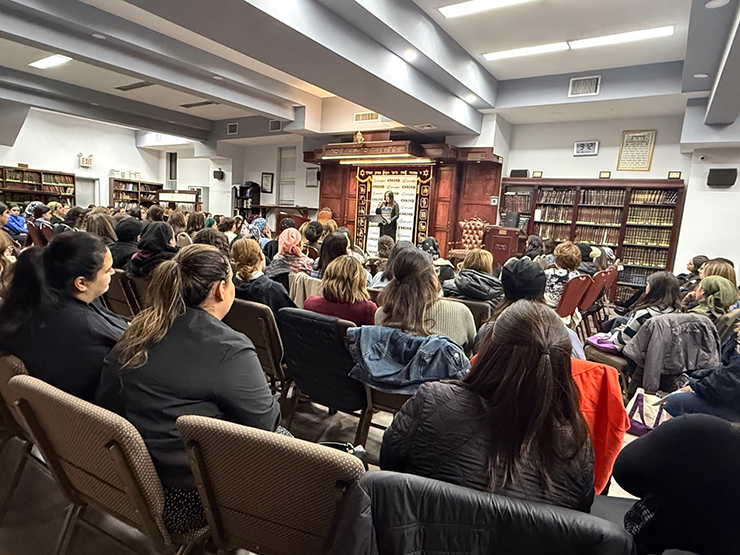
The note was found a week after a packed auditorium attended a discussion between investor and author Michael Moritz and Meredith Kopit Levien, CEO of The New York Times Company. They discussed Ausländer, Moritz’s account of his German Jewish family’s experiences during the Nazi era.
The discussion addressed the persecution that forced members of Moritz’s family from their homeland and the relevance of those experiences today. Rosenfeld described the turnout as encouraging, although the subject matter underscored how much of the history under discussion remained pertinent.
In his essay, Rosenfeld examined the wording of the note, particularly its presentation of violence against Jews as a way to save lives. He placed that message within a history of anti-Semitic accusations that portray hostility toward Jews as justified or virtuous.
The incident also prompted him to consider the limits of historical education. Preserving evidence and explaining the past do not necessarily persuade people determined to reject the facts, he wrote, but that difficulty does not diminish the need for the work.
Rosenfeld argued that confronting anti-Semitism requires allies, resources, and determination, along with access to a reliable historical record. Although historical knowledge cannot overcome every prejudice, archives provide evidence with which to challenge falsehoods.
The Center’s collections document persecution and the destruction of Jewish communities, as well as Jewish learning, creativity, faith, and everyday life. They preserve the experiences of families who rebuilt after displacement, established institutions, and passed their traditions to subsequent generations.
For Rosenfeld, continuing to preserve and make those records available remains an essential part of the response to the hatred expressed in the note.
By Shabsie Saphirstein