
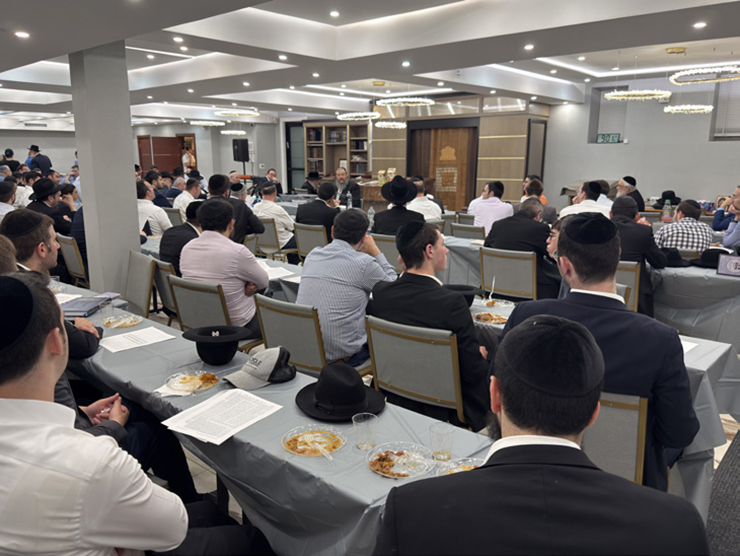
“It’s not a schmooze; it’s a shiur.”
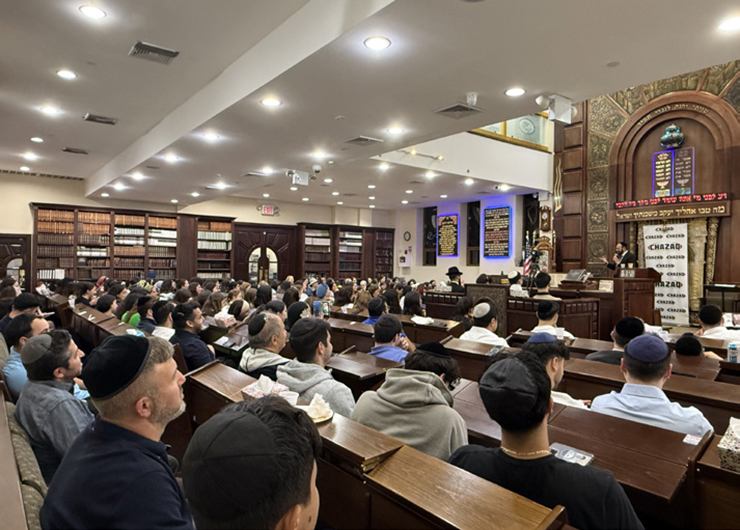
With that direct correction, HaRav HaMashgiach Gershon Ribner, shlita, set the tone for the KGH Rosh Chodesh Elul Yarchei Kallah. Hosted at Beis Yosef D’Ulem by Rav Yaakov Yitzchak Friedman, the Ulemer Rav and Mara D’Asra, the evening brought together local kehillos for an in-depth examination of Torah law, Jewish government, and personal responsibility.
“I’ve never seen anything like this,” the Mashgiach remarked before moving straight into the sugyah.
The central question was whether Torah law alone can run a society.
The discussion began with a dayan who receives reshus from a superior authority, protecting him under certain circumstances from personal liability for a mistaken ruling. The Gemara distinguishes between the Reish Galusa in Bavel and the Nasi in Eretz Yisrael, with the Reish Galusa possessing broader coercive authority.
The Mashgiach connected that distinction to the pasuk, “Lo yasur shevet miYehudah u’mechokeik mibein raglav.” Chazal associate the shevet, the rod of authority, with the Reish Galusa, while the mechokeik is identified with the descendants of Hillel who served as Nesi’im in Eretz Yisrael.
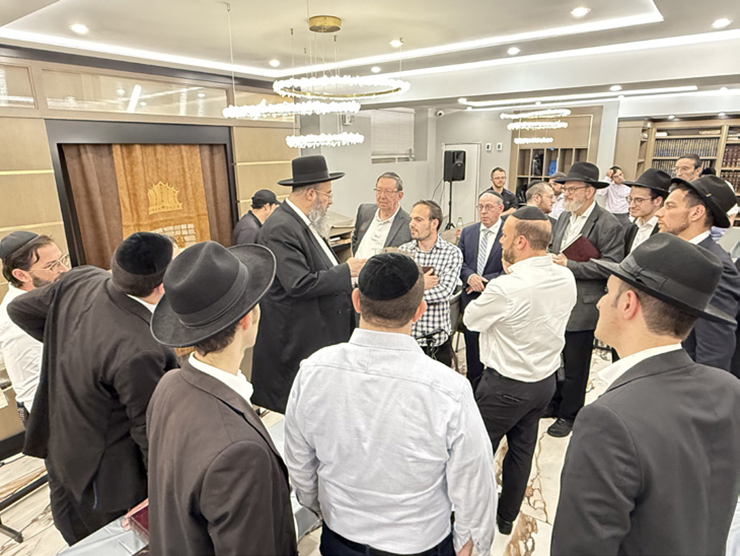
Turning to the Ran’s discussion of Jewish government, Rav Ribner explained that Torah criminal law requires qualified eidim, hasra’ah, and other strict conditions before Beis Din can impose punishment. Yet society must still have a way to deal with dangerous individuals who cannot be punished under those evidentiary rules.
The Torah therefore provides Mishpat HaMelech, giving the melech authority to preserve public order where Beis Din, bound by Mishpat HaTorah, cannot act. The Nasi represented Torah adjudication, while the Reish Galusa exercised broader authority more closely resembling malchus.
Dovid HaMelech, the Mashgiach explained, embodied both roles. He pointed to Nasan HaNavi’s mashal of the wealthy man who seized the poor man’s lone sheep. Dovid declared that the offender deserved death and also had to repay fourfold. Rav Ribner suggested that the death judgment came through Mishpat HaMelech, while the monetary judgment came through Mishpat HaTorah.
The discussion then turned to the liability of a dayan. If a judge needs protection from having to reimburse a litigant after an erroneous ruling, Rav Ribner asked, why should the litigant bear the loss?
One possibility was that making a dayan personally liable could itself create a form of shochad, since fear of financial loss might influence a ruling. But even that answer, the Mashgiach noted, did not fully resolve the question.
After Maariv, the Rosh Kollel remained for a Q&A based on questions submitted in advance.
The first dealt with confessions. Secular criminal law often treats a voluntary confession as powerful evidence, yet Torah law does not permit Beis Din to impose corporal or capital punishment based on a defendant’s own confession. In dinei mamonos, however, hoda’as baal din can carry great weight.
Rav Ribner suggested that the distinction may relate to ownership. A person has authority over his mamon, but does not possess his guf in the same way. The body is entrusted by HaKadosh Baruch Hu for avodas Hashem. He cautioned, however, that the sevarah still required further thought.
From there, the discussion moved naturally into Elul. The Rambam describes the din of Rosh Hashanah in terms of zechuyos and avonos: one whose merits predominate is a tzaddik, one whose avonos predominate is a rasha, and one who is balanced is a beinoni.
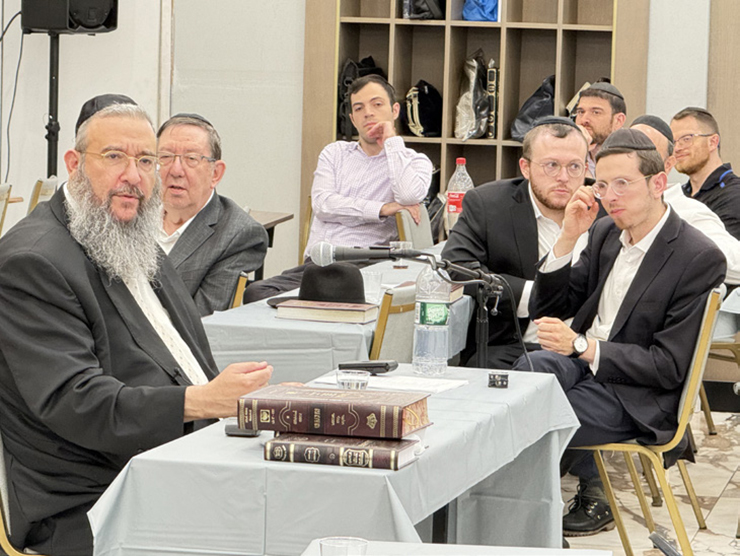
Rav Ribner asked how a person who sincerely performs teshuvah each Yom Kippur could return to beinoni status the following Rosh Hashanah if his previous aveiros had already been erased.
When one response explained how without addressing the underlying question, the Rosh Kollel cut in: “Don’t tell me facts. Justify it.”
The Q&A also touched on dinei yerushah and the family tensions that Torah inheritance laws can sometimes produce.
It was a fitting entrance into Elul. The kehillos of KGH came to learn and left with questions worth carrying home.
About HaRav Gershon Ribner
HaRav Gershon Ribner, shlita, is a son-in-law of Rav Shneur Kotler, zt”l, Rosh HaYeshivah of Beth Medrash Govoha in Lakewood. Rav Ribner learned extensively under Rav Yitzchok Hutner, zt”l, and in Yeshivas Brisk.
Rav Ribner serves as Rosh Kollel of Kollel Nesivos HaTorah and has long been associated with Beth Medrash Govoha. A prolific ba’al mechaber, Rav Ribner is the author of the Apischa D’Bava and Apischa D’Shmaytza series, Shiurei Govoha, and Nesiv Govoha on Shas. His widely circulated shiurim and Q&A recordings have brought his rigorous and direct approach to listeners far beyond the walls of the beis medrash.