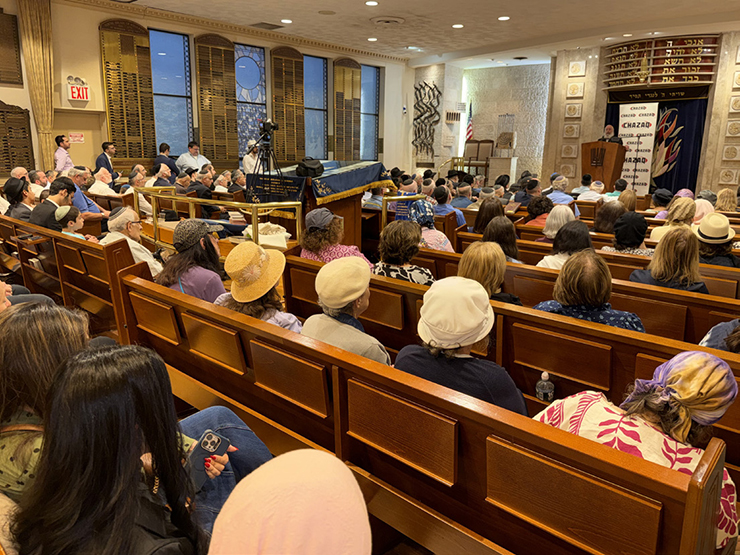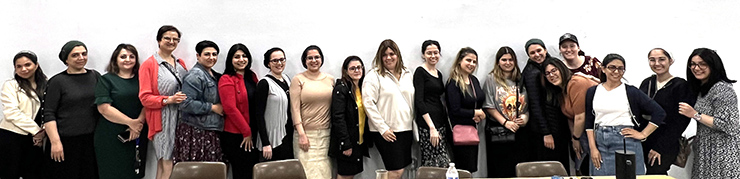

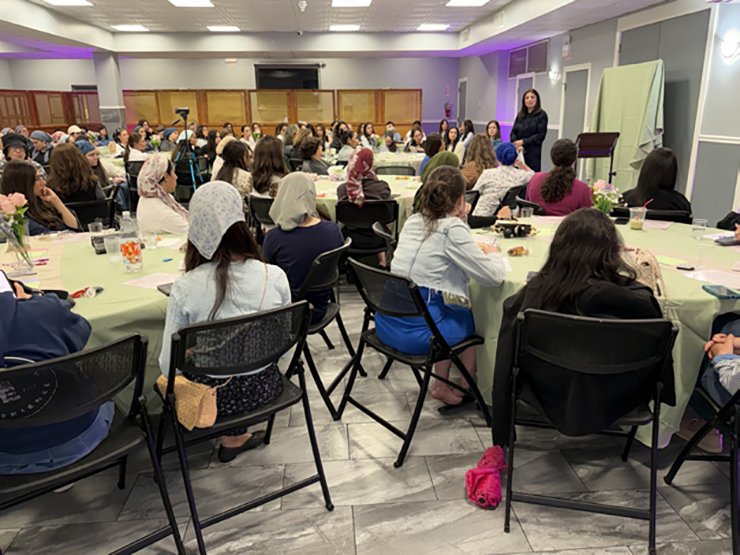
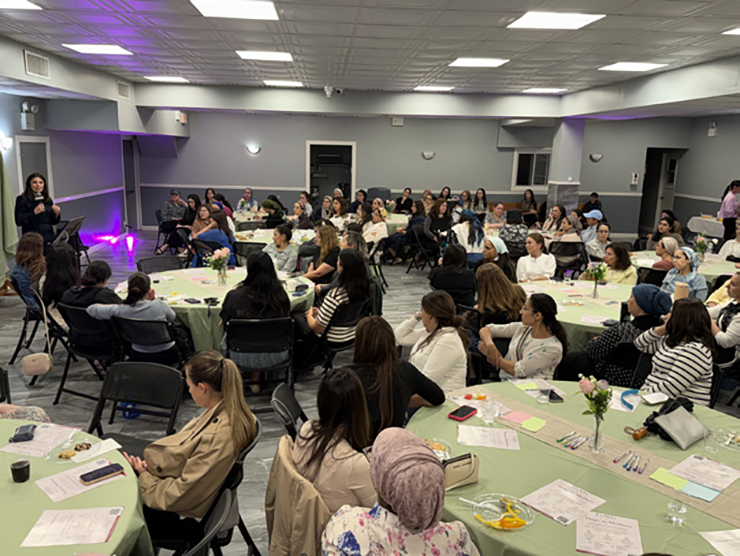
Women from across the community filled the Young Israel of Queens Valley on Tuesday evening, July 21, for the launch of Geula Wellness, a new Queens-based organization supporting mothers experiencing postpartum depression, anxiety, and other emotional challenges surrounding childbirth.
Presented in partnership with Chazaq, the women-only program, titled “From Separation to Connection: The Hidden Gift of the Month of Av,” featured therapist and educator Dr. Tamar Perlman. The evening also introduced Geula Wellness founders Dina Akbashev and Milana Yagudayev and clinical director Miriam Handlesman.
Geula Wellness was created to ensure that mothers do not have to navigate postpartum struggles alone. The organization offers confidential emotional support, case management, support groups, home visits, care packages, a helpline, and assistance connecting women with appropriate clinical care.
In her work as a therapist, Dr. Perlman has found that healing often begins not with advice but with the experience of being genuinely heard. Careful listening can help people recognize truths about themselves that had been obscured by fear, shame, pain, or mistaken assumptions.
She recalled teaching a kallah who initially did not believe that observing taharas hamishpachah belonged in her life. Through their conversations, the woman felt respected rather than pressured. She eventually chose to embrace the practice, explaining that the way Dr. Perlman listened helped her recognize her own desire to connect with the legacy of Jewish women.
“True listening takes the ability to let go of what you already know,” Dr. Perlman said. “When you assume that you already know what the other person will say, you have not created room for anything new.”
Dr. Perlman also addressed the role of tears. The night of the sin of the meraglim was marked by weeping rooted in falsehood and fear. Its repair, she suggested, includes learning to weep honestly, with pain, prayer, longing, and hope.
Tears do not necessarily represent despair. They can acknowledge suffering while preserving the belief that the present situation will not last forever. Dr. Perlman cited the teaching that Hashem, so to speak, weeps with Bnei Yisrael in the innermost chambers, reminding the audience that even in the loneliest moments, a person is not abandoned.
Jewish crying, she said, contains hope.
“Our crying has longing in it,” Dr. Perlman explained. “It knows that we will not always remain here.”
She concluded by describing genuine listening as a means of reversing the falsehood that led to separation. Listening to others and to oneself can uncover inner truth, while honest tears can clear away what is false and create room for rebuilding.
Dr. Perlman then introduced the founders of Geula Wellness, saying she had been impressed by their sense of responsibility and commitment to helping women in the community.
Milana Yagudayev explained that the organization began after a mother who had recently given birth found herself struggling without knowing where to turn. Attempts to locate meaningful assistance revealed a serious gap in locally available support.
The experience led Yagudayev to think about the mothers of klal Yisrael: women caring for their children, supporting their families, and strengthening their communities.
“But who was there to support them?” she asked.
That question became one of the foundations of Geula Wellness.
Yagudayev said the organization grew from lived experience, the recognition of a significant need in Queens, and tragedies that demonstrated the consequences of leaving postpartum struggles unaddressed.
The name Geula, meaning redemption, represents the belief that healing remains possible even during a person’s darkest period.
“Geula is far more than providing resources, although those resources are essential,” Yagudayev said. “It is about creating a sisterhood, a united community where women know that they are not alone.”
The organization seeks to challenge the expectation that mothers must always appear composed and capable, even when they are struggling beneath the surface. It also aims to reduce the stigma that can prevent women from seeking assistance.
Geula Wellness operates with the guidance and backing of Rabbi Haimov, Rabbi Grossberg, and Rabbi Faskowitz.
Dina Akbashev shared a firsthand account of postpartum struggle and recovery, explaining how the experience revealed the need for accessible, culturally sensitive support here in Queens. Akbashev emphasized that seeking help is a sign of strength and that no mother should have to navigate the postpartum period alone.
The evening concluded with raffles, along with sushi and refreshments.
Geula Wellness provides care packages, case-management sessions, supportive home visits, mothers’ support groups, helpline assistance, and referrals for clinical care. Its educational materials note that postpartum depression and anxiety affect approximately one in five mothers.
Possible warning signs include persistent sadness, frequent crying, overwhelming anxiety, difficulty sleeping or concentrating, intrusive thoughts, difficulty bonding with a baby, withdrawal from others, or feeling disconnected from oneself.
Through Geula Wellness, Akbashev and Yagudayev hope to replace silence with conversation, isolation with community, and uncertainty with access to appropriate care.
For confidential assistance, Geula Wellness may be reached at 929-900-6704 or This email address is being protected from spambots. You need JavaScript enabled to view it.. The organization can be followed on Instagram at @geula_wellness.
By Shabsie Saphirstein