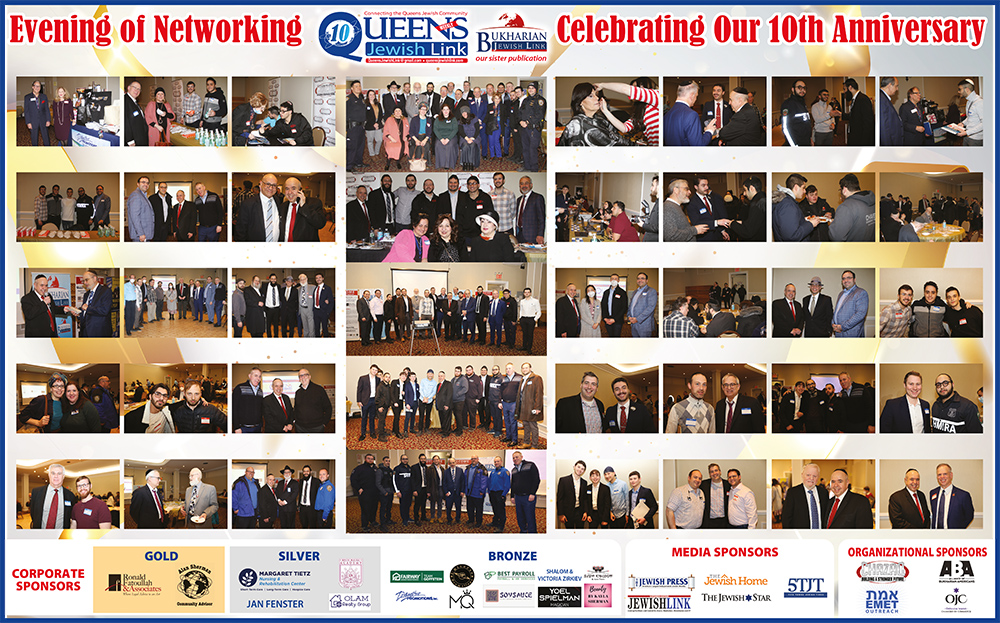

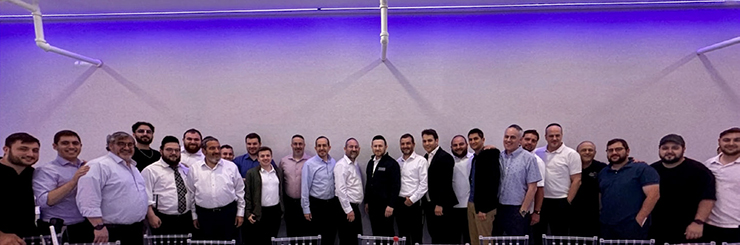
An hour before the Misaskim Volunteer Appreciation Dinner on Monday, July, 13, a small group of dedicated volunteers was already inside Ateres Chaya Rivka, a brand-new community simchah hall on Main Street, just off 68th Drive in Kew Gardens Hills. The elite contingent comprised Misaskim of Queens’ inaugural Emergency Disaster/Recovery class, tasked with chesed shel emes at a tragic scene most hope never to encounter.
Misaskim co-founder and President Reb Meir Weill led the training session explaining how to work alongside proper authorities, preserve kavod hameis, and ensure that everything requiring burial is handled respectfully according to halachah. It is among Misaskim’s most demanding forms of selfless benevolence, requiring technical knowledge and the ability to carry out a sacred responsibility under extraordinarily difficult circumstances.
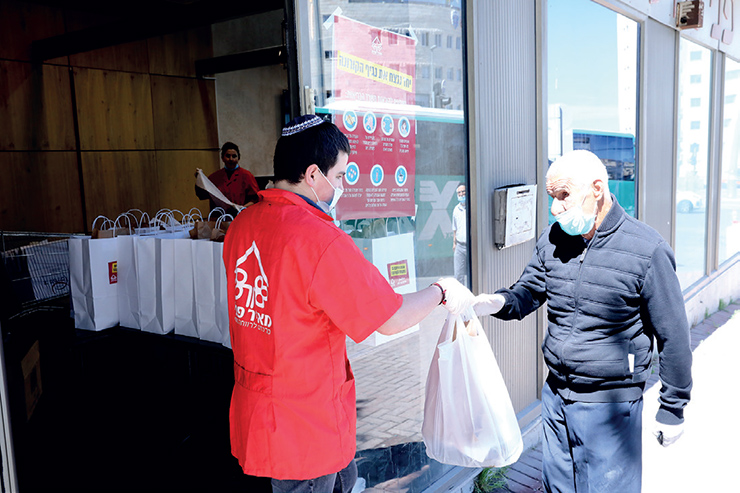
To a family suddenly plunged into darkness, Misaskim can appear to begin with one telephone call. Before long, shiv’ah chairs, folding chairs, tables, siddurim, condolence signs, supplies, and often a Sefer Torah are on their way. What the family does not see is the chain of volunteers, coordinators, and office staff that makes the response possible.
Moshe Vatch, founder and coordinator of the Queens division, opened the dinner by reflecting on the branch’s development. “It was approximately eight years ago that we started the Queens branch of Misaskim,” Vatch said. “Baruch Hashem, we have grown quite a bit since then.”
In the past year, the Queens division completed over 300 shiv’ah stops and hundreds of Project Yedid deliveries. Vatch addressed the “80-20 rule,” in which roughly 20 percent of the volunteers handle 80 percent of the assignments. He asked for a fresh recommitment: if every volunteer accepts approximately two calls each month, it would stabilize the workload and prevent burnout.
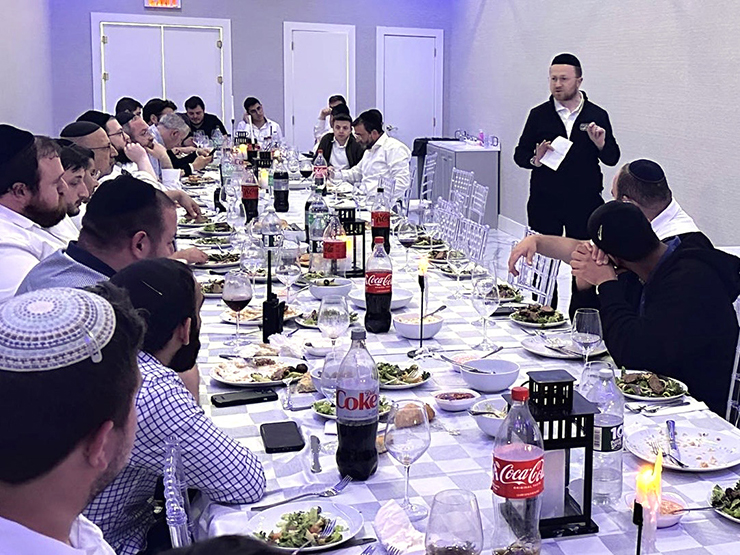
Vatch also noted that the division’s growth now required a clearer structure, and appointed Mordechai Lapp as an additional Coordinator, Yosef Noy as Special Operations Supervisor, and this writer as Logistics Supervisor. Vatch recounted how Lapp had transformed an informal levayah minyan chat into a dependable network assisting with 40 levayos each month. “Mordechai is simply that type of person,” Vatch said. “He sees that there is a need for something, and he gets it done.”
Matis Sofer, Misaskim’s CEO, praised Queens’ high level of volunteerism and recognized the senior leadership in attendance, including Reb Weill, Avraham Schwab, National Director of Business Development, and Dovy Jacobs, Director of Volunteer Services. He also lauded the professional staff, observing that their dedication is extraordinary, as they could earn more elsewhere but choose to devote their lives to the organization.
Sofer defined the organization’s new reality: “Misaskim is the 311 and 911 for aveilim, yesomim, and almanos in America.” Approximately $3 million of the $4.5 million budget is devoted to less visible work, such as morgue releases and navigating complex government authorities.
He detailed a massive infusion of resources: five new vehicles, two supply trailers, and a donated ambulance for the Catskills division, courtesy of SeniorCare, which has matured into a year-round operation. Montreal has launched, Detroit is preparing, and Flatbush has developed into a separate, exceptionally busy division with its own garages.
Equipment shortages have been addressed with 1,000 new cushions, over 600 shiv’ah chairs, 400 tables, and 110 lighter-weight lumbar chairs to ease the physical burden on volunteers. Furthermore, the supply of Sifrei Torah has been replenished as families have offered dedications to Misaskim.
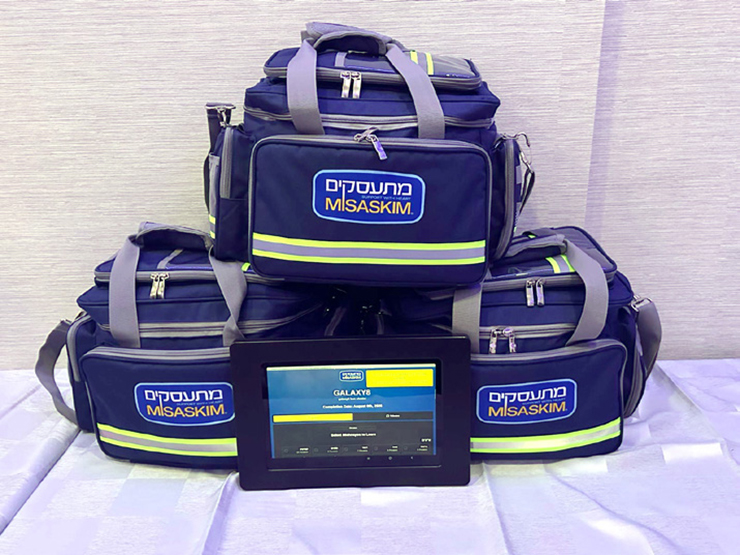
Sofer discussed technological initiatives. A new dispatch application currently under testing in Flatbush, will move the network onto a unified platform. A separate volunteer app will broaden participation, allowing those unable to lift equipment to sign up for minyanim or lighter tasks. He also discussed a digital Mishnayos learning system and the Shiv’ah Kiosk—the only piece of technology physically displayed that evening. The sleek, compact terminal solves the issue of visitors not carrying cash while allowing them to contribute to a cause selected by the family, with notifications sent automatically to the mourners.
He described the relaunch of the Fix-It Program, sharing the story of an almanah who lived with a burned-out closet light for eight months because she was embarrassed to ask for help.
The developing Family Advocacy Program—a potential “crown jewel”—will train volunteers to develop continuing relationships with families, addressing complex financial, educational, or household needs. Misaskim has already helped families obtain approximately $200,000 in funding initially denied by other organizations, and the team works closely with groups like Chai Lifeline and RCCS to prevent families from falling through gaps.
Sofer concluded by noting the organization’s financial recovery since the untimely passing of founder Yankie Meyer, reducing the annual shortfall from over $1 million to under $100,000 while tripling the donor base. A major campaign is planned for August 24–25, immediately ahead of Yankie’s yahrzeit. He shared a story from jury duty—where a roomful of people who claimed they did not speak English realized they actually understood enough to serve—to encourage volunteers to participate, even if they only raise small amounts. “This is not my organization,” Sofer said. “It is our organization.”
By Shabsie Saphirstein