
In a political climate defined by upheaval and unpredictable outcomes, the June 23 Democratic primary for New York’s 6th Congressional District delivered a clear message.
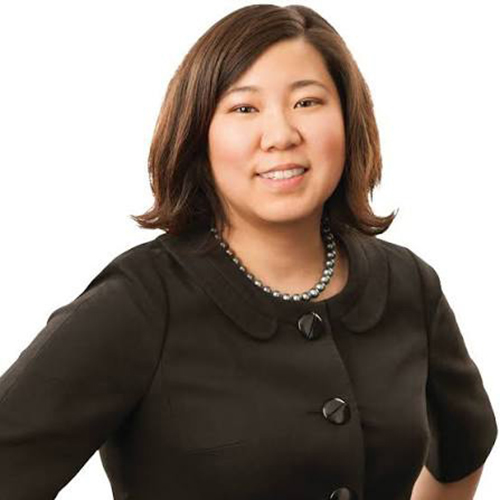
While headlines across New York City were dominated by incumbent vulnerability, progressive insurgencies, and disappointing outcomes for many pro-Israel voters, Queens offered one of the night’s few bright spots. Congresswoman Grace Meng secured re-election, and the numbers show that the Jewish community was an important part of the coalition that returned her to Congress.
Districtwide, Meng defeated challenger Chuck Park by 18,134 votes to 13,674, or 56.85% to 42.87%, according to the New York City Board of Elections’ unofficial election night results. But the broader story emerges from the election districts of Kew Gardens Hills, Hillcrest, Fresh Meadows, Forest Hills, and surrounding Orthodox neighborhoods, where Meng consistently outperformed her districtwide margin.
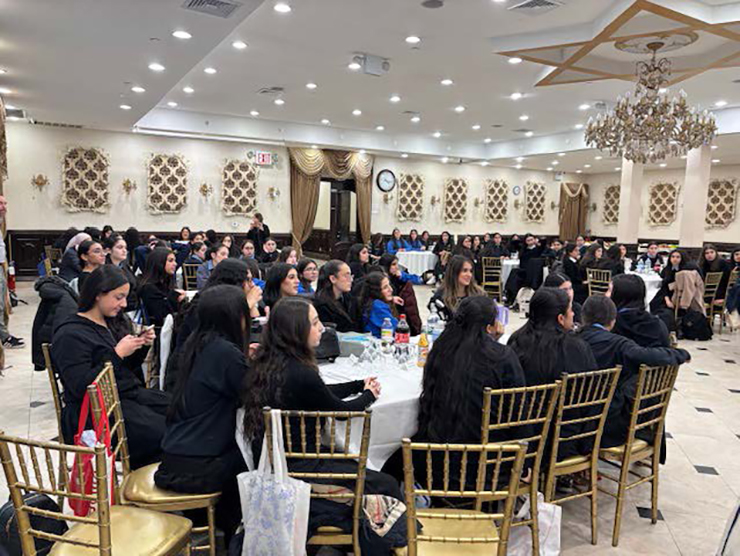
Election District returns revealed that Orthodox Queens remains one of the district’s most reliable voting blocs.
In Assembly District 27, which encompasses many of our heavily Orthodox communities, Meng received 3,463 votes to Park’s 1,019—a commanding 77% to 23% margin. The numbers become even more striking when examined at the Election District level, particularly within the heart of Kew Gardens Hills. Across Assembly District 27 Election Districts 20 through 30, Meng received 2,033 votes to Park’s 164, earning more than 92% of the two-candidate vote in those districts. Individual Election Districts reflected overwhelming support: In ED 24, Meng won 220–8; in ED 25, 293–6; in ED 27, 398–7; and in ED 29, 252–5.
The pattern extended well beyond the core of the neighborhood. In Assembly District 25, which includes Fresh Meadows and neighboring portions of northeastern Queens, Meng continued to post commanding margins, including 89–22 in ED 9, 88–14 in ED 11, 87–22 in ED 14, 99–20 in ED 16, and 93–29 in ED 43. Assembly District 24, which includes parts of Kew Gardens and adjoining areas, likewise delivered strong support, with Meng carrying ED 58, 98–30; ED 59, 108–22; ED 60, 133–45; ED 61, 83–36; and ED 62, 131–34. In neighboring Assembly District 28, which includes portions of Forest Hills, Meng also recorded comfortable victories, including 156–88 in ED 37, 162–67 in ED 40, 121–51 in ED 52, 108–65 in ED 62, and 77–38 in ED 25.
Taken together, these results demonstrate that support for Meng was not isolated to a single neighborhood. Orthodox communities across central Queens voted decisively, delivering overwhelming margins that significantly exceeded Meng’s districtwide performance.
Central Queens was not the only place where the Orthodox vote proved influential. In Far Rockaway, Pesach Osina won the Democratic primary for Assembly District 23, securing 59.8% of the vote against Mike Scala. In Orthodox-heavy Election Districts, Osina’s margins were extraordinary: ED 27, 344–15; ED 29, 430–5; and ED 30, 253–16. In Brooklyn, Joey Cohen-Saban advanced as the Democratic nominee for Assembly District 45. While his primary was uncontested, his emergence as a nominee reflects the growing political organization and influence of the frum community in Flatbush.
Taken together, these races demonstrate that the Orthodox Jewish vote remains one of New York’s most organized and influential voting blocs.
That success, however, should not lead to complacency. Although our community delivered when it mattered, turnout throughout Queens remained well below what many community leaders had hoped to see. Even with tens of thousands of early votes cast boroughwide, too many eligible voters stayed home. In an election where relatively few ballots determined races with significant consequences, every additional vote mattered.
Political influence is not measured by the size of a community, but by its willingness to participate. Candidates and elected officials closely watch neighborhoods with consistently strong voter turnout. Whether the issues are support for Israel, public safety, combating antisemitism, protecting yeshivah education, or preserving our community’s quality of life, our influence is earned through participation.
This election demonstrated that our community remains a significant political force when it participates. The challenge now is to build on that momentum. Every election presents another opportunity to support candidates who engage with our community and ensure that our concerns remain part of the public conversation.
By Shabsie Saphirstein