
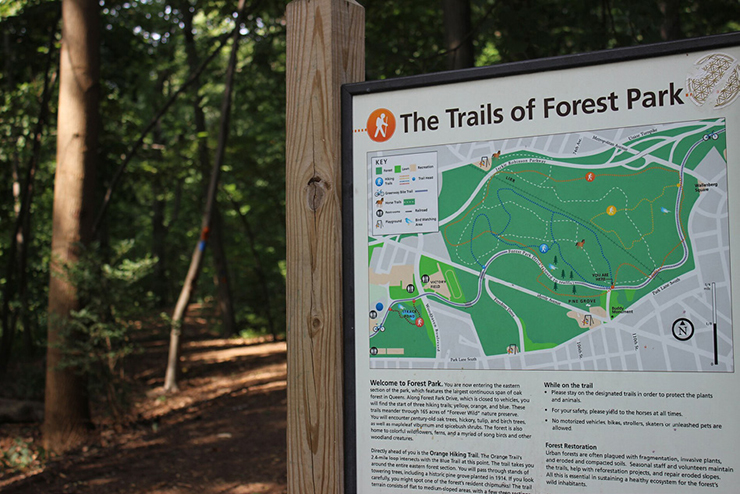
The tragic death of Zenon Reynarowyzh, an 86-year-old man killed in Forest Park on June 6 by a falling tree during a storm, has raised questions about public safety, responsibility, and the stewardship of one of New York City’s greatest assets: its urban canopy.
In the wake of the tragedy, which occurred around 8:30 p.m. near the intersection of Myrtle Avenue and Park Lane South during a period of severe weather and strong winds, Assemblymember Jenifer Rajkumar called on the New York City Department of Parks and Recreation to accelerate tree inspections and trimming efforts throughout South Queens. Her concerns reflect what many residents have been saying for years. Hardly a week passes without someone reporting a dead tree, a dangerous branch, or a trunk that appears unstable after a storm.
Yet this conversation must extend beyond maintenance schedules alone.
New York City’s millions of trees provide shade, cleaner air, and beauty – benefits that improve daily life for every resident. Forest Park itself is treasured precisely because it offers a natural, serene escape. But when trees age, become diseased, or suffer damage from increasingly severe weather, they can also pose serious risks.
The challenge facing city officials is not whether to preserve our trees or protect public safety; it is how to achieve both.
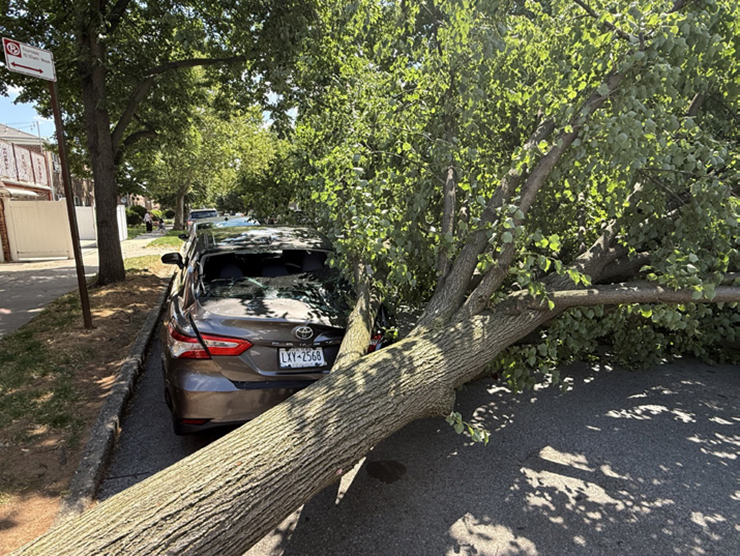
That begins with moving from a reactive approach to a truly preventive one. Too often, hazardous trees come to the city’s attention only after a resident files a complaint or damage becomes visible to the naked eye. By then, the danger may already be critical. Greater investment in routine, rigorous inspections – particularly in heavily trafficked parks, playgrounds, walking paths, and residential corridors – is essential to identify risks before tragedy strikes.
Technology also has a vital role to play. Modern diagnostic tools allow arborists to evaluate a tree’s internal structural integrity without removing it, helping identify hidden decay or weakness that may not be visible from the outside. In areas where thousands of residents pass daily, such advanced assessments should become a standard part of the city’s safety strategy.
Equally important is a commitment to prioritization. Not every section of a park carries the same level of risk. A secluded woodland presents different challenges from a popular walking trail or a children’s playground. Inspection schedules must reflect those realities, ensuring that the areas most frequently used by the public receive the highest level of care.
Residents also have an important role to play. Those who live near parks and tree-lined streets often notice subtle changes in their environment long before city crews arrive. Encouraging stronger communication between our neighborhoods and city agencies can create an additional layer of vigilance that benefits everyone.
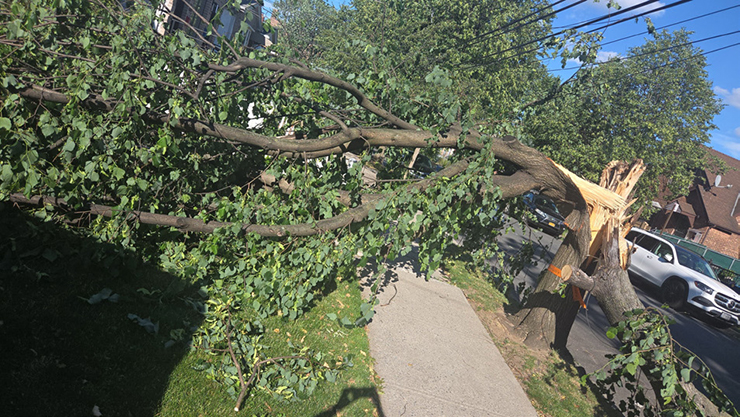
No amount of maintenance can eliminate every risk in a city with millions of trees; nature will always carry an element of unpredictability. But reasonable precautions and community involvement can significantly reduce the likelihood of another devastating loss.
The man who lost his life in Forest Park should not be remembered solely as the victim of a tragic accident. His passing should serve as a catalyst for a broader discussion about how we safeguard both the natural beauty of Queens and the residents who enjoy it every day.
The question facing our city leaders is no longer whether we can afford to do more. It is whether we can afford to do any less.
By Shabsie Saphirstein
A Pattern of Peril
The recent tragedy has coincided with a spike in dangerous tree-related incidents across the district, as documented by community safety organizations like Chaverim of Queens & Great Neck and Queens Shmira. Recent reports of hazardous conditions included:
- 75th Road: A massive tree collapsed between 147th and 150th Streets, completely blocking all road access.
- Park Drive East: A downed tree obstructed the entire roadway at 77th Avenue.
- Residential Hazards: Significant incidents have also been recorded at 158-16 77th Road, 160-10 79th Avenue, and Tudor Road between the Grand Central Parkway and Edgerton Boulevard.