
It is just past midnight on a Tuesday in Kew Gardens Hills. The house is finally quiet, and upstairs, the children are asleep. A father sits at his kitchen table, the glow of his laptop illuminating a spreadsheet of next month’s tuition and camp payments. His phone buzzes: a Charidy link dropped into a family WhatsApp chat. Then, another buzz: a voice note forwarded through a community group from a respected rav in Eretz Yisrael. Before Shabbos, his phone will be flooded with emergency campaign statuses. After Shacharis, local businessmen will be discreetly approached.
For many Orthodox Jews throughout Briarwood, Forest Hills, Fresh Meadows, Hillcrest, Jamaica Estates, and the Bukharian neighborhoods of Central Queens, these appeals are no longer unusual interruptions. They are the daily rhythm of communal life.
Parents support children learning overseas. Bukharian households privately sponsor learning in memory of parents from Samarkand. Those already carrying enormous financial burdens—mortgages, groceries, weddings, and rising living costs—continue giving because they believe Torah is the foundation holding the Jewish future together. For many Queens residents, Torah in Eretz Yisrael is not overseas. It sits at their own dining room tables.
Yet alongside that commitment, an unspoken communal strain is surfacing. People are exhausted. Not from caring or giving, but from the uncertainty of a system where every mosad seems to be fighting for survival simultaneously.
“Everyone wants to help, but we’re just overwhelmed,” one local father admitted softly outside a shul after Maariv. “You give to one, and three more urgent messages pop up before you even walk home.”
The toll extends far beyond local donors. Elderly roshei hayeshivah, men in their 80s and 90s who should be sitting in the beis hamedrash guiding their talmidim, are instead boarding flights across America. They spend weeks away from their yeshivos, traveling from parlor meetings in Jamaica Estates to breakfast meetings in the Five Towns, simply to close budget gaps.
This growing instability is tied directly to an unprecedented crisis in Eretz Yisrael. Over the past three years, political and judicial battles surrounding draft-age yeshivah students have triggered severe sanctions designed to squeeze the economic baseline of Orthodox life. Millions of shekels in operational funding were frozen. Daycare subsidies, a critical lifeline for young parents, were abruptly canceled. Bituach Leumi (national insurance) discounts were restricted. The pressure has even escalated to proposed travel bans, the denial of driver’s licenses, and active arrest warrants.
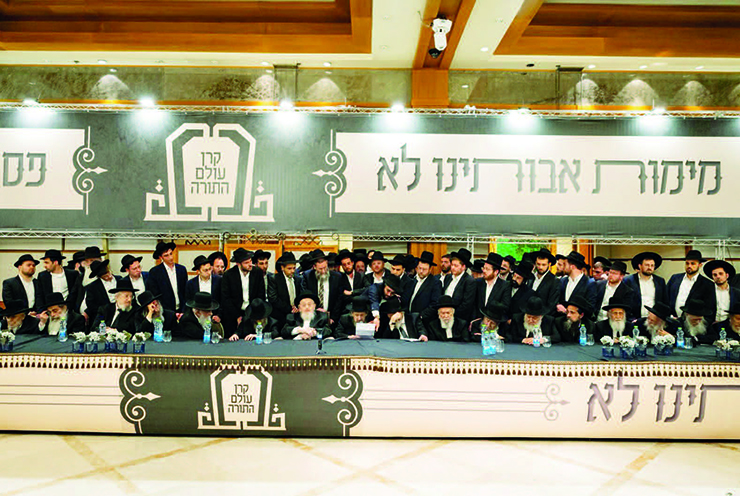
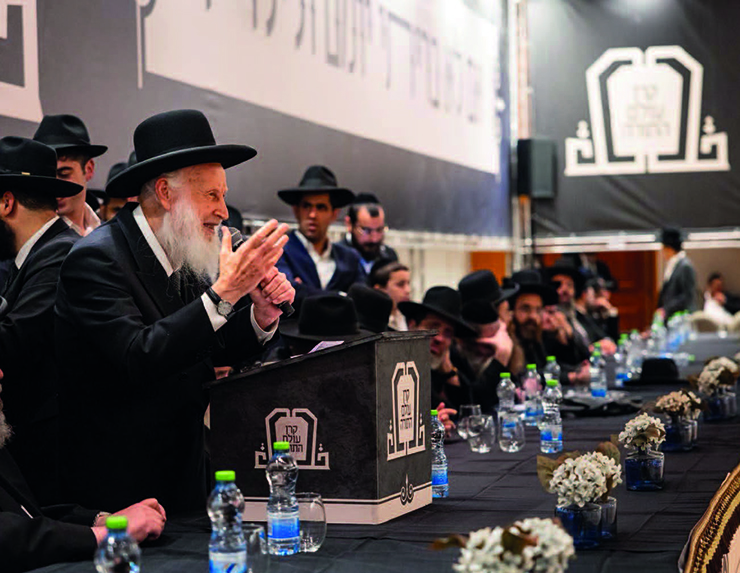
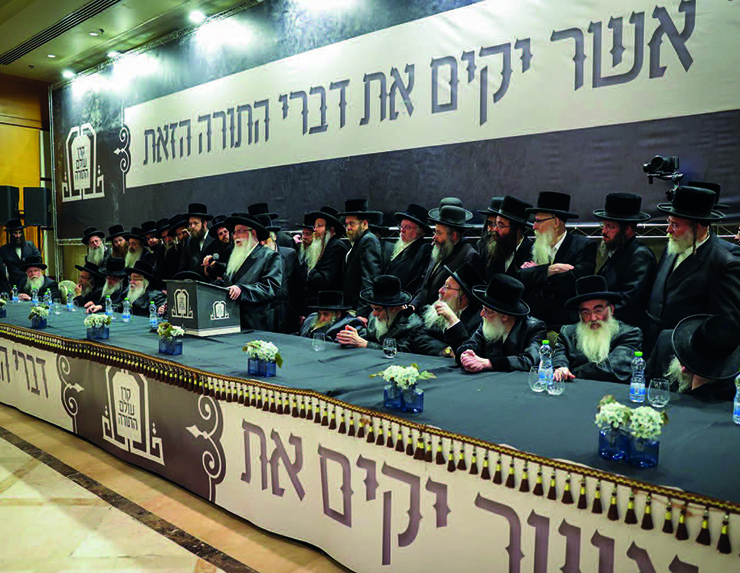
To prevent widespread institutional collapse, Keren Olam HaTorah was mobilized. As an emergency relief measure, the fund distributed hundreds of millions of shekels over the past two years through a tightly monitored system designed to ensure the money directly reached struggling students and institutions. But maintaining this lifeline requires askanim to raise an estimated $130 million annually. Even the most dedicated advocates privately admit that nonstop rescue campaigns cannot realistically continue at this pace.
There is a reason the Torah world functioned this way for so long. Many still cherish the deeply personal relationship between donors and organizations—the direct phone calls from roshei hayeshivah, the emotional connection to specific talmidim, and the beautiful sense that preserving the yeshivah world is built through personal responsibility rather than institutional distance. Some genuinely fear that transitioning to a massive, centralized endowment could make giving feel corporate, weakening the heartfelt bond between the Queens donor and the yeshivah in Yerushalayim. But as the sheer scale of the financial pressure mounts, broader conversations are inevitably shifting toward long-term survival.
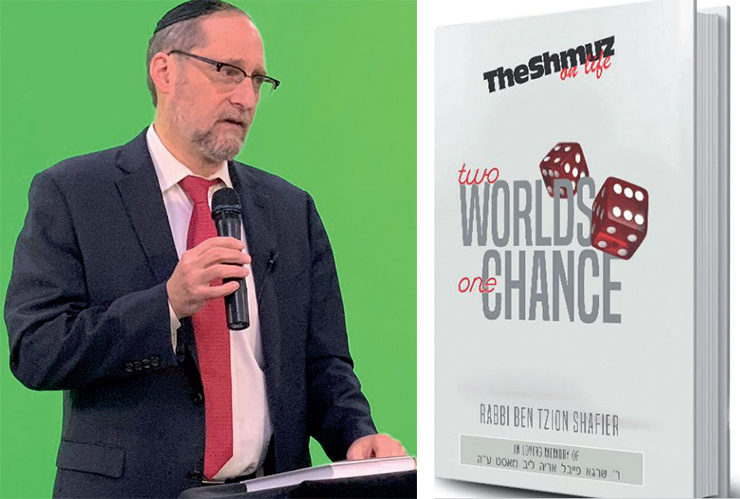
At the center of these discussions is Dr. Paul (Pinchas) Volosov, a Baltimore-based healthcare entrepreneur calling for a new model. Modeled after the endowments of elite universities, his concept offers a permanent anchor: a $1 billion principal fund remains untouched and invested conservatively, while the estimated $50 million in annual returns helps stabilize these organizations long term. Dr. Volosov has pledged a substantial lead gift, securing the historic backing of gedolei hador, including Rav Dov Landau, Rav Moshe Hillel Hirsch, Rav Yaakov Hillel, and Rav Dovid Cohen.
What makes Dr. Volosov’s vision so compelling is the life story behind it. Raised by a single mother in Paterson, New Jersey, during the 1950s, he grew up intimately familiar with financial hardship. After foundational years at Torah Vodaath, Prospect Park Yeshiva, and Ner Yisroel, he earned a doctorate in psychology. He went on to build a massive healthcare network focused on individuals with severe intellectual disabilities and complex behavioral challenges. His mission was to restore dignity to people society had forgotten or institutionalized.
That same pursuit of dignity shapes his view on Torah institutions. He argues that organizations carrying the spiritual future of the Jewish people should not have to live under the indignity of constant financial panic. The endowment model would allow everyday supporters—whether middle-class families setting up testamentary estate gifts or individuals giving $18—to become permanent builders of the Torah world’s future.
Central Queens understands the weight of this conversation better than most. The borough occupies a unique place within Orthodox Jewish life, serving as a powerful intersection of immigrant memory and upward mobility. It is a community built by Holocaust survivor descendants and energized by a thriving Sephardic and Bukharian Torah revival. Very few communities combine all those elements into a single geographic footprint.
For many immigrants from the former Soviet Union, supporting Jewish learning openly carries a profound emotional weight. They remember parents and grandparents who risked their careers, safety, and freedom just to preserve fragments of Jewish observance under Communist rule. The ability to openly fund these institutions today is a direct continuation of sacrifices earlier generations made in the shadows.
That is why the discussion of a billion-dollar endowment is no longer just theoretical financial news. It is an active conversation taking place during carpools, between husbands and wives reviewing household budgets, and in the still moments after another WhatsApp appeal flashes across a screen. It is the realization that the grandparents who preserved Judaism under oppression, and the parents who painstakingly built the thriving Torah life in Central Queens, are now passing the baton. The goal is no longer just helping yeshi3vos survive the month; it is about building an unbreakable foundation for the children learning freely today, and for all the generations still to come.
By Shabsie Saphirstein