
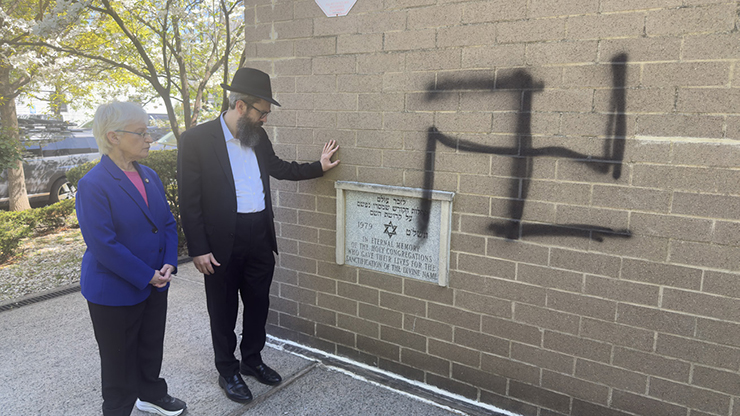
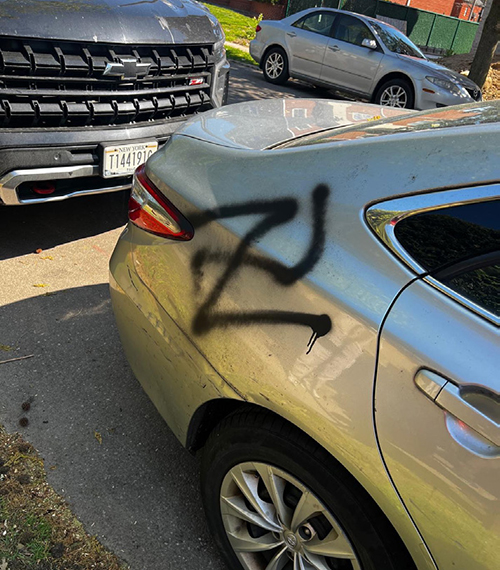
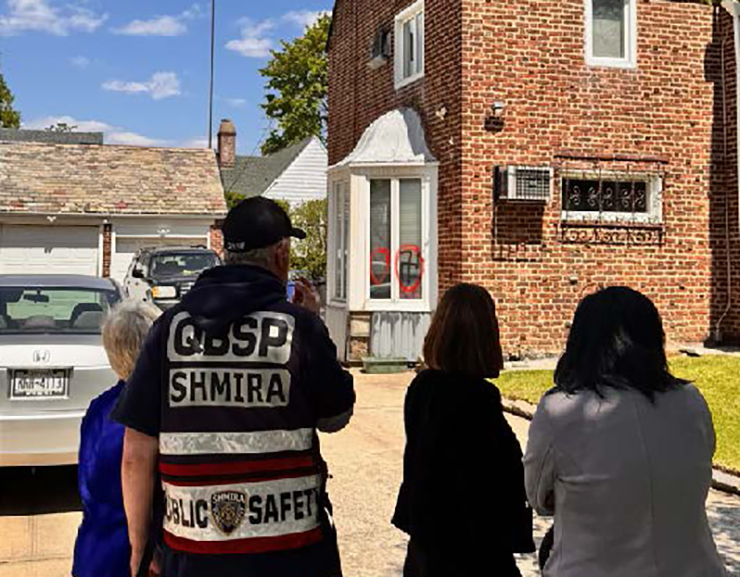
What began as a distressing alert to the Queens Shmira hotline quickly transformed into a day defined by tireless coordination and a profound sense of communal responsibility. On Monday morning, May 4, the streets of Forest Hills and Rego Park were marred by the discovery of swastikas and hateful graffiti. The vandalism appeared with alarming frequency on Jewish institutions, private family homes, a personal vehicle, and even a site connected to a pre-K daycare.
For a neighborhood whose identity is deeply woven into its Jewish roots, the sight of these symbols was a shock to a communal life built around shuls, schools, and the expectation of safety.
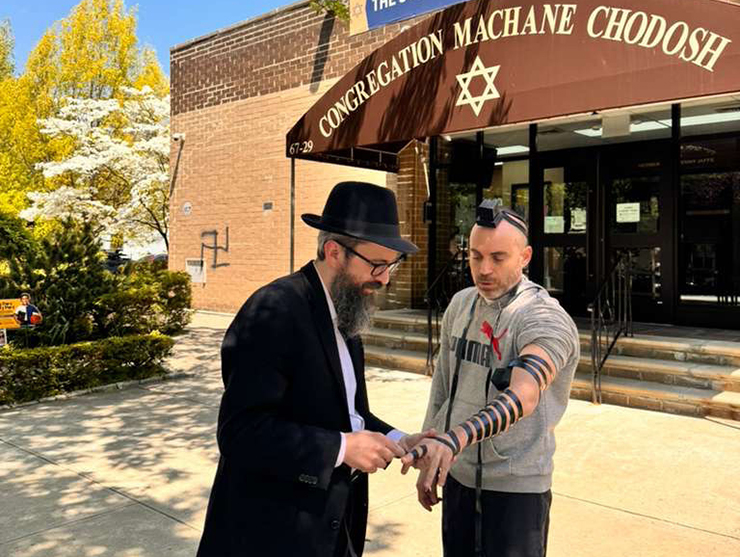
The targeted sites included the historic Congregation Machane Chodosh, where a swastika was scrawled on the street-facing façade, partially obscuring a Holocaust memorial plaque, as well as the Rego Park Jewish Center and various residential properties throughout the district.
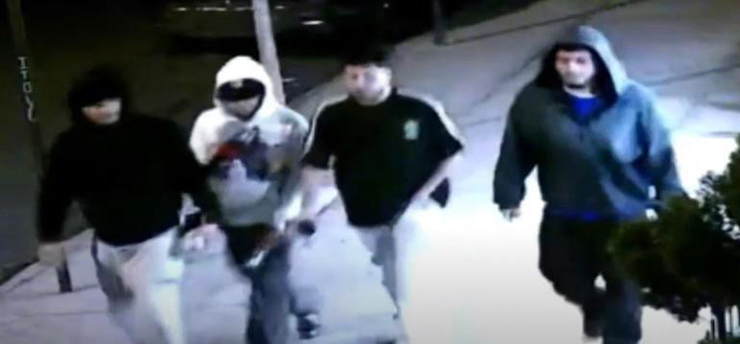
From the moment that the initial hotline call was received, the members of Queens Shmira worked without pause to ensure that communal leaders were brought to the scene and that mainstream media outlets were directed to the affected locations. Their primary goal was to provide firsthand information and available surveillance footage so the ordeal could be reported with accuracy and with the proper historical context. Throughout the day on Monday, the focus remained entirely on the victims: ensuring that the graffiti was addressed, that video evidence was collected for the NYPD, and that residents and rabbanim were not forced to face these Nazi symbols alone in the heart of their own community.
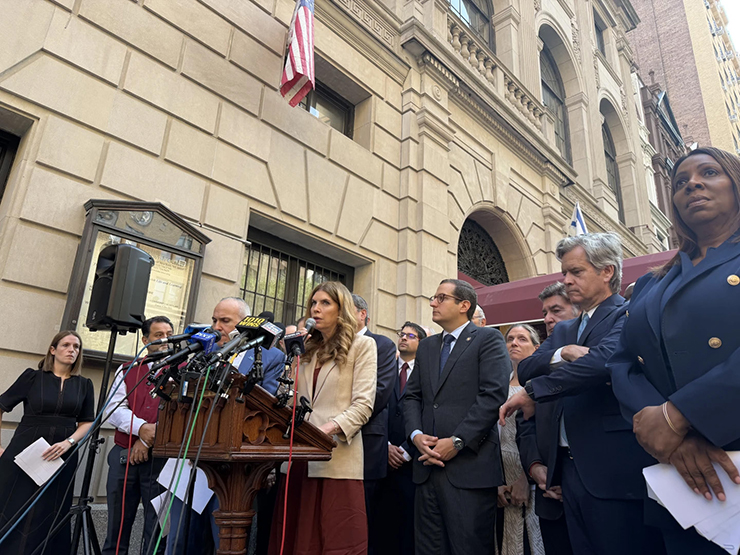
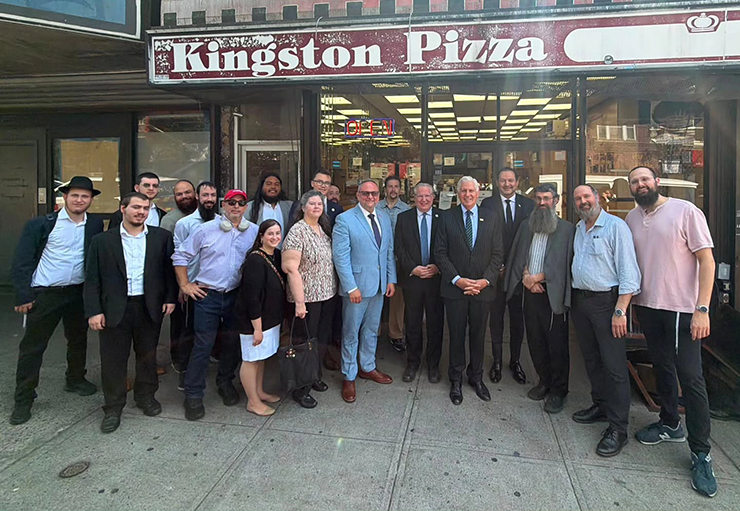
Early in the day, I stood at Congregation Machane Chodosh alongside a group of dedicated public servants, including New York City Council Speaker Julie Menin, Council Member Lynn Schulman, Congress Member Grace Meng, and NYPD Deputy Chief Richie Taylor. Each of these leaders took significant time to meet with Rabbi Yossi Mendelson and visit the specific locations where the swastikas had appeared. Their presence on Monday was far from a mere photo opportunity; to see many of these same leaders return the very next day for a public press conference was a moving testament to their commitment.
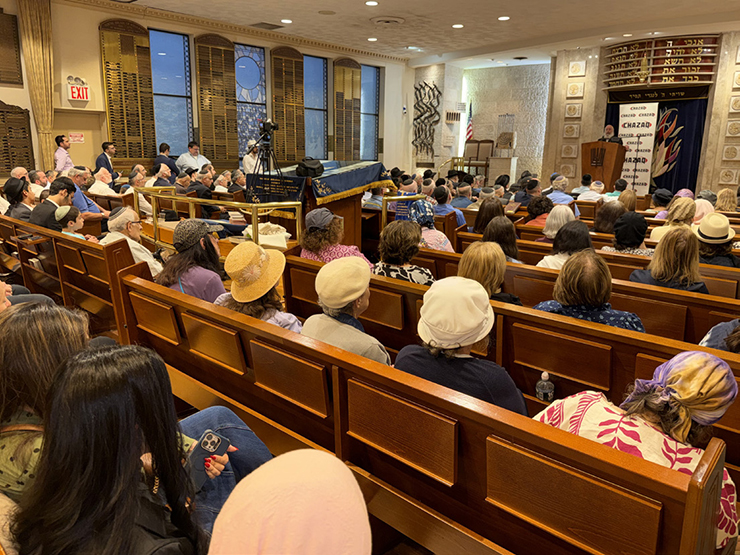
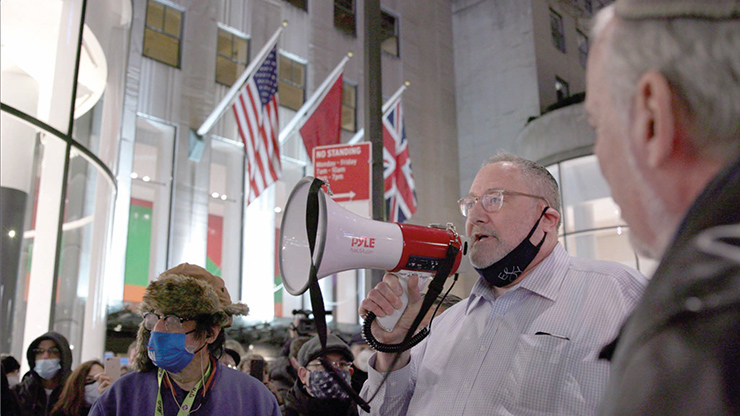
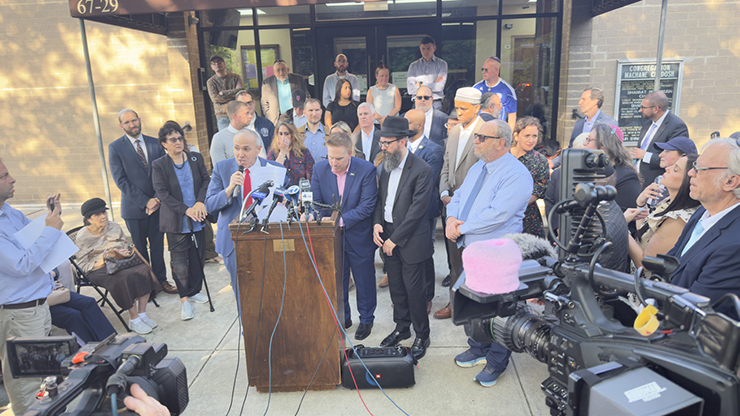
The Tuesday press conference took place outside Congregation Machane Chodosh on 108th Street, specifically at the Holocaust Memorial Corners. The setting provided an immense emotional weight to the gathering, as Machane Chodosh is a shul rooted in the postwar Jewish story of survival and rebuilding. The congregation was founded by a small group of refugees in Crown Heights at the outbreak of World War II, just as Jewish communities across Nazi-dominated Europe were being systematically destroyed.
The history of this synagogue is uniquely tied to the trauma and resilience of its founders. Of note, the synagogue was designed without any street-facing windows. The refugees who built it had recently survived the horrors of Kristallnacht and were so haunted by the memory of shattered glass that they took this architectural precaution to protect their sanctuary from future hatred. On November 7, 1999, the intersection of 108th Street and 67th Road was officially renamed Holocaust Memorial Corners, cementing the site as a landmark of memory and a shield against forgetting. Today, the shul remains a leading light of the Forest Hills-Rego Park community.
The synagogue’s very name, Machane Chodosh – meaning “new camp” – serves as a poignant reminder of a community that chose to begin again after total devastation. This identity made the appearance of swastikas on its walls feel particularly cruel, yet it also underscored the resilience of the people standing before those walls on Tuesday.
The broader Rego Park-Forest Hills Jewish landscape carries its own powerful narrative of endurance. The Rego Park Jewish Center, which was also targeted in this wave of vandalism, has been a cornerstone of the neighborhood since 1939. Its stunning Art Deco building is listed on the New York State and National Register of Historic Places, featuring a world-renowned mosaic by the Hungarian-born Jewish artist A. Raymond Katz. These institutions are central to the story of Queens as a borough of refugees. Over the decades, Forest Hills and Rego Park became a home for Holocaust survivors, European Jews, Soviet Jews, Bukharian families, and generations of New Yorkers who rebuilt their lives around their shuls, yeshivos, and community organizations.
Timing often adds a layer of meaning to events, and this incident was no exception. The vandalism was discovered on the eve of Lag BaOmer, a day associated with joy and light. Instead, the community was forced to confront the darkest symbols of the 20th century. Yet, in a powerful reversal, the community answered this darkness with public visibility. On the same week that Jews gather around bonfires to celebrate spiritual survival, the Jews of Queens gathered publicly to show that their own flame had not been diminished by the spray paint of a bigot.
Opening the program, Mark Treyger, CEO of the Jewish Community Relations Council of New York, acknowledged the rapid response from UJA-Federation of New York, the Queens Jewish Community Council, Commonpoint, and local leaders. Addressing those who questioned the need for a public rally, Treyger stated that the far more dangerous message would have been to remain silent. He argued that swastikas on homes and synagogues can never be treated as a normal or acceptable part of the New York experience. His words set the stage for a program that prioritized action over rhetoric.
Standing directly across from the Holocaust Memorial Corner, Speaker Julie Menin spoke with visible emotion. As the daughter and granddaughter of Holocaust survivors, she reflected on the personal horror of seeing a swastika scrawled near a memorial to those murdered by the Nazis. Her own grandfather was killed for the “crime” of being Jewish, and she framed the incident not as a random act of juvenile graffiti, but as part of a disturbing, systemic rise in anti-Semitism across the city. As the first Jewish Speaker of the New York City Council, she highlighted legislative efforts like the Safe Access Bill and the need for increased funding for Holocaust education to ensure that such hatred does not find a home in the hearts of future generations.
The investigation, currently being handled by the NYPD Hate Crimes Task Force, was addressed by Congress Member Grace Meng, whose district includes the affected area. She noted that while the graffiti had been removed, the investigation remained a high priority. Meng pointed out that the attack occurred during Jewish American Heritage Month, a time meant to honor the contributions of the Jewish community to the United States. She was particularly forceful in her rejection of those who attempt to justify local anti-Semitism by pointing to international conflicts. She stated clearly that scapegoating Jewish communities in Queens for the actions of a foreign government is morally bankrupt. She highlighted federal initiatives, including the bipartisan Pray Safe Act, designed to help houses of worship access security resources more effectively.
The personal toll of these incidents was articulated by Queens District Attorney Melinda Katz, speaking as the only Jewish district attorney in the state. She noted how exhausting it is for the community to have to keep showing up to condemn such acts, month after month. However, she stressed that “showing up” is exactly what prevents hate from becoming the status quo. Katz praised the unity of the crowd, which included rabbis, Muslim leaders, and secular officials standing together. She referenced past assaults in the borough and promised that her office would continue to pursue strict legal accountability for those who target people based on their faith.
City Comptroller Mark Levine sent a clear and defiant message to the perpetrators: If their goal was to scare, intimidate, or chase Jews away from Forest Hills, they had failed utterly. The Jewish community of Queens, he said, is going nowhere and will continue to grow.
Representing the borough as the only Jewish Council member from Queens, Lynn Schulman spoke of her responsibility that extends beyond her own district lines. She noted that this was not an isolated incident but appeared to be a targeted, wide-ranging wave of hate. Schulman emphasized the necessity of better security infrastructure, including cameras and combat-hate programs in local schools, to ensure that Jewish safety is protected in every neighborhood across the borough.
The need for a united front was further emphasized by Public Advocate Jumaane Williams, who adjusted his schedule to attend the rally. Standing in solidarity was not just an act of support for Jews, he suggested, but an act of defense for the fabric of the entire city. Queens Borough President Donovan Richards was represented by his staff member Alan Weinberg.
Offering a powerful perspective, Rabbi Yossi Mendelson, the Rav of Congregation Machane Chodosh, began by speaking for the neighbors whose homes were vandalized but who were unable to attend the rally due to work. He expressed their deep gratitude to the NYPD for their vigilance and for treating their private properties with the same respect as communal buildings. Rabbi Mendelson then urged his community not to be intimidated into silence or fear. He taught that the true answer to anti-Semitism is an increase in Jewish presence: more shul attendance, more mitzvos, more Torah study, and more pride in one’s identity. He noted that while the graffiti was washed away with water, the community’s spirit remained intact. Am Yisrael chai.
Rabbi Mendelson also called for a broader cultural shift in the New York City school system, suggesting a “mindful minute of meaning” – a daily moment for students to reflect or pray according to their own traditions. He argued that in a borough as diverse as Queens, children must be taught to be grounded in their own identities while respecting the backgrounds of others. This vision was not just for Jewish safety, but for the moral health and spiritual foundation of the entire city.
Speaking from a neighboring district, Council Member Phil Wong emphasized the absolute necessity of serious Holocaust education. He recalled learning about Kristallnacht, Auschwitz, and Treblinka in the public school system and argued that this history must be taught with gravity, not merely as a footnote in a textbook.
The sense of history was echoed by Rabbi Romiel Daniel of the Rego Park Jewish Center, who spoke of the deep shock felt by his congregation. He noted that his community has served German and European refugees for 87 years, acting as a sanctuary for those who fled the very symbols that were scrawled on their walls this week.
Danielle Allman, CEO of Commonpoint, spoke as the daughter of a refugee, stating that the Jewish response to hatred must always be more service and more community love. She highlighted the One Queens Fellowship as an example of leaders from various backgrounds standing together against bigotry. She explained that Commonpoint serves New Yorkers of all stripes, and that the unity seen at the rally is the strongest defense against the division the vandals sought to create.
Addressing the impact on the youngest members of the community, Rabbi Shlomo Nisanov, president of All My Children Daycare, spoke about the site at the Rego Park Jewish Center. He noted that the school serves children of many faiths and that “no one is born hating; you are taught to hate.” His plea to parents and educators was to prioritize the teaching of tolerance and unity from the earliest ages, ensuring that children grow up to be builders of community rather than vandals of it.
Reflecting on the unique nature of the borough, Barry Grodenchik, president of the Queens Jewish Community Council, spoke of Queens as a gateway for the world. He called for a return to the values of neighborliness that have long defined the borough’s identity.
Ayelet Pearl, Queens Community Mobilizer for UJA-Federation of New York, spoke of the spiritual danger of sin’as chinam, or baseless hatred, and how it threatens to undermine the unity of the city. Speaking also as a Queens resident, she noted that anti-Jewish stickers and messages have been appearing with disturbing frequency. She pointed to the One Queens Fellowship and the Jewish Queens Exchange as vital efforts to better connect communities and strengthen Jewish life and safety across the borough.
The gathering featured a significant interfaith presence, with Mark Treyger specifically recognizing Imam Safraz Baksh of Masjid Al-Abidin for standing in solidarity with his Jewish neighbors. Leaders from the AJC, ADL, and the Mayor’s Office to Combat Anti-Semitism were also in attendance.
Special appreciation is owed to the NYPD Community Affairs team and the leadership of the 112th Precinct and Queens Borough Patrol North. The urgency with which Captain Fennessy, Assistant Chief Green, and Deputy Chief Richie Taylor treated the investigation gave the community confidence that the city takes their safety seriously.
The press conference did not erase the pain caused by the sight of swastikas in Forest Hills and Rego Park. Nothing can make such a sight acceptable in a civilized society, and the trauma for the survivor families remains real. However, the event did showcase the strength of a community that refuses to hide, to be intimidated, or to let a bigot’s marker define their neighborhood. From the initial hotline call to the collection of surveillance footage and the public rally, the response was serious, united, and highly visible.
The hateful markings were washed away by the city, but what remained was a community standing proudly and unafraid. On a week connected to the light of Lag BaOmer, Queens answered darkness with its own radiant, communal presence. The swastikas are gone; the Jewish people remain.
By Shabsie Saphirstein