


Elie Wiesel, Nobel laureate and Holocaust survivor, shared that “we survivors decided to tell the tale of what happened because we want the world to be a better world. We want people to learn and to remember.”
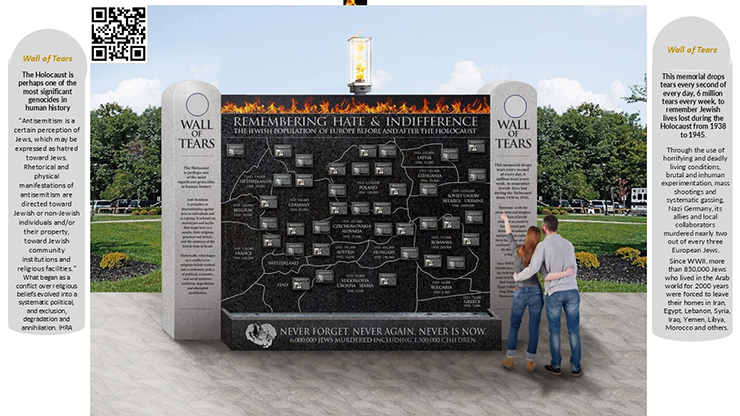
The Wall of Tears Foundation is telling that story in a unique and educational way, with this mission in mind. They have created a monument that is literally a wall of tears. It is 16 feet wide and 10 feet tall, featuring plaques that display engraved accounts of Jewish life, persecution, and resilience from 1938–1945. Each plaque contains a QR code that directs the viewer to a video of a survivor, a witness, or a documentary. Some depict the conditions during deportation and transportation to death camps, as well as incarceration in concentration camps.
The wall also features a map of Europe showing Jewish populations before and after the Holocaust, country by country, along with an eternal flame that burns continuously to honor victims who have no grave. In addition, cascading drops of water symbolize the six million tears shed weekly in remembrance.
Norm Kaish, Executive Director of the Wall of Tears Foundation in West Hempstead, explained that the goal is for Holocaust education to remain visible and accessible, even for those who do not actively seek it. The foundation builds these unique monuments on college campuses and in public spaces such as community parks to educate, inspire reflection, and combat antisemitism. These monuments are placed in locations where they are seen daily, reaching both young and old.
The foundation strives to foster empathy and compassion, inspire activism and social responsibility, and serve as a safeguard against historical amnesia and misinformation. This mission is especially important as the generation of Holocaust survivors continues to dwindle, and younger generations must never forget what happened.
A Wall of Tears monument is currently being constructed in Andrew J. Parise Park in Cedarhurst. Mayor Weinstock of Cedarhurst shared that the memorial will stand as a visible reminder of the consequences of hatred and indifference.
The Wall of Tears monument is an educational resource based on archival information from Yad Vashem, Israel’s Holocaust museum, and the United States Holocaust Memorial Museum in Washington, D.C. The plaques present the tragic realities of forced displacement from homes and communities, the harsh conditions endured during deportation and in camps, the atrocities of enslavement and mass murder, and the post–World War II expulsion of 850,000 Jews from Arab nations.
Together, these accounts serve as a stark reminder that persecution is not confined to the past and that vigilance remains essential today.
The Wall of Tears Foundation plans to build additional monuments to give students a clearer understanding of how antisemitism reached such devastating levels and the impact it had on thousands of Jewish communities across Europe.
The ADL shared, “Standing up against the tide of antisemitism requires a bold new initiative, and we enthusiastically add our endorsement for your efforts toward that end, which we believe can contribute to greater understanding and respect.”
The Holocaust Memorial and Tolerance Center stated, “We are particularly impressed by how you blended accounts of victims alongside the behavior of bystanders in each country. We believe this exploration is essential if we are to cultivate upstanders among young adults.”
The monument is not an answer; rather, it is a question—an ally of education in the fight against ignorance and hate. Today, with rising antisemitism, this initiative is especially vital. The Wall of Tears Foundation is seeking additional locations to build monuments on college campuses and other appropriate sites. As mentioned, the first monument will be built in the Five Towns.
Hashem should bless the foundation with continued siyata diShmaya in educating people about the Holocaust and in fulfilling what Elie Wiesel so beautifully expressed: “To make the world a better place.”
For more information, visit
walloftears.org.