

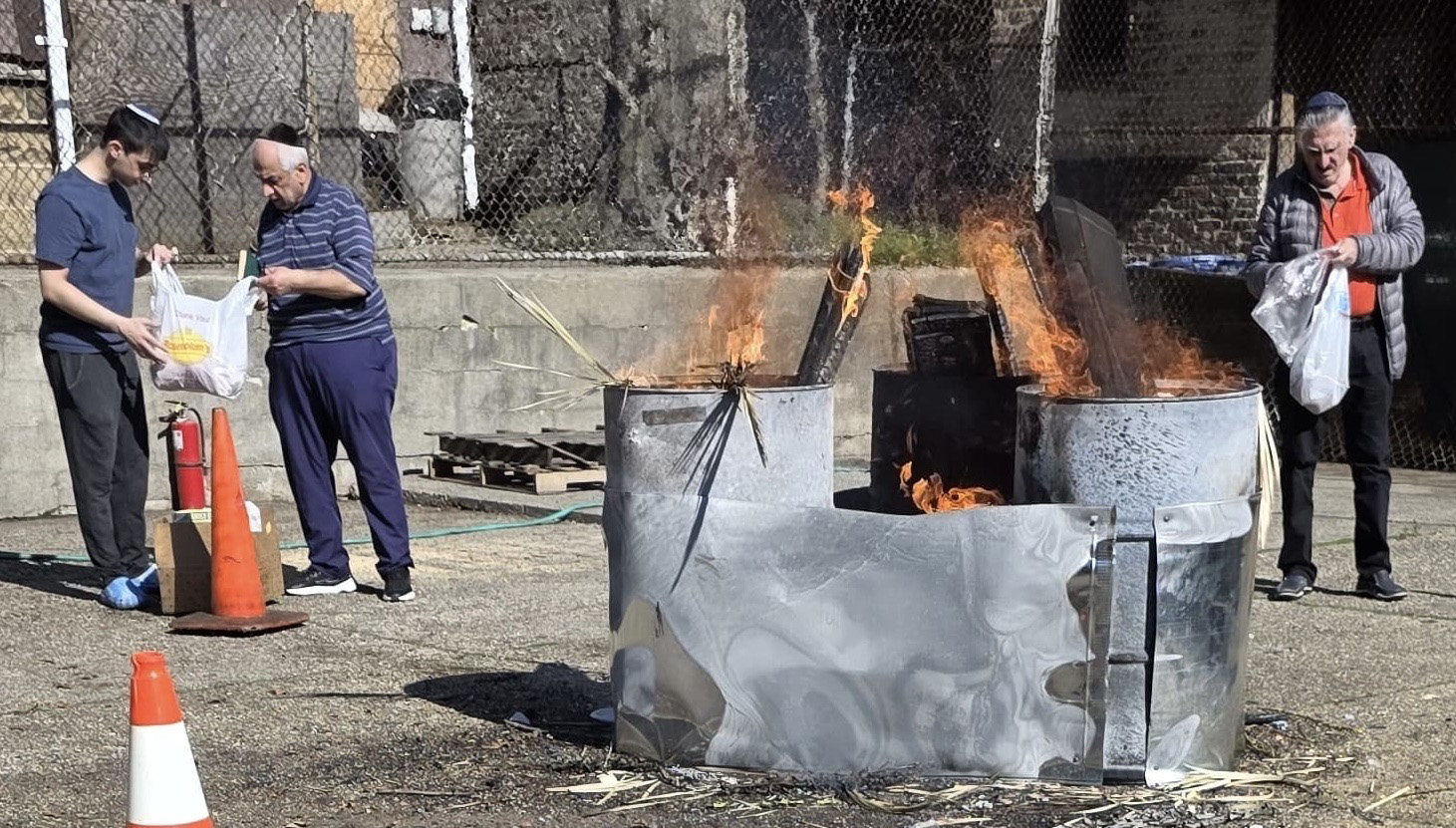
Before most of Queens had even started its morning, the fires were already burning.
Across the borough, Jewish families gathered outside shuls and at designated locations, little bags with scraps of bread in hand, to complete biur chametz – the final step before Pesach. Fathers stood with children, watching as the last remnants were placed into the flames, marking the end of weeks of intense preparation.
The morning moved with a singular purpose: arrive, burn, and return home to finish the final preparations for the Yom Tov.
In Queens, biur chametz does not take place in a single central hub. Instead, it unfolds across neighborhoods, with each community carrying out the same mitzvah in its own local setting. This year, that network was clearly visible through coordinated burning stations across central and eastern Queens, including sites at the Young Israel of Kew Gardens Hills, the Young Israel of Jamaica Estates, the Young Israel of Queens Valley, the Young Israel of Holliswood, Kehilat Sephardim, and Congregation Charm Circle.
The activity moved in waves. In Kew Gardens, the burning at the Adath Jeshurun yard began around 7:00 a.m. In nearby Kew Gardens Hills, activity followed shortly after at the Young Israel of Kew Gardens Hills. In Forest Hills, the Queens Jewish Center opened early and remained active throughout the morning. Other locations began later, providing residents the flexibility to complete their preparations while still meeting strict halachic deadlines.
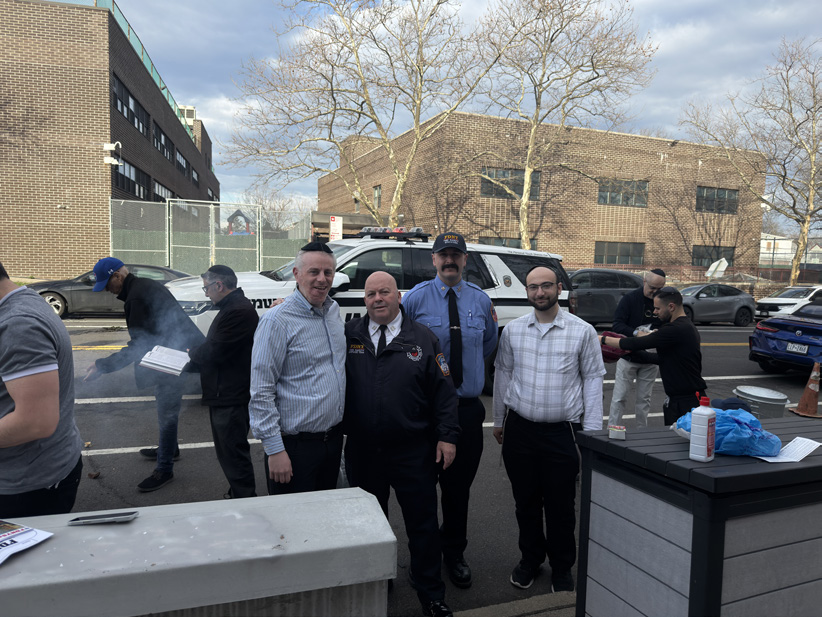
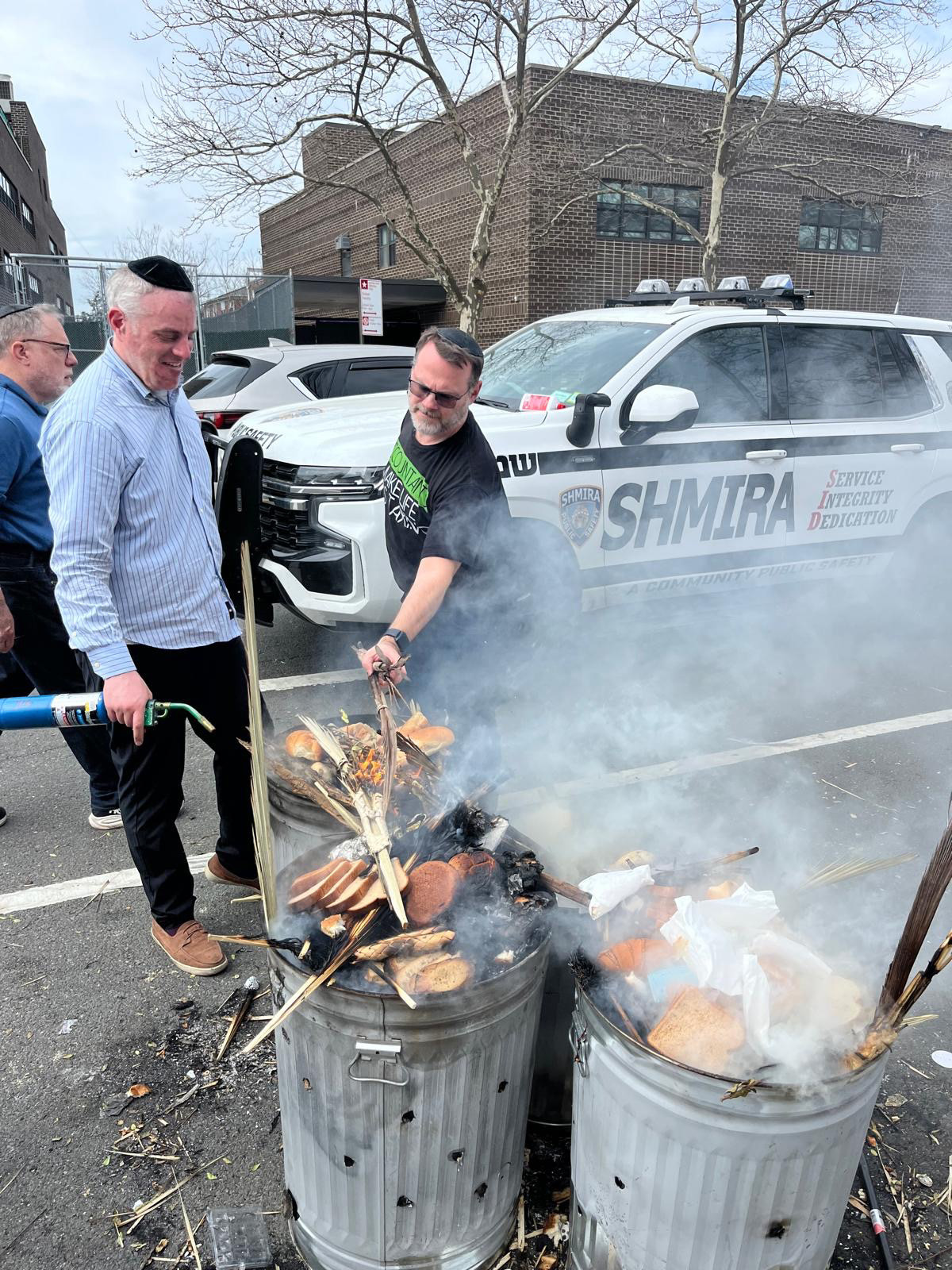
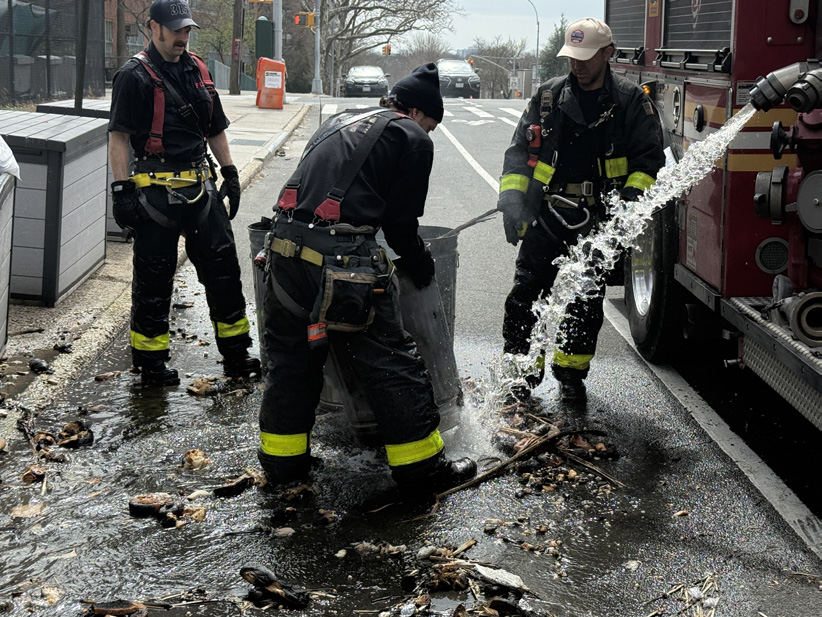
Behind the scenes, the effort required significant coordination. Queens Shmira assisted at multiple biur chametz locations to ensure order. Daniel Winchester led operations at Congregation Charm Circle, where Shmira members worked alongside the FDNY Fire Safety Team to extinguish the metal garbage pails used for the fires, ensuring each site was left safe and secure.
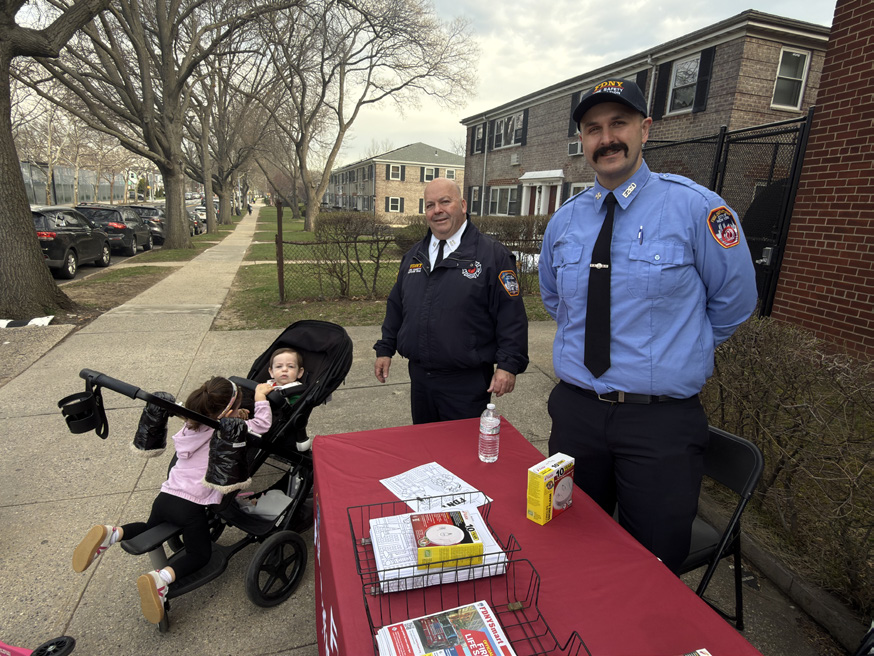
FDNY representatives also engaged with families, distributing safety materials and speaking with residents. Their message was direct: The days leading into Pesach bring an increased risk of burns and fire-related incidents. With kitchens active, boiling water in use, and candles soon to be lit, extra caution is essential.
Residents were reminded to remain present while cooking, keep flammable materials away from stovetops, and maintain clear space around open flames. Candle safety was also emphasized – using stable holders, keeping flames away from fabrics, and never leaving them unattended.
At the burn sites, precautions were equally important. Only designated locations were used, and participants were encouraged to bring minimal chametz. Care was taken to ensure that biur chametz and the recitation of Kol Chamira marked the final step, only after all remaining chametz had been cleared from the home. Children were kept under close supervision, and unsupervised fires were strictly avoided. Participants were also reminded to place only actual chametz into the fire bins; wrappings such as foil or plastic were discarded separately to prevent toxic fumes.
Sanitation played a critical role as well. In coordination with the Department of Sanitation, ashes were collected and removed, and dumpsters were made available for last-minute disposal. Community Board guidance instructed residents to place garbage out Tuesday night ahead of the special Erev Pesach collection, reflecting the massive scale of preparation across the borough.
What appears to be a simple neighborhood ritual is, in practice, a highly coordinated effort involving community volunteers, local organizations, and city agencies. That structure reflects something fundamental about Queens: Jewish life here is built on a network of neighborhoods rather than a single center. On Erev Pesach, that network becomes visible: fires in Kew Gardens, Forest Hills, Jamaica Estates, Holliswood, and beyond, all carrying the same purpose.
For a few hours, weeks of preparation came into focus. The final remnants of chametz were burned, marking the transition into the holiday. By late morning, the fires were out, the ashes were cleared, and the borough turned toward the Seder night.
By Shabsie Saphirstein