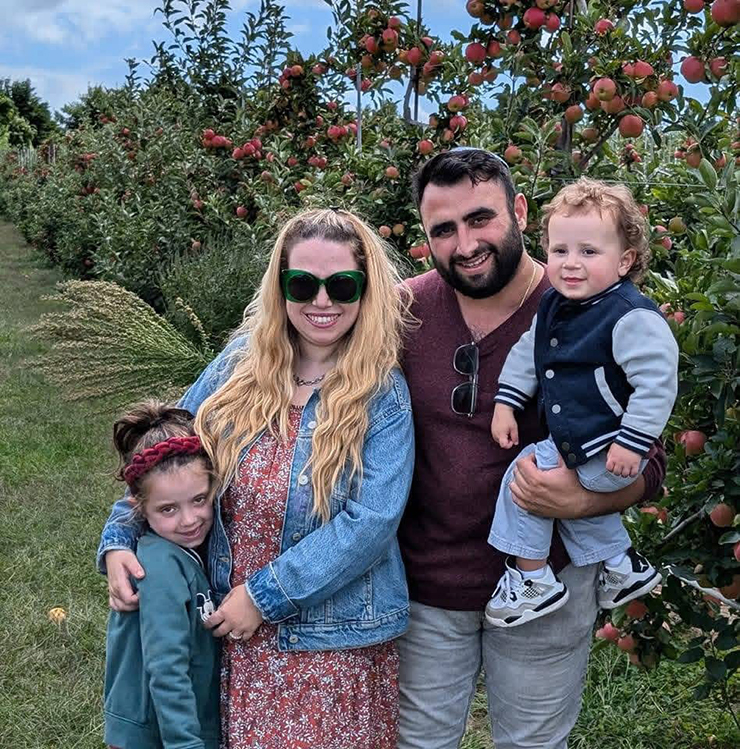

When Marc Goldhammer moved from Queens to West Hempstead in 2020, it was at the height of the COVID-19 pandemic. It was a particularly difficult time to arrive in a new community. Hosting newcomers for Shabbos was largely impossible due to pandemic restrictions, and opportunities for social interaction were few and far between. That is what made the experience of Tashlich at Halls Pond Park that year so meaningful. It was there that Marc met Avromi and Suzy Gorokhov, who had also recently moved into the neighborhood.
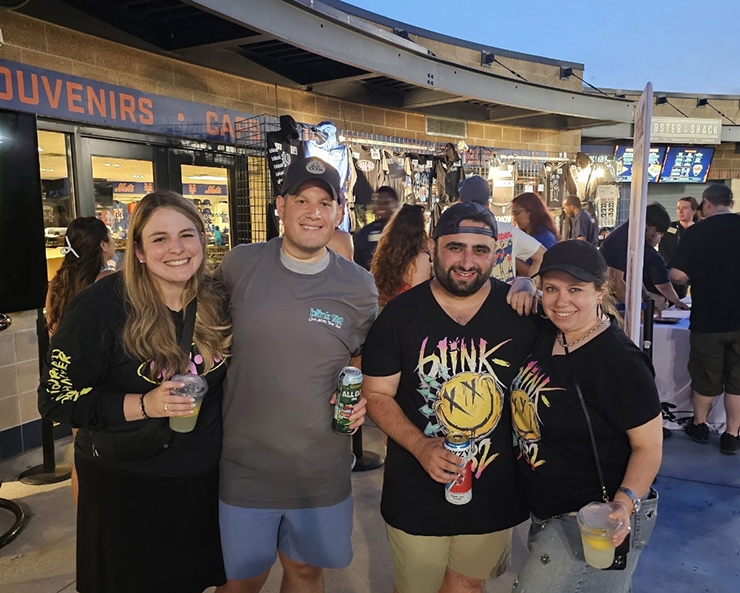
What began as a chance meeting grew into a genuine friendship. They attended concerts and sporting events together, spent evenings learning in the beis midrash, and connected over the deeply personal challenges of infertility, eventually experiencing the joy of welcoming additional children into their families.
This past Friday, just two hours before Shabbos, Marc found himself at Avromi’s home under circumstances no friend or family should ever have to face. Avromi, just 34 years old, had unexpectedly passed away from a heart attack on his wife’s birthday, while she was pregnant with their third child. The suddenness and tragedy of his passing are almost impossible to comprehend.
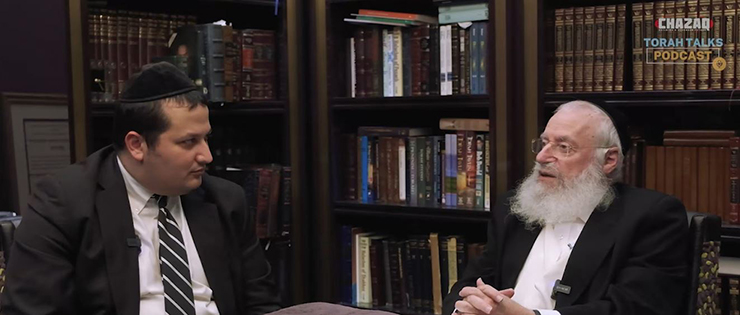
Among my own recent memories of Avromi and Marc was our time at the tenth anniversary celebration of Kinyan HaMasechta, a worldwide evening learning program in which participants master Talmudic texts in their original language. Their invitation led me to further my learning. Through listening to the maggid shiur, reading the text themselves, and developing an understanding of its vocabulary, halachah, and aggadata, participants deepen their connection to Torah learning.
Our teacher is Rabbi Dov Greer at the Beis Medrash of West Hempstead. Avromi was an enthusiastic supporter of this relatively new shul, conveniently located near his home. His involvement went beyond simply attending. He generously contributed his talents, helping with the shul’s website and designing a bumper magnet for Kinyan HaMasechta. These were characteristic examples of how he used his abilities to strengthen the institutions and people around him.
I moved to West Hempstead a year after Marc and also met Avromi at the pond. Here was another Russian speaker, someone whose many talents extended well beyond his professional career in special education.
I remember once expressing frustration about the tedious assignments at my job. My supervisor had gently reminded me that I should not allow my career to define me. I was also a father and husband, with hobbies, interests, and passions that gave meaning to my life. In many ways, Avromi embodied that lesson. He was a reminder that a person can contribute to the world in so many different ways and that our identities are shaped by far more than what we do for a living.
At his wife’s 30th birthday celebration, Avromi sang on the backyard deck he had recently built. I later discovered recordings of his performances on SoundCloud, including appearances at simchos in Crown Heights. Music was just one of his many creative outlets. He designed logos and posters for schools, shuls, and businesses. During the summer, he served as the photographer at his daughter’s camp, capturing memories for children and families. At home, he cultivated an impressive backyard garden filled with tomatoes and cucumbers.
Another side of Avromi’s creativity and dedication was his use of social media. In an article I wrote for this publication two years ago, I highlighted how he used Instagram, through the account @kosher_celiac_kid, to share his daughter’s diagnosis and the family’s journey of adapting to a gluten-free diet. What could have remained a private family challenge became an opportunity to help and connect with other families navigating similar circumstances. Even in this small but meaningful way, Avromi demonstrated his instinct to turn personal experiences into something that could benefit others.
Raised with a Chabad education, Avromi lived with the spirit of a shaliach. At Brooklyn College, he served as president of the Chabad Club, helping bring Jewish life and connection to fellow students. His commitment to spreading Yiddishkeit was not limited by geography, background, or affiliation. He was equally interested in learning from other Jewish traditions. He shared the teachings of Rabbi Yosef Palacci with friends and attended Sephardic events, reflecting a genuine curiosity and appreciation for the broader Jewish world.
Coming from Queens, I initially thought his last name was Borukhov. Although Avromi was not Bukharian, we shared an appreciation for Bukharian culture and often spoke about its presence in West Hempstead, particularly at the House of Torah.
Avromi also shared stories of his family’s roots in Belarus, where my wife was born and where my paternal family lived for centuries. His parents immigrated to Brooklyn from the Soviet Union and sought the Lubavitcher Rebbe’s brachah to have a child born here. That child was Avromi. His story reflected the journey of an older generation of Soviet-born Jews who worked to reconnect with their Jewish heritage and rebuild observant Jewish lives in America.
He also spoke about the origins of the Gorokhov family name, explaining its connection to Gurevich and Horowitz, surnames historically associated with Leviim. His wife’s family immigrated from Ukraine, and they met at a Shabbaton for Russian-speaking families, where a conversation between them led to this union of two teachers with similar backgrounds and goals in life.
Avromi was wonderfully comfortable moving between worlds. He could be thoroughly American, attending a Guns N’ Roses concert, and equally at home celebrating New Year’s Eve as my guest, where I served traditional Russian dishes such as shuba and kholodets, along with vodka. In a community where Russian speakers are relatively few, finding someone with whom I could share that language and cultural connection was special. Losing Avromi has therefore been particularly personal for Keren and me.
In the hours following his untimely petirah, the West Hempstead community responded with an extraordinary outpouring of love, support, and responsibility. Neighbors, friends, and acquaintances came together to honor Avromi’s memory and help Suzy through this unimaginable loss. The mitzvah of supporting widows and orphans, which we so often discuss in abstract terms, suddenly became painfully real and personal.
The levayah was filled to capacity. All the available Mishnayos were quickly taken by people eager to learn in Avromi’s memory. The Meal Train was filled with commitments for every Shabbos through the spring, when Suzy is expected to give birth to their third child. An online fundraiser quickly gained momentum, with donations pouring in from West Hempstead, Brooklyn, and supporters well beyond.
An email account was also established where friends and acquaintances can share their memories of Avromi. In the years ahead, his children will have the opportunity to read these messages and discover the many ways their father touched people’s lives. They will learn about the friendships he built, the kindness he showed, the interests he pursued, and the countless moments that made him who he was.
There are undoubtedly many more stories waiting to be told about this remarkable, multifaceted individual: stories about his mentschlichkeit, his zest for life, the warmth he brought to his home, his devotion to his wife, his love for his children, his music, his artistic talents, and his willingness to help others. No single article could adequately capture all the dimensions of a person whose life intersected with so many others.
Perhaps the most meaningful legacy Avromi leaves behind is not simply the impressive number of things he accomplished in 34 years but the many people who feel his absence and the memories they will carry forward. His children may be too young to fully understand the extraordinary person their father was, but through the stories shared by family, friends, and members of the community, they will gradually come to know him.
They will discover that their father was a man who embraced life, cultivated his talents, cared deeply about his family, and found ways to make a difference in the lives of others. They will see how much he was loved, how deeply he was valued, and how far his influence extended.
May these memories provide comfort and strength to Suzy and the children, and may Avromi’s remarkable life continue to inspire all those fortunate enough to have known him.
Yehi zichro baruch.
By Sergey Kadinsky