
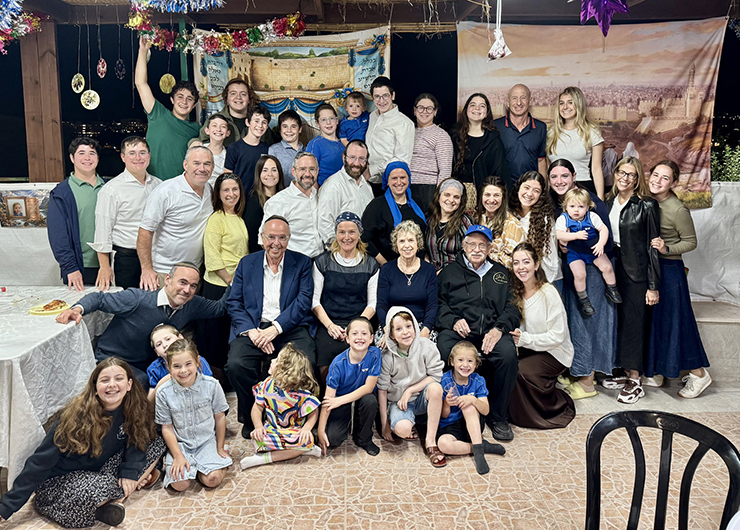
The holiday of Sukkos has always had a special significance in the life of my family. For more than 50 years, our sukkah in Staten Island served as a symbol of family unity, sharing, and a meeting place for three or four generations of its members. As we recounted family traditions and the grandchildren eagerly listened to their grandparents’ stories, it was truly z’man simchaseinu (a period of our happiness). We lived in the Northeast, and our Floridian children and granddaughters annually visited us for the holiday. When we decided to make aliyah and sold our house, they were unanimous in bemoaning the loss of the small, pink-canvased hut where we shivered together on frosty fall evenings.
Things changed after we settled into our new apartment in Rehovot. Now we were the visitors in our children’s sukkahs. We told the stories, trying to transfer to future generations the values and vision of our departed parents. The same warmth and joy were felt by our growing tribe. The cousins reveled in their closeness. On October 7, 2023, our perception of Sukkos changed forever. The eighth day of Sukkos that year saw our army-aged grandsons receive a tzav to report immediately to their units. The war with our Muslim cousins had begun, and the Jewish people suffered a brutal and tragic loss. Our brothers and sisters were murdered, raped, beheaded, and placed in dark underground detention; yet most of the world blamed the Jews.
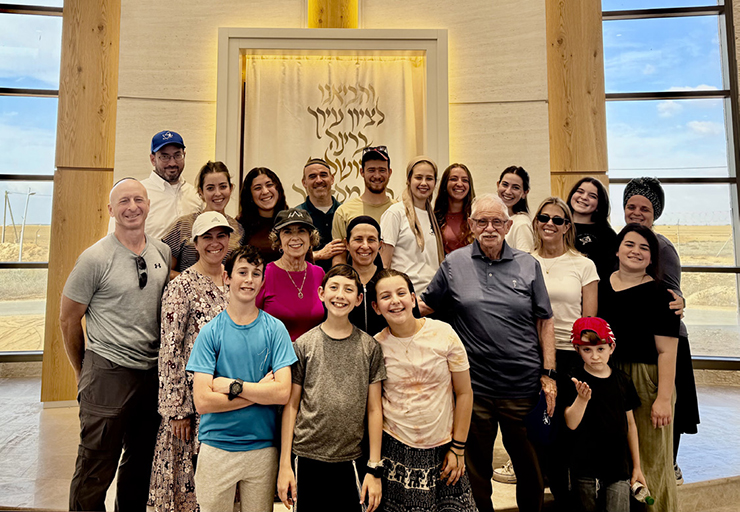
This past Sukkos, we returned to the Gaza envelope community. After three years, life had begun again. We met a farmer, Yair, who grows 400 varieties of hot peppers, and our grandchildren competed to see who could down the hottest ones. This pepper hothouse (no pun intended) was located on Moshav Pri Gan, a small farm-like village in the envelope. It was infiltrated on October 7, 2023, by heavily armed Hamas terrorists on motorcycles. It could not defend itself, but nine civil response team members from nearby Shlomit heard the distress messages and immediately responded. Four of these heroes fell that day, but not one civilian from Pri Gan was killed or taken hostage. We visited the synagogue in Shlomit built in the names and in honor of these four men: Avi Tzidon, Aviad Cohen, Reouven Chicheportiche, and Bechor Suid. Four widows and 15 orphans were left in their wake. Yet the world protests the fact that the Jews of Israel choose to eliminate the Hamas terrorists and all their leaders and supporters in order to prevent such massacres in the future.
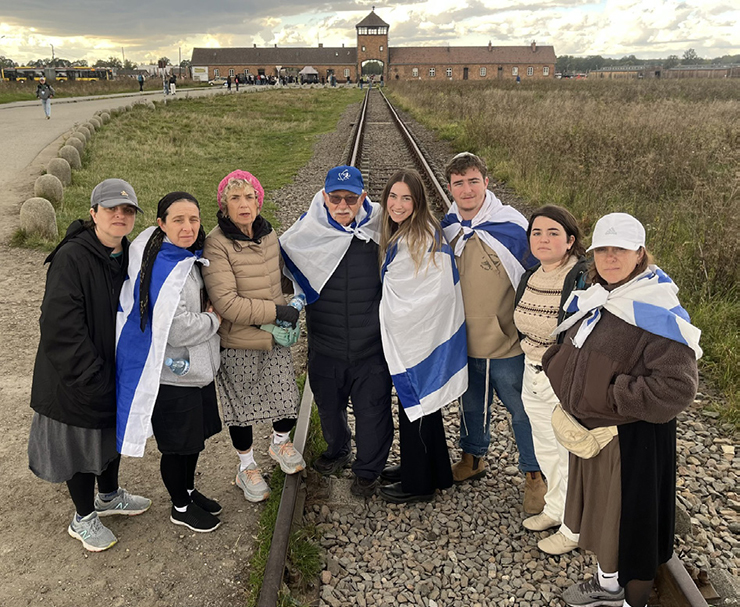
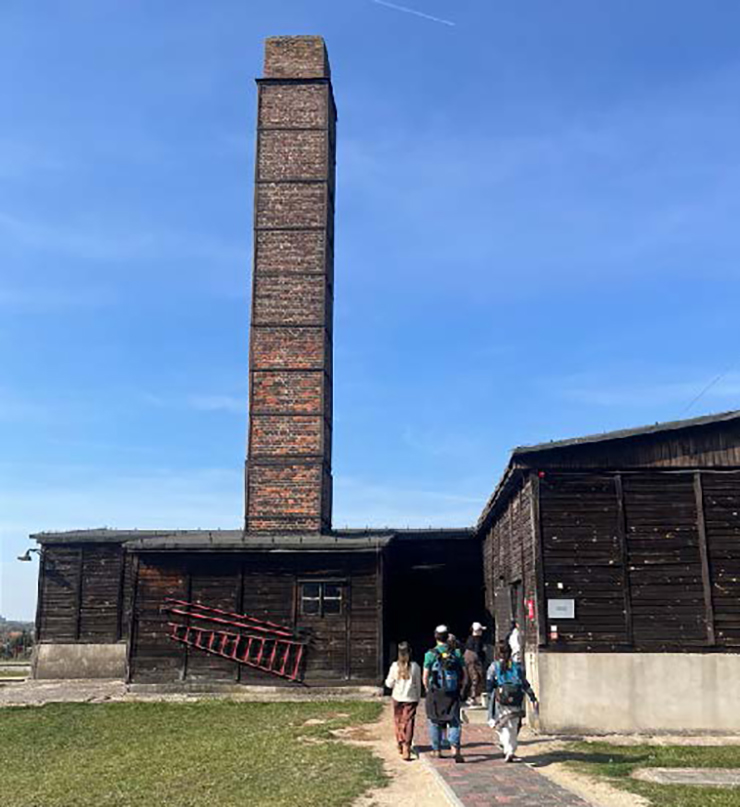
Immediately after Sukkos, we traveled on a family roots journey to Poland. Our mission was to learn about the shtetls (small villages) where our ancestors were born and died, and to visit the Nazi extermination camps. Three daughters, three grandchildren, and a son-in-law (who was our guide) accompanied my wife and me on this trip. I will skip the details of the now Judenrein shtetls where my grandparents lived and where my father likely had his bris milah, marking his transition into the Jewish people. These shtetls hold the remains of Jewish cemeteries, synagogues, and mikvahs, all attesting to the once-vibrant Jewish life that existed in Poland pre-war. At the start of the war, 3.3–3.5 million Jews (10% of the population) lived in Poland. Ninety percent of these were murdered by the Nazis and their collaborators. Ironically, we visited one of these murder camps, Majdanek, on October 7. While we visited, we heard reports of the mass pro-Palestinian and pro-Hamas protests roiling Europe and America. Will the world ever learn?
At Treblinka, Majdanek, Auschwitz, and Birkenau, we saw firsthand how the Nazi butchers worked, beat, abused, and finally slaughtered their victims. We learned that Rudolf Franz Ferdinand Hoss had testified that he became the greatest destroyer of human beings. He went to his death showing little remorse over the murder machine he oversaw. With tears in our eyes, we saw the remnants of 1.1 million Jews in Birkenau and viewed pictures of our people who had been starved to the point of skeletonization. Yet the world was not bothered.
While seeing the rooms where Jews were gassed with Zyklon B and the crematoria where their bodies were turned into ash, I reflected on October 7. One cannot compare the magnitude of these inhuman actions. One can compare, however, the intent. The Nazis’ goal was to rid the world of the Jews and all other undesirables. What would remain was the “Master Aryan Race.” The Hamas- and Palestinian Islamic Jihad-led barbarians wish to rid the world of Jews, certainly to make Israel Judenrein. I remember hearing a self-made tape of one of the Hamas barbarians calling his parents to brag that he had killed 10 Jews and his parents praising his “accomplishment.” Ultimately, the fanatical, fundamentalist Muslims see the world as populated only by believers and cleansed of infidels.
The hatred of the Nazis and of the Muslims toward the Jew is a repeating theme of antisemitism. Long before the founding of the State of Israel and long before the Jews had sovereign powers, Nazi leaders like Hitler and Muslim leaders like the Grand Mufti Amin al-Husseini of Jerusalem hated the Jews with a fierce intensity. Their hatred was not based on any rational analysis, but it was used to spur on their followers. Those who support Hamas in their quest for a Jew-free Holy Land today are equal to those who supported the Nazis 80 years ago. They must be confronted and their lies exposed. The contrast between our sukkah and the Nazi crematoria is stark: one, a transient home celebrating life; the latter, a permanent house of death. We must never forget what the haters have done to our people.
Dr. Naider was Provost and Vice President of Academic Affairs at the College of Staten Island and is a Distinguished Emeritus Professor of Biochemistry and Chemistry at the City University of New York. He lives in Rehovot, and the opinions in this article are his own.