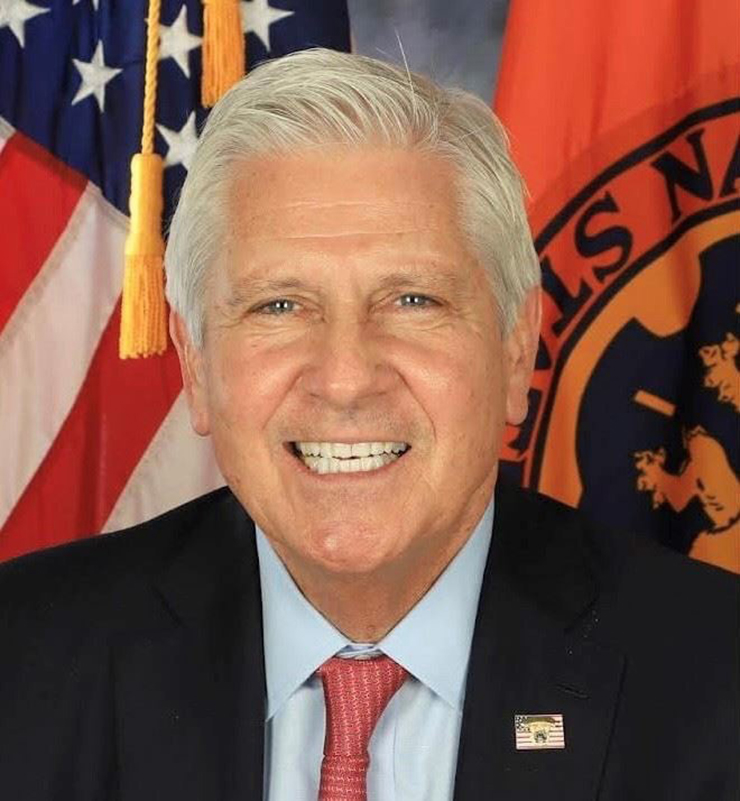
Before He Was Prime Minister: Philadelphia Magazine Revisits Bibi’s Teen Years
Israeli Prime Minister Benjamin “Bibi” Netanyahu grew up in West Jerusalem but spent his high...
 Queens Jewish Link
Connecting the Queens Jewish Community
Israeli Prime Minister Benjamin “Bibi” Netanyahu grew up in West Jerusalem but spent his high...

The Gemara recounts how the Sages told R’ Zeira, “One should always reject with the left hand and embrace with the right” (Sotah 47b). R’ Zeira, however, preferred to focus on the sin, not the sinner. He had faith that even a hard-core sinner, even a hoodlum who is wicked towards G-d and wicked towards people, has a very positive seed hidden away in his soul, which over time can eventually overpower all evil and hooliganism. The Gemara (Sanhedrin 37b) quotes Reish Lakish, who taught, “Even the empty among you are as full of virtuous deeds as a pomegranate.” R’ Zeira went even further and deduced the notion of highlighting the positive even in negative people.
Jewish life in the city of Nikolsburg reached a peak in the early 19th century, outshining that of other towns in Moravia. Jews benefited from the relatively benign regime of the Prince von Dietrichstein family, and a thriving community developed on the western slopes of the imposing hill on which stood the princely palace. Nikolsburg, the seat of the Moravian Chief Rabbi, had a well-known yeshivah, many shuls, and a large graveyard in which many of the famous rabbis of Moravia are buried.
Many times, in the spring and summer months, pigeons or doves would nest on the air-conditioner box outside the home of R’ Chaim Kanievsky Shlit’a. Since the mitzvah of shiluach hakan is brought in the Medrash as a segulah for having children, many childless couples would perform the mitzvah of shiluach hakan (sending away the mother bird and taking the chicks) on the air conditioner, as both R’ Chaim and his Rebbetzin performed the mitzvah many times.
Jewish life in the city of Nikolsburg reached a peak in the early 19th century, outshining that of other towns in Moravia. Jews benefited from the relatively benign rule of the Prince von Dietrichstein family, and a thriving community developed on the western slopes of the imposing hill upon which stood the princely palace. Nikolsburg, the seat of the Moravian Chief Rabbi, had a well-known yeshivah, many shuls, and a large graveyard in which many of the famous rabbis of Moravia are buried.
The Mishnah tells us that the Almighty, out of His great compassion, informs us that we, the Jewish people, are His children. The reason for this, explains R’ Leib Chasman zt”l, is that without this important tidbit of knowledge, we might never know who we really are. Imagine a man who, in theory, is the owner of great riches. He can have all the money in the world, but if he cannot access it, what good is all that wealth? We, the children of Hashem, however, were informed about this excessive gift, enabling us to access it, appreciate it, and elevate ourselves with this unduplicable gem.
The following story is told by R’ Yitzchok Zilberstein shlita in his sefer, Aleinu L’Shabei’ach. Meshulam was a star pupil in his cheder, and his parents had enormous nachas from him. Unfortunately, Meshulam’s spiritual descent began at age 17, when his mother passed away. One day, he informed his father that he was taking a trip to India together with a few friends. His father was heartbroken, and his anguish over Meshulam’s spiritual deterioration compounded the grief he felt over the loss of his wife. “Meshulam,” he said in a defeated voice, “what does a frum bachur have to do in India?”