
When swastikas began appearing across Queens – spray-painted on synagogues, schools and homes – Daniel Rosen, president and co-founder of IMPACT, knew the Jewish community could not stay silent.
IMPACT, a 501(c)(3) nonprofit launched in Westchester after October 7, was created to combat the surge in anti-Semitism and the rapid spread of anti-Israel disinformation targeting Jewish people online and beyond. Recognizing that today’s battlefield is social and digital, IMPACT built a free technology platform and mobile app designed to unite Jewish and non-Jewish communities into one coordinated network for action.
The platform transforms passive supporters into active participants – mobilizing schools, synagogues, organizations, influencers and individuals to take meaningful action online and offline. From social media campaigns and civic engagement to rallies, advocacy and grassroots organizing, IMPACT is built to turn outrage into measurable impact.
After the incidents in Queens, Rosen called me with a bold idea: Organize a major rally to support the community and send a clear message that hate would not go unanswered.
“I told Daniel, ‘I’ve never organized a rally before – but let’s go.’”
What followed was a 72-hour grassroots mobilization effort.
We secured permits, coordinated with police, reached out to rabbis, influencers, community organizations and allies – and just moved. The goal was simple: Organize to mobilize for the community.
For Rosen, the motivation behind the rally was deeply personal and urgent.
“You cannot come into our community and act in despicable ways and expect our community not to have an organized response,” Rosen said. “We wanted to let the world know that this shall not stand.”
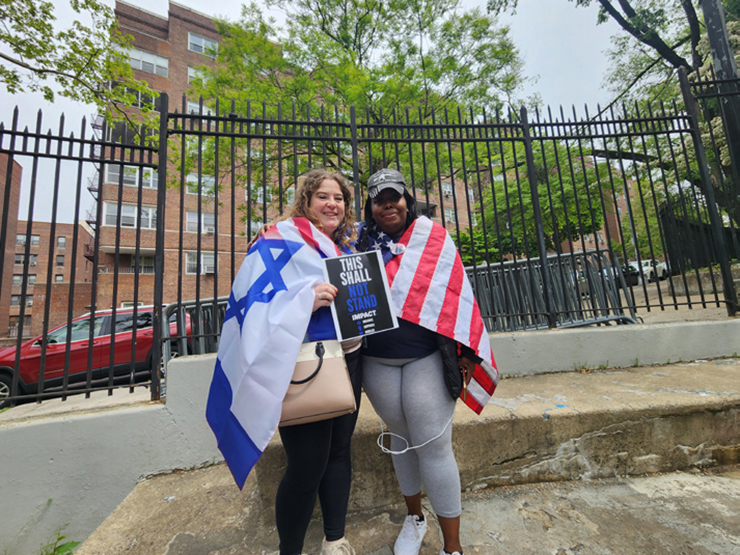
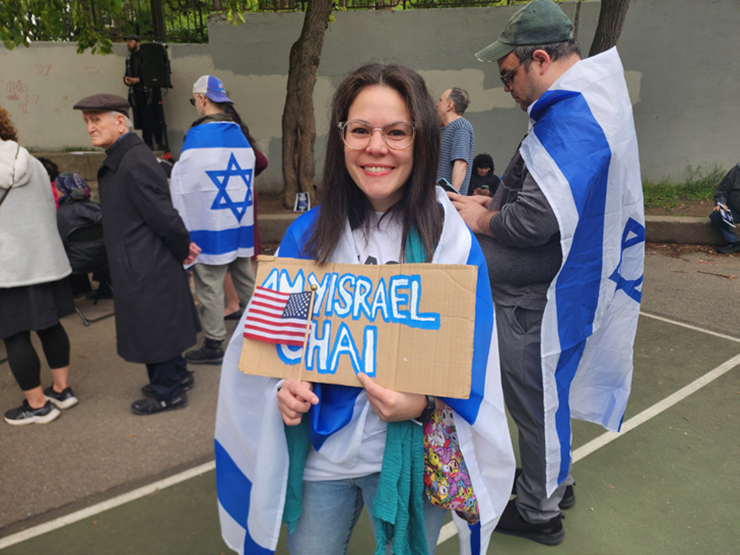
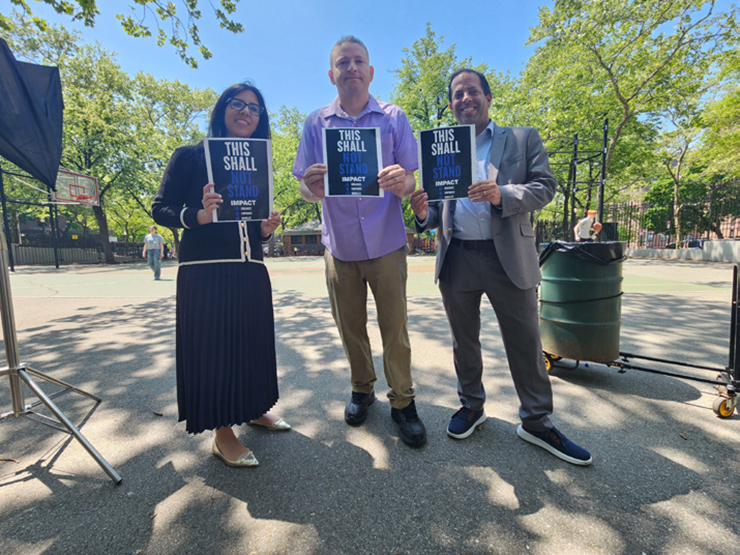
That idea became “This Shall Not Stand,” a massive rally at Yellowstone Park in Forest Hills that brought together more than 250 members of the Jewish community and allies from across the five boroughs and Westchester in response to the growing wave of anti-Semitism in New York City.
The rally transformed fear and outrage into resilience, unity, and action.
“This wasn’t just about graffiti,” Rosen said. “It was about the normalization of anti-Semitism in our neighborhoods, online, and on our streets. We wanted to send a clear message: The Jewish community is not going to stay silent.”
The event followed multiple anti-Semitic attacks in Forest Hills and Rego Park, where swastikas and “Heil Hitler” graffiti were spray-painted across synagogues, homes and Jewish institutions – including Congregation Machane Chodosh, a synagogue founded by German Jewish refugees who escaped Nazi Germany.
Days later, additional swastikas appeared in Queens parks and playgrounds, further alarming residents and community leaders.
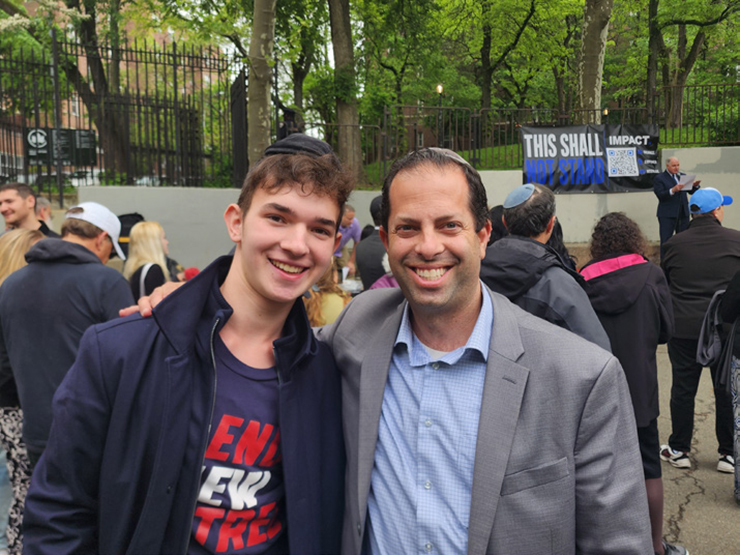
Under the banner “This Shall Not Stand,” organizers aimed not only to condemn hate, but to launch a new model of Jewish grassroots mobilization built around visibility, allyship, and action.
‘Visibility Stops Hate’
One of the rally’s featured speakers, Jayne Zirkle, Director of Communications and Outreach for The Lawfare Project, stressed the importance of public action and allyship.
“Grassroots activism is powerful because it creates visibility,” Zirkle said. “If people don’t see others standing up to anti-Semitism, they stay silent – and history has shown us what happens when good people stay silent.”
Zirkle emphasized that anti-Semitism affects far more than the Jewish community.
“It starts with Jews, but it never ends there,” she said. “Christians, Hindus, Muslims – everyone is impacted when hate and extremism are normalized.”
She praised the rapid mobilization organized by IMPACT and its partners.
“You see anti-Semitic and anti-Israel mobs showing up loudly across the city,” she said. “We have to show up, too. Never Again is now.”
That spirit of allyship was visible throughout the rally.
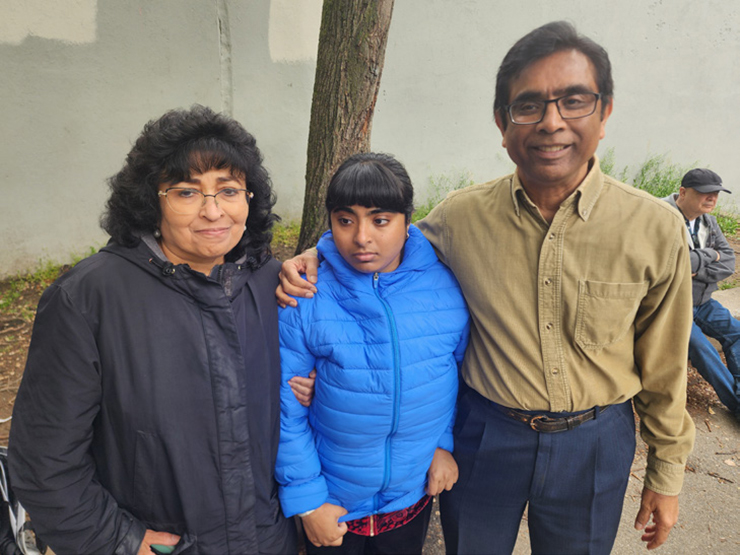
During the event, I met Pankaj Mehta, a Westchester resident and respected Hindu community leader who heard about the rally through community networks and felt compelled to stand with the Jewish community.
What began as a brief conversation at the rally quickly evolved into something much bigger.
Days later, Mehta – founder of Hindus for Universal Human Rights – joined me for lunch at J-Joe Kosher Pizza & Berrylicious in White Plains, where we discussed the importance of communities uniting against hate and amplifying resilience together.
“We need more storytelling between our communities,” Mehta said. “That’s how you build understanding, trust, and real relationships.”
Mehta shared his vision for creating an interfaith organization focused on building bridges between communities and developing protocols for how communities should respond when houses of worship or targeted groups come under attack.
“He wants no community to ever feel isolated again,” I reflected. “Whether it’s a synagogue, church, mosque, or temple, there should be a visible and organized response of solidarity.”
Mehta emphasized that the Jewish community must help shape that vision.
For me, the interaction captured the true power of the rally.
It blew me away how one interaction at the ‘This Shall Not Stand’ rally could forge so many meaningful connections. I told Pankaj I would connect him with the WJC because I truly believe we can build something together that transforms communities.
Moments like these, organizers say, are exactly why IMPACT was created.
This is how movements begin: people showing up for one another, communities building together – turning pain into purpose and action.
“Showing Up Is Activism”
Among the rally’s most inspiring voices was teenage activist Hillel Kornwasser, who shared how October 7 transformed his life.
“I was 13 years old when October 7 happened,” Kornwasser said. “I remember hearing that Israel was under attack and feeling completely helpless.”
A solidarity trip to Israel changed everything.
“I met a wounded IDF soldier who still smiled despite everything he went through,” Kornwasser recalled. “That taught me what Jewish resilience really means.”
After returning home, Kornwasser realized he had a responsibility to speak up.
“I came back wanting to talk about what I experienced in Israel, but people were talking about sports scores,” he said. “That’s when I realized if you experience something powerful, you have a responsibility to share it.”
Kornwasser has since become a prominent young advocate online.
“Showing up is activism,” he told the crowd. “Every person here today is an activist simply because they refused to stay silent.”
He also addressed the power of social media.
“When you respond online, millions of people may be watching,” Kornwasser said. “Your tone matters. Your message matters.”
Zach Sage Fox: ‘We Need Jewish Influencers’
Comedian, filmmaker, and activist Zach Sage Fox delivered some of the rally’s most passionate remarks, speaking openly about the silence he witnessed after October 7.
“There was a void,” Fox said. “And somebody had to fill it.”
Fox explained that his activism is deeply personal.
“My family fled Europe before the Holocaust. I made a promise to a Holocaust survivor that I would do everything I could to make sure something like this never happened again,” he said.
Fox criticized the silence of many celebrities and public figures amid rising anti-Semitism.
“They’ll show up for the Met Gala,” he said, “but they won’t show up for their own community when literal swastikas are appearing in New York City.”
Using comedy, undercover journalism, and viral social media content, Fox has become one of the most recognizable Jewish activist voices online since October 7.
“All the anti-Semitism is spreading through social media,” Fox said. “So why aren’t we fighting back harder there?”
Fox urged attendees not to overcomplicate advocacy.
“You don’t need to be a geopolitical expert to say swastikas are evil,” he said. “If you don’t want to create content yourself, share content. Amplify truth.”
One of the loudest cheers of the afternoon came when Fox declared: “We don’t just need Jewish doctors and lawyers anymore; we need Jewish influencers. We need keyboard warriors.”
Fox said the Jewish community must adapt to the modern information battlefield.
“Our ancestors during the Holocaust didn’t have the ability to instantly push back against lies,” he said. “We all carry supercomputers in our pockets now. Use them.”
For many attendees, the rally represented something larger than a response to one incident. It marked the beginning of a movement focused on reclaiming Jewish visibility, resilience, and communal strength.
As chants of “This Shall Not Stand” echoed through Yellowstone Park, the message was unmistakable: Anti-Semitism will not be normalized. It will not be ignored. And it shall not stand.
Aaron Herman is a nonprofit fundraiser, video journalist, and growth strategist specializing in Jewish storytelling and advocacy. He is Co-Founder and CEO of IMPACT, a movement to organize, empower, and mobilize communities against hate while celebrating Jewish joy (Join the movement and follow on socials at @joinimpactnow). He lives in White Plains with his wife, Tani, and sons Michael and Ari. Aaron can be reached at This email address is being protected from spambots. You need JavaScript enabled to view it..