
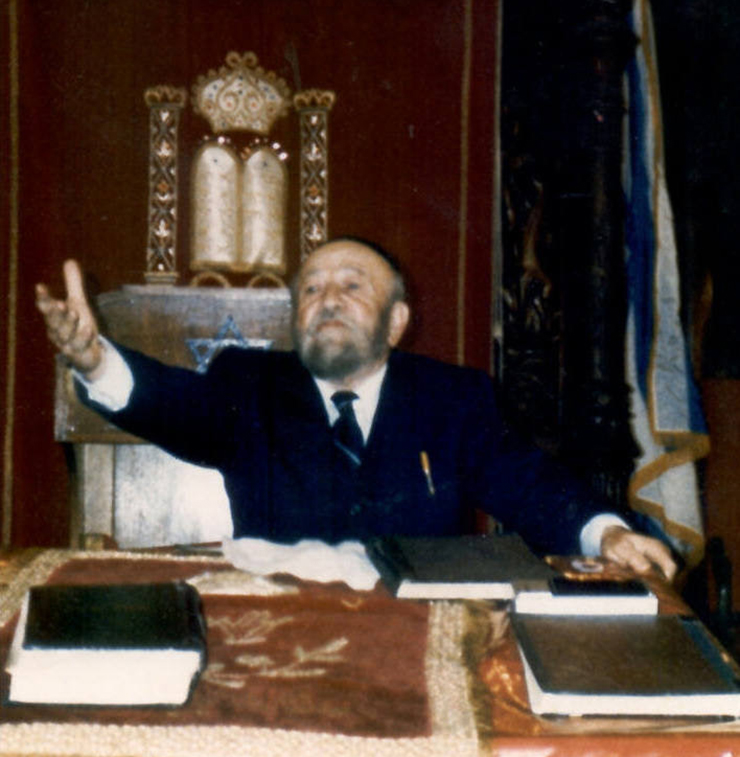

Among the creative neighbors I’ve met in West Hempstead, Jonathan Grossman shares his knowledge of music through a violin gemach for children and by highlighting overlooked composers and performers. On the anniversary of Kristallnacht, he shared the story of Dick Kattenburg, a Dutch Jewish violinist and composer who was murdered at Auschwitz at age 24. In that short life, he created more than 30 works that survived in his manuscripts. Grossman spoke at Young Israel of West Hempstead, sharing his music, the fate of his family, and the stories of those who sheltered them.
“Some 60 years after his death, a remarkable collection of his manuscripts came back to life,” Grossman said. “How did he compose so much while in hiding, and why is he unknown? As I researched, I encountered stories of ordinary people in extraordinary circumstances.”
The Kattenburgs were a prosperous Jewish family whose livelihood came from the textile industry. “That prosperity gave the children opportunities. Dick received an excellent musical education growing up in a world where music and art were part of everyday life,” he said.
Nazi Germany invaded the Netherlands in May 1940, quickly setting up a collaborationist regime that excluded and segregated Jews. His father, Louis, died shortly afterward. As conditions worsened for Jews, the Hollandia Kattenburg factory in Amsterdam, where Louis had worked before his death, protected its Jewish workers. “The factory was considered essential for German wartime production, and the Jewish workers received temporary protection from deportation. Their children were covered too.”
By the autumn of 1942, pressure to increase deportations made the factory a target. “A former employee accused Jewish workers of resistance activities and sabotage. On November 11, German police descended on the factory. They separated the Jewish workers. 367 were arrested, and then the authorities rounded up their families.”
Of the 826 men, women, and children on the Kattenburg transport, fewer than two dozen survived the war. Among Grossman’s sources was Joyce Bergman, daughter of Dick’s sister Daisy and her husband, Bernard van Hessen. “About a year ago, I started communicating with Dick’s relatives. Once I explained my interest, everyone was very encouraging, and the network expanded,” he said.
Grossman received photos of the Kattenburg family, including one of Dick’s grandfather. “Of Meir Kattenburg’s nine grandchildren, only four survived the war. November 11, the day of the raid, was Dick’s birthday. At the site of the former factory is a memorial, where a commemoration is held each year.”
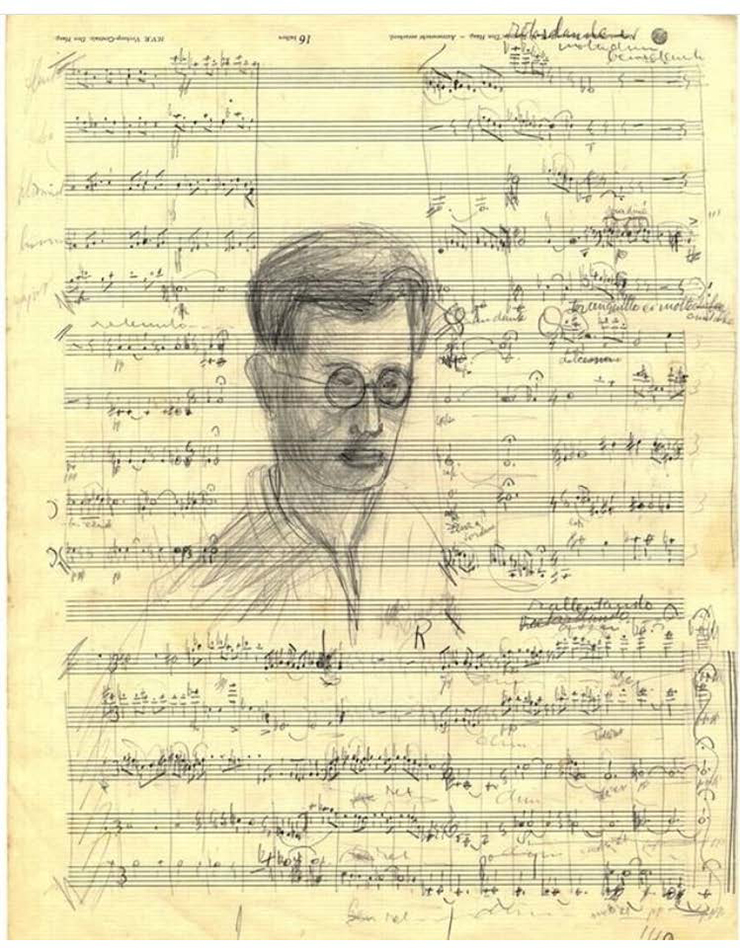
By the time of the raid, Dick’s family had split up and sheltered with friends. Dick’s network of fellow musicians included Theo Kroeze, a musician and painter in Utrecht. “Theo married a Jewish woman, Stella van Son, on November 11, 1941. She was part of their social circle. They divorced shortly after the war ended. Was their marriage a sham? I got in touch with Theo’s daughter, Janine, to find out.” She confirmed that the marriage of convenience was intended to save Stella’s life. Grossman recounted: “You may think that Theo was a hero. He insisted that he was no hero.” Grossman’s research into Kattenburg’s music included the manuscript for his 1938 violin duet titled Escapades, dedicated to Kroeze.
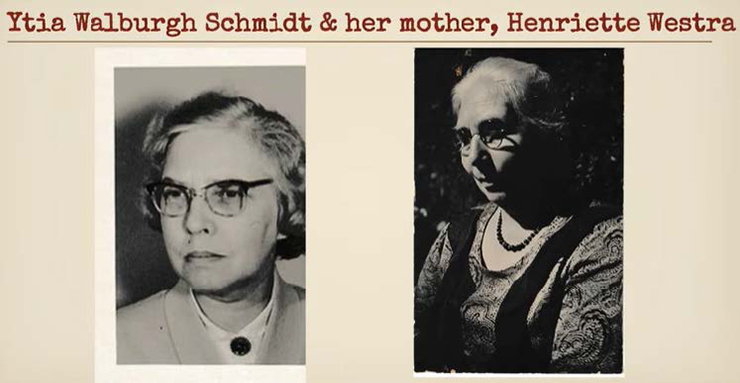
Another member of this network was Ytia Walburgh Schmidt, a musician who, along with her mother and sister Wabine, sheltered Dick. “That musical friendship became a lifeline,” Grossman said. Her sister Henriette objected strongly to her mother and sister sheltering Jews. Dick’s sister Daisy suspected Henriette of collaborating; luckily, Ytia helped Dick find another hiding place.
“Ytia has never received recognition from Yad Vashem. I couldn’t find a photograph of her. Ytia and her sister Wabine never had any children. It was a complicated endeavor. I found a cousin of Ytia who provided a photo.” Grossman then contacted the Dutch desk at Yad Vashem to submit evidence concerning Ytia, her mother, and her sister for consideration as Righteous Among the Nations. The Dutch desk indicated that the evidence warranted opening files for consideration. Grossman intends to pursue recognition for Ytia, Wabine, and their mother.
Dick had to find other hiding places and was betrayed in May 1944. He was arrested and deported to Auschwitz; the precise circumstances of his death remain uncertain.
The Kattenburgs were not very religious, but with the imposition of Nazi racial laws, Dick’s music took on a visibly Jewish identity. “He arranged Hebrew songs, Jewish symbols, and Jewish calendar dates in his manuscripts,” Grossman said. “He signed his name as David Ben Yehuda. When I tried to verify his father’s Hebrew name, I ran into a problem.” His father, Louis Kattenburg, died in 1940 and was remembered as Levi. This brought Grossman to the story of Dick’s younger brother Tom, who survived the war and was among the Haganah soldiers killed in 1948, shortly after Israel declared independence.
“He was killed by the Egyptians near Ashdod. His body was never found.” A cenotaph on Mount Herzl describes him as the son of Levi. But Bergman confirmed that her grandfather had a different Hebrew name. An old photo of Louis in her collection was inscribed on the back as Yehuda son of Meir Kattenburg. “This is what I was looking for! Dick’s manuscript and father’s photograph gave us his Hebrew name, allowing us to properly memorialize him.”
Bergman’s mother was sheltered during the war by resistance activists Henri and Louise Asselberghs. Three of their sons escaped to England and fought in Normandy. In 1993, Yad Vashem posthumously recognized their act of heroism. “Their grandson, Chris Asselberghs, sent me photos of them,” Grossman said. “Collaborators lived around the corner from them.”
Daisy and Bernard, while in hiding themselves, also helped shelter two American airmen who parachuted into the Dutch countryside in 1944, Daniel Redd and Chris Smith. “There were nine crew members stranded behind enemy lines. Local Dutch farmers provided aid.” The Germans captured only one member of the crew and then executed four Dutch civilians for assisting the enemy. The Germans threatened to execute 18 more men, resulting in five of the Americans surrendering. Three escaped, with two of them assisted by Daisy Kattenburg and Bernard van Hessen. “Two Jews in hiding, helping to hide American servicemen. After the war, Smith visited Daisy’s uncle in New York to tell him that they were alive,” Grossman said.
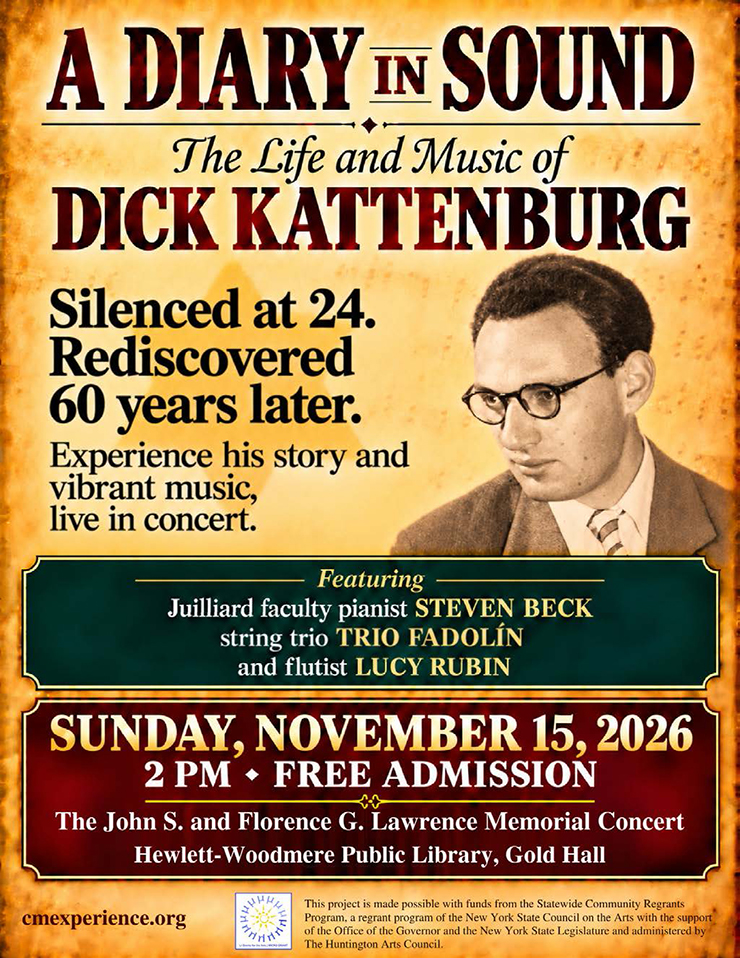
A tax attorney by trade, Grossman learned the piano in his youth and then the cello with his children. After his wife’s cousin, Hersh Goldberg-Polin, was taken hostage by Hamas and subsequently executed, Grossman revived the music of a Holocaust composer for a memorial concert and later decided to create a nonprofit, The Chamber Music Experience, to promote the appreciation of classical music in the Jewish community. This Sunday at 2 p.m. at the Hewlett-Woodmere Public Library, Grossman will share the music of Dick Kattenburg, with five musicians performing on piano, violin, viola, cello, and flute. The concert received a grant from the New York State Council on the Arts, administered through the Huntington Arts Council. Grossman spoke with appreciation that NYSCA is helping to revive and publicize the music of a young composer killed for being Jewish.
By Sergey Kadinsky