This week, I attended our fourth-grade twins’ siyum on Mishnayos Yoma in their yeshivah, the Yeshiva of Spring Valley.
Most of Maseches Yoma is dedicated to describing the special avodah performed by the Kohen Gadol in the Beis HaMikdash on Yom Kippur. Five times throughout the day, the Kohen Gadol would immerse in a mikvah, each time changing his clothing, alternating from his regular garments to special white linen garments. At the siyum, I was reviewing the second-to-last mishnah with Gavriel and Michoel, in which the mishnah states that at the conclusion of the day’s holy service, the Kohen Gadol immersed one final time, after which “they brought him (the Kohen Gadol) his own clothing.”
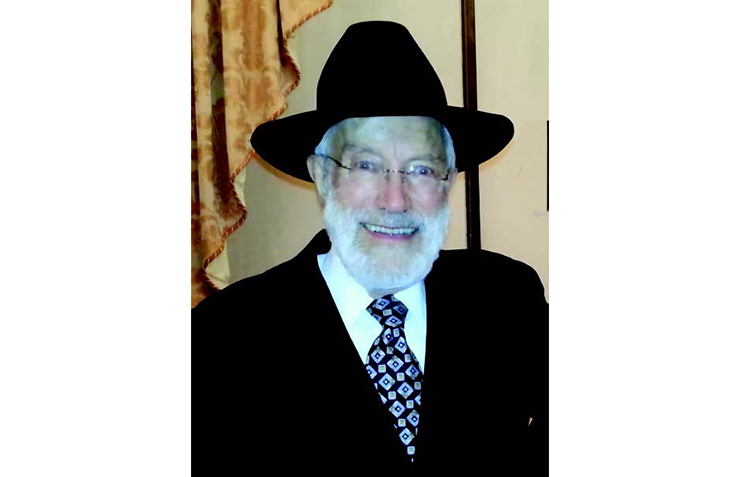
As we learned those words, my mind wandered back 35 years earlier. I was in fourth grade in the Yeshiva of Spring Valley, and my Mishnayos rebbi was Rabbi Mendel Balsam. Rabbi Balsam was one of the sweetest, gentlest, and warmest rebbeim I ever had.
These days, there is a plethora of beautiful, digitized pictures that bring the details of the Yom Kippur avodah – and Mishnayos generally – to life. But back then, there was no such thing. Rabbi Balsam gave out copies of pictures he personally drew to help us understand the Mishnayos.
Each Friday, Rabbi Balsam handed out a Hebrew word-find with words based on the parshah. There was no computer generating program then. The entire thing was handwritten each week.
I remember that, during class, he would sometimes allow a structured conversation with the entire class. Often, the conversation would wander from one topic to another. Afterward, he would always ask how the conversation started, and we would laugh as we recounted the progression of tangents.
On the rare occasion when Rabbi Balsam would become upset – dealing with close to 30 fourth-graders all morning will do that to you – his face would become beet red and he would say annoyedly, “Do you want to see an angry rebbi?” Then he would walk over to the window and look outside. Usually, a few seconds later he would turn back toward us and laugh. I was amazed by his self-control and how quickly he calmed himself down.
While I was learning that mishnah with my sons, I remembered learning the same mishnah with Rabbi Balsam. I remember that he pointed toward the Mishnayos excitedly, noting that we had come to the conclusion of the Kohen Gadol’s glorious avodah, which we had spent so many months learning about.
To this day, I love learning about the Beis HaMikdash. I have a few different s’farim with drawings and illustrations of the different chambers and basic structure of the Beis HaMikdash. I visited the famous model in the Israel Museum a few years ago, as well as the one atop the Aish building in Yerushalayim. I also have a few models of the Beis HaMikdash in my home.
That love was ignited by Rabbi Balsam when I was in his class in fourth grade.
When I decided that I wanted to write about Rabbi Balsam for this column this week, I searched my computer to see if I had ever written about him before. I came across a letter I had emailed him in November 2009, which I had forgotten about.
I am including part of it below:
“Dear Rebbi,
“A few years ago, as per the suggestion of a friend, I began learning two mishnayos a day. Baruch Hashem, I am nearing the end of Seder Kodashim and am learning Maseches Midos, having just finished Maseches Tamid.
“I do not have such a good memory, but I am amazed at how many of the mishnayos I am still familiar with because of my beloved fourth-grade rebbi. I remember the model of the Mizbei’ach that you created and brought into class to help depict and describe the different forms of avodah performed upon it. When I was in fourth grade, I had a dream of constructing a similar one. I also remember all the diagrams you gave us.
“In fact, yesterday I came across the mishnah that speaks of a little ring on a board that was lifted and led to an underground passageway. In my mind, I can still picture the drawing you gave out on that mishnah.
“As I go through the mishnayos, I realize how much harder it would be if I didn’t have those mental images and prior knowledge in my head.
“So, I guess I wanted to say Thank You! It’s now been almost 20 years, but at the moment it feels like yesterday.
“With everlasting gratitude,
“Your eternal talmid,
“Dani”
*****
He replied:
“Dear Dani shlita,
“Thank you so much for your heartwarming words.
“It is true, as you probably know from your own experiences as a rabbi/rebbi, the good feeling that comes with acknowledgements from your audience and talmidim. Such very sincere expressions of appreciation as yours are especially meaningful.
“May you be zocheh to continue bringing the joy and pleasure of learning to others amus”h.
“Mendel Balsam”
*****
I am thankful that I took the time to express those feelings.
My life crossed significantly with Rabbi Balsam 24 years ago, when his son-in-law and daughter, Rabbi Aryeh and Dini Adest, introduced me to their neighbor’s daughter, who became my wife. They were not only our shadchanim, but they were – and are – devoted guides and inspirations for us, particularly during the early years of our marriage.
It was special for me to again meet with and interact with Rabbi Balsam during the Yamim Tovim when he was visiting the Adests, and my family was visiting my in-laws.
Rabbi Balsam passed away a few months ago at the age of 97. He embodied the words of the Mishnah (Avos 4:17): “The crown of a good name rises over all of them (all other crowns).”
May his memory be for a blessing through the many students and admirers that he inspired.
Rabbi Dani Staum is a popular speaker, columnist, and author. He is a rebbi in Heichal HaTorah in Teaneck, New Jersey, principal of Mesivta Orchos Yosher in Spring Valley, New York, and a member of the administration of Camp Dora Golding. His writings can be found at strivinghigher.com. Looking for an inspirational speaker or scholar-in-residence? Contact Rabbi Staum at 845-641-5094 or at This email address is being protected from spambots. You need JavaScript enabled to view it..