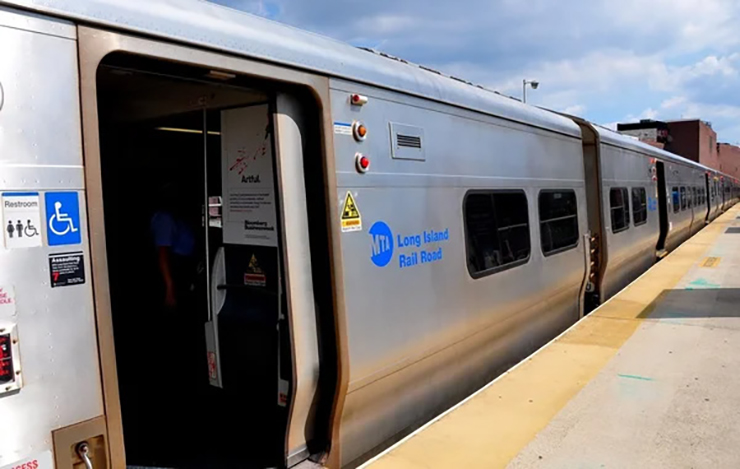
New Yorkers are witnessing the clearest evidence yet that Governor Kathy Hochul is simply not equipped to lead the Empire State. The shutdown of the nation’s largest commuter railroad, disrupting more than 300,000 daily riders, is not just a labor dispute—it is a predictable consequence of political gamesmanship, fiscal mismanagement, and a glaring inability to negotiate in good faith. Hochul’s handling of this crisis reveals a governor more focused on short-term political gain than on actual governance.
According to the head of a major transit union, Hochul and her allies at the Metropolitan Transportation Authority deliberately pushed the LIRR unions toward a strike to score political points against her Republican opponent, Nassau County Executive Bruce Blakeman. John Samuelsen, International President of the Transport Workers Union, told the New York Post that the timing was no coincidence. “She believes that she can get a leg up in Nassau and Suffolk County by triggering a strike and then allowing the blame to be cast on Blakeman and the Republicans,” Samuelsen said.
This is cynicism at its worst. Instead of working to avert a crisis that strands commuters, inflates costs for businesses, and burdens families, Hochul allegedly played politics with a vital method of transportation for hundreds of thousands of people. Her spokesperson dismissed the claims, insisting the focus should be on “protecting riders and taxpayers.” But actions speak louder than spin. The MTA, under Hochul’s control, ignored recommendations from two federal panels that could have prevented the walkout. They brought in Gary Dellaverson—a figure tied to past contentious negotiations—as chief negotiator, a move Samuelsen called a foreshadowing of failure.
The human cost is staggering. Long Islanders who rely on the LIRR to reach jobs in Manhattan are now forced into cars or buses, facing gridlock and the controversial $9 congestion pricing toll. Bruce Blakeman has stepped up where Hochul has not, calling for an immediate suspension of the toll during the strike and supporting legislation to do so in any future transit disruptions. Hochul claimed there’s “no legal mechanism” to pause it, even as she encouraged people to simply “stay home” or work remotely—advice that ignores the realities of hourly workers, small business owners, and essential personnel. It’s akin to the out-of-touch attitude Democrats had during Biden’s gas crisis in 2022 when they told people to just buy electric cars.
Blakeman’s response highlights a deeper contrast in leadership styles. As Nassau County Executive, he has successfully negotiated numerous contracts with unions, demonstrating the pragmatism and competence that Albany desperately lacks. This is not the first time Blakeman has been forced to clean up after Hochul’s failures. When the state-managed Excelsior healthcare plan collapsed, it left Nassau County scrambling. Blakeman and CSEA Local 830 had to secure a new, sustainable healthcare plan for county employees, stepping in to protect workers and taxpayers from yet another state-level debacle.
Meanwhile, the strike exposes the unsustainable compensation structure at the LIRR that Hochul’s administration has failed to reform. Payroll records show hundreds of LIRR workers earning massive overtime while picketing. Nearly a dozen pulled in over $200,000 in overtime alone last year—figures that rival or exceed Hochul’s $250,000 gubernatorial salary. One foreman, Leonardo Espinosa earned $244,954 in OT on top of his base salary, for a total of nearly $397,000. Others followed close behind, with totals exceeding $350,000 or $380,000.
Overtime accounts for a whopping 22% of the LIRR’s payroll, according to Manhattan Institute fellow Ken Girardin. These workers are already among the best-compensated in the nation, yet unions are demanding retroactive raises totaling 9.5% over three years plus another 5% this year. The MTA has offered far less, while pushing for work-rule changes to curb the overtime bloat. The system is “so distorted,” Girardin noted, that it’s difficult to distinguish legal waste from illegal schemes—echoing past LIRR overtime fraud scandals that led to federal convictions.
Hochul’s office has remained largely silent on these eye-popping overtime numbers, even as the strike drags on. MTA officials express outrage but have failed to deliver a deal that balances worker pay with long-term sustainability. Any settlement that simply caves to union demands risks fare hikes, higher payroll taxes, or increased congestion tolls—further driving up costs for the very commuters already suffering. As Kyle Strober of the Association for a Better Long Island warned, an unsustainable deal will make the region less affordable and accelerate out-migration from New York.
Bruce Blakeman offers a different vision. His track record in Nassau County proves he can negotiate contracts, manage budgets, and prioritize commuters over political theater. His willingness to confront congestion pricing and support affected workers during this crisis shows the proactive leadership missing in Albany. While Hochul plays games with strikes for electoral advantage, Blakeman focuses on practical relief and long-term fixes.
New York cannot afford four more years of this. The LIRR strike is a wake-up call. Commuters stuck in traffic, businesses losing revenue, and families rearranging their lives deserve better than a governor who at best cannot negotiate a contract and at worst engineers crises for political gain. New York is currently on the wrong track, and it’s time to switch trains.
Moshe Hill is a political analyst and columnist. His work can be found at www.aHillwithaView.com and on X at @HillWithView.