Last week’s observance of Israeli independence was customarily observed by Modern Orthodox yeshivahs with the expected simulations of a shuk, where tables displayed falafel, shawarma, and Bissli, with flavors of Prigat to wash down these fast-food dishes. Israeli pop music played to set the mood.
“Isn’t that the song of the Tel Aviv pride parade?” my daughter later asked me, in regards to Omer Adam’s party hit titled “Tel Aviv.” Her question felt like a needle suddenly making a scratch on a record disc: “Can they marry in Israel?”
I have never discussed the song with her, Israeli policy concerning marriage, or Omer Adam. Perhaps she heard about him from her classmates or searched for the song on her own.
The previous week, we tackled the question of listening to music during Sefirah. Kosher supermarkets take the strictest approach by playing mournful vocal compositions, and nearly everyone agrees that attending concerts during Sefirah is improper. My daughter asked: “My friends’ parents listen to music: Why don’t we?”
I responded that minhagim vary among Jews and I would speak to our rabbi for clarification. We were told that indeed, listening to recorded music is not forbidden and for many people it is a means to relieve stress. Supermarkets take the strictest approach because they understand that most of us will not mind the inconvenience of Oy Oy Oy while shopping. I would rather they play nothing at all for these 33 days.
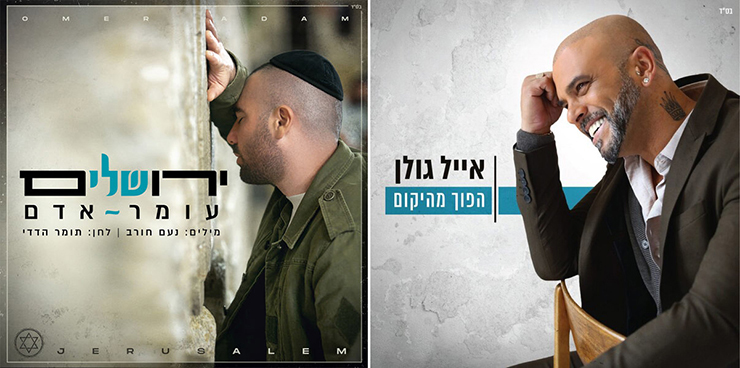
Back to Omer Adam. I answered that for many people, the meaning and lyrics are disregarded for the catchy beat. I was also a deep thinker when I was her age: When others danced, I thought about the lyrics, the message, and the singer.
“Omer Adam is a secular pop star, and he makes songs for everyone,” I answered. “He performed ‘Tel Aviv’ for a specific audience. But he is also known for ‘Modeh Ani,’ a very spiritual hit. Then there is ‘Mahapecha Shel Simcha,’ a party hit that is relatively tame when you consider its words.”
I also noted Eyal Golan, whose “Mi Shemaamin” is a standard at Israel-themed celebrations: After the October 7 attack, his “Am Israel Chai” boosted the morale of an embattled nation. The performer is visibly secular, but seemingly all Israelis have a spiritual feeling in their lives. Look further than the tattoos and piercings: There is a Jewish soul longing to express itself, connect to its Creator, people, and land. Facing hostility from nations and boycotts from foreign pop stars, Israeli performers from across the spectrum of religious observance are tapping into Tehilim and p’sukim from Tanach for inspiration. There is a feeling of a spiritual revival even as they remain divided on so many social and political matters.
On May 31, we will be hearing many of these Israeli pop songs at the Celebrate Israel Parade, the largest pro-Israel gathering in the Diaspora, which spans the religious and political spectrum. I have heard liberal groups marching to Mordechai Ben David and Modern Orthodox groups waving their banners to the music of Omer Adam and Eyal Golan.
My daughter is in her Bat Mitzvah year, when her classmates host parties with playlists that blend American and Israeli hits. Her Zionist conscience is aware of pop stars who use their social media platforms to disparage Israel, while her Jewish sentiments recognize which songs to avoid on account of their lyrics and videos. It is possible to include secular music in celebrating Israel and milestones in our children’s lives as long as we are aware of their deeper meaning. As a thinking people, music is more than a beat: It carries a message.