The legacy of President Donald J. Trump will be one of a leader who took decisive action to topple dictatorships and achieve world peace. He did so in his first term, when he brought China, North Korea, Russia, Iran, and Venezuela to heel merely with the threat of force. Joe Biden, in contrast, essentially showed all these adversaries the neck of America. Cleaning up the mess was harder this time, because these nations know that Trump has only four years. So the action must be far more final.
After a bold raid in arresting Venezuela’s dictator Nicolás Maduro, it was hard to think that Trump could be topped. So when American forces joined Israel in targeting Iran’s nuclear facilities, missile sites, and key leadership, including the elimination of Supreme Leader Ayatollah Ali Khamenei, it was more than a geopolitical maneuver; it was a statement. There is only one world power: the United States of America.
This bold action, dubbed Operation Epic Fury, was not an act of aggression but a necessary response to decades of Iranian malice. It showcased the unbreakable alliance between the United States and Israel, two beacons of democracy in a turbulent region, as they neutralized a persistent threat to peace. Trump’s vision and Israel’s resilience have reshaped the Middle East, paving the way for stability and prosperity.
To understand this triumph, we must trace Iran’s long history of destabilization, beginning with the 1979 Islamic Revolution. That year marked the birth of a theocratic regime obsessed with exporting chaos. The seizure of the U.S. Embassy in Tehran, holding 52 Americans hostage for 444 days, was Iran’s opening salvo against the West. It set the tone for a pattern of aggression: direct attacks on Americans and their allies, often veiled through a web of terrorist proxies. Iran’s leaders, the ayatollahs, have funneled billions into sowing discord, viewing the U.S. as the “Great Satan” and Israel as a target for annihilation.
Throughout the 1980s, Iran backed Hezbollah in Lebanon, which bombed the U.S. Embassy and Marine barracks in Beirut in 1983, killing 241 American service members and 58 French troops. This was no isolated incident; it was part of Iran’s strategy to expel Western influence from the Middle East. In the 1990s and 2000s, Tehran supported insurgencies in Iraq, supplying deadly explosively formed penetrators (EFPs) that killed over 600 U.S. troops during the Iraq War. Iran’s Quds Force, the elite arm of the Islamic Revolutionary Guard Corps (IRGC), orchestrated these operations, turning proxies into extensions of its will. Meanwhile, in Yemen, Iran armed the Houthis, enabling attacks on Saudi Arabia and international shipping lanes, disrupting global trade and escalating sectarian tensions.
Iran’s interference extended to Syria, where it propped up Bashar al-Assad’s brutal regime, contributing to a civil war that displaced millions and created fertile ground for ISIS. In Bahrain, Tehran incited Shia unrest to undermine the Sunni monarchy. Across the region, Iran’s fingerprints are on assassinations, bombings, and cyberattacks. The regime’s ballistic missile program and nuclear ambitions amplified these threats, aiming to dominate the Persian Gulf and beyond. By 2020, the U.S. State Department chronicled Iran’s outlaw behavior, noting its role in over a dozen conflicts and terrorist acts. This wasn’t mere rivalry; it was a calculated campaign to destabilize the Middle East, killing Americans and allies while oppressing its own people.
Confronting the ayatollahs directly proved immensely challenging due to their extensive proxy network. This “Axis of Resistance”—including Hezbollah in Lebanon, Hamas and Palestinian Islamic Jihad (PIJ) in Gaza, the Houthis in Yemen, and Shia militias like Kataib Hezbollah in Iraq—acted as Iran’s shield and sword. These groups allowed Tehran to wage asymmetric warfare without direct accountability. Hezbollah, Iran’s most potent proxy, received hundreds of millions annually, along with advanced weapons, enabling it to threaten Israel with over 150,000 rockets. In Iraq, Iranian-backed militias like Asaib Ahl al-Haq and Harakat Hezbollah al-Nujaba attacked U.S. bases, killing contractors and soldiers.
Spreading itself out this way made a direct strike on the ayatollah nearly impossible. His death could have triggered a global response that would have been impossible to defend against. Iran’s strategy was to entrench itself in failed states, creating “land bridges” from Tehran to the Mediterranean, supplying arms to Hezbollah via Syria. This network not only protected the regime but amplified its reach, allowing attacks on Israeli targets worldwide and U.S. interests in the Gulf. For years, Western leaders, including previous U.S. administrations, hesitated to act decisively, fearing escalation.
The turning point came on October 7, 2023, when Hamas, fueled by Iranian arms and training, launched the assault on Israel. This motivated Israel like never before to not only take out Hamas, but all of the proxies that conducted attacks against it. Israel targeted Hezbollah’s arsenal in Lebanon, eliminating leaders like Hassan Nasrallah and degrading its missile stockpile through precision strikes. In Yemen, coordinated efforts with allies curtailed Houthi attacks on shipping. In Syria and Iraq, Israel struck IRGC commanders and supply lines, disrupting the “land bridge.”
This systematic dismantling exposed Iran’s vulnerabilities. Proxies, once formidable, crumbled under Israeli innovation—from pager explosions targeting Hezbollah operatives to airstrikes on command centers. By mid-2025, Hezbollah was a shadow of itself, its forces depleted and morale shattered. Hamas’s leadership, including Yahya Sinwar, was neutralized, and Gaza’s tunnels were flooded or bombed. The Houthis faced relentless pressure; their drone capabilities halved. These victories, achieved through Israeli ingenuity and determination, weakened the regime in Tehran, isolating it economically and militarily.
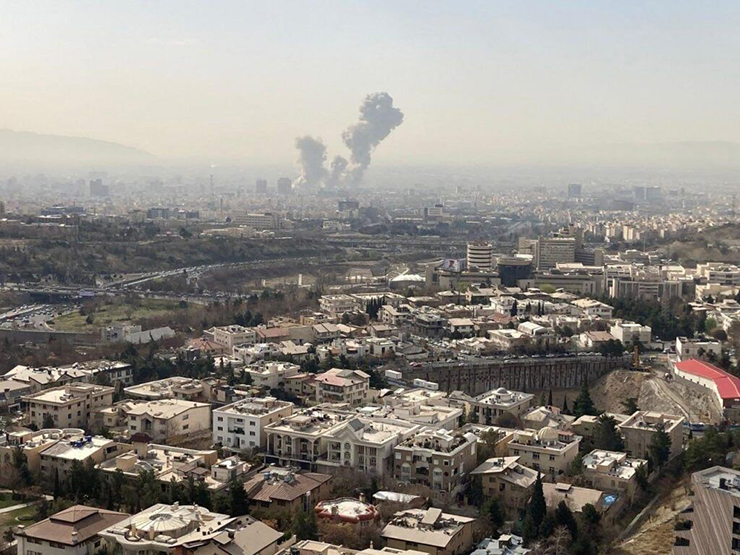
As proxies faltered, Iran’s direct threats escalated. In 2024 and 2025, Tehran launched missile barrages at Israel, but Iron Dome and allied intercepts minimized damage. Trump’s return to the White House in 2025 brought renewed vigor. Reviving his maximum pressure campaign, Trump imposed crippling sanctions and rallied allies. When diplomacy failed—as Iran violated nuclear thresholds and threatened nuclear breakout—Trump authorized joint action with Israel. The June 2025 strikes destroyed Natanz, Fordow, and other sites, decapitating the IRGC and eliminating Khamenei. This was a masterstroke of cooperation, with U.S. intelligence and Israeli precision ensuring minimal civilian harm.
What comes next is not occupation or endless war. Unlike Iraq in 2003, where regime change led to quagmire, Trump and Israel have made clear: no boots on the ground in Iran. The goal is empowerment of the Iranian people, who have long protested the regime’s tyranny. U.S. and Israeli forces will support a transition to a democratic government, providing humanitarian aid and security guarantees without entanglement. Allies like Saudi Arabia and the UAE, part of the Abraham Accords, will help stabilize the region, fostering economic ties over conflict. This is not Iraq 2.0; it’s a targeted liberation, learning from past mistakes.
Trump’s leadership has cemented his legacy as the most consequential president in a century. Like Reagan ending the Cold War or Roosevelt defeating fascism, Trump has confronted evil head-on. His deal-making acumen expanded the Abraham Accords, isolated Iran, and now delivers peace. By partnering with Israel—America’s steadfast ally—Trump has eradicated a generational threat, ensuring a safer world for generations.
Moshe Hill is a political analyst and columnist. His work can be found at www.aHillwithaView.com and on X at @HillWithView.