From Hostage Releases to Visa Freezes: Why Trump’s Foreign Policy
Leaves Freedom-Seekers Waiting
In the past year of President Trump’s second term, some of his surprise moves in foreign policy took place on Shabbos. The releases of Israeli hostages in the weeks following his inauguration, the strike on the Fordo nuclear facility in Iran, and the arrest of Venezuelan leader Nicolas Maduro. Turning on the phone after Havdalah came with a sense of relief that our prayers were answered in the actions of this president as he brought the ceasefire to Gaza, silenced the nuclear threat from Iran, and brought an autocrat to justice.
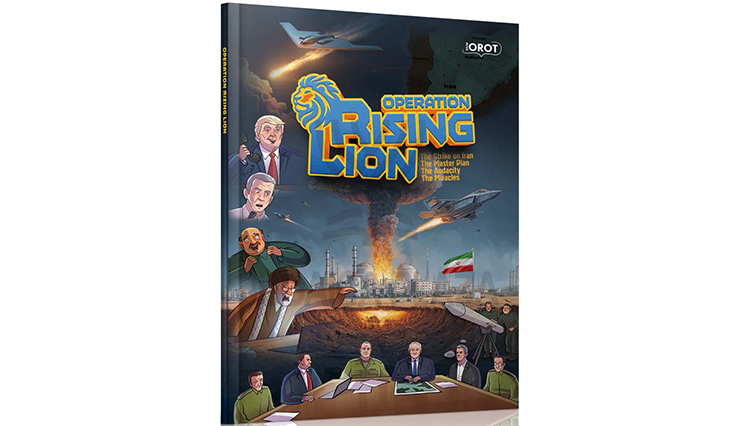
In one Jewish bookstore, an illustrated children’s book highlighted the surprise airstrike that terrified the arrogant clerics calling for death to America. Amid the celebrations, the underlying tension within America First is whether it involves projecting power beyond our borders or withdrawing from the international stage. Perhaps it limits our hegemony only to this hemisphere in the latest affirmation of the Monroe Doctrine, which would abandon Ukraine to Russia and Taiwan to China, while the United States annexes Greenland and exercises control over Venezuela. Like many of Trump’s policies, the outcome is unclear and his comments are as difficult to understand as his evasive answers to reporters muffled by the blades of the presidential helicopter on the White House lawn.
A survey published by Bloomberg News reported that more than half of Venezuelans expected her to return in a display of people power leading to democracy and prosperity. Instead, armed gangs empowered by the Bolivarian regime hunted for Machado’s supporters in the aftermath of Maduro’s arrest. “I think it would be very tough for her to be the leader,” Trump told reporters. “She doesn’t have the support within or the respect within the country. She’s a very nice woman, but she doesn’t have the respect.” He expected Maduro’s successor, Delcy Rodriguez, to offer favorable rates on oil and the restoration of assets to American companies in exchange for stabilization.
Machado met with Trump last week, gifting him the Nobel medal that she won in an attempt to earn his support for democracy in Venezuela. She spoke of the 200-year brotherhood between their respective nations, with her gift to Trump in “recognition for his unique commitment with our freedom.” Machado was awarded the medal for risking her life, staying in hiding in her country after last year’s stolen election. Trump thanked Machado, calling her a “wonderful woman,” without changing his policy towards Venezuela.
Likewise in Iran, where Trump threatened military action if the clerical regime killed protesters. More than 10,000 have been killed to date, with 800 on death row, and more than 26,000 arrested for opposing the Islamic Republic. Their flag represents pre-1979 Iran and their chants for the return of the shah could have inspired Trump to recall the pro-American monarchy that welcomed American businesses and military ties. Reza Pahlavi, the 65-year-old heir to the throne, also expected a meeting with Trump to coordinate the removal of Ayatollah Khamenei’s regime.
“He seems very nice, but I don’t know how he’d play within his own country,” Trump said. “And we really aren’t up to that point yet. I don’t know whether or not his country would accept his leadership, and certainly if they would, that would be fine with me.”
While Machado has support among her compatriots, Pahlavi’s popularity is uncertain as he hasn’t lived in Iran since 1979. With memories of past American interventions in Iran and lengthy wars involving American forces in neighboring Afghanistan and Iraq, Trump also has his voters in mind, having promised them not to engage in “forever wars.” There are no troops, arms, or funding being given to democratic opposition movements abroad. Even our voice of inspiration was silenced by Trump with shutting of bureaus and layoffs at Voice of America.
Pahlavi has a realistic view towards his future in Iran, seeking to serve as a unifying symbol rather than a ruler with power. His precedents include Michael of Romania and Mohammad Zahir Shah of Afghanistan, popular figures who returned home after decades in exile, who promoted democracy without a crown.
Iran and Venezuela are among the 75 countries listed by Trump in a freeze of immigrant visa applications, ostensibly on economic and security grounds to end “the abuse of America’s immigration system by those who would extract wealth from the American people.” The list covers most of Africa, most former Soviet countries, ten stable Caribbean democracies, countries with relatively low populations such as Moldova, Mongolia, and Montenegro, as well as oil-rich Azerbaijan and Kuwait, among others.
Most distressing is that while Trump fails to lend a hand to democratic movements in countries ruled by dictatorships, the visa freeze traps freedom-seekers from coming here for a better life. Like many immigrants, they arrive here receiving benefits but most of them eventually advance economically and upon receiving citizenship, voters who fled from Marxism and other authoritarian regimes tend to vote for Republicans for their economic, social, and foreign policies.
Iranian and Venezuelan Americans who put hopes for freedom in their former countries on Trump were met with disappointment in the past month. I don’t wish to open my phone after Shabbos knowing that the American association with freedom that inspired people worldwide is being met with repression and an uninterested president.
By Sergey Kadinsky