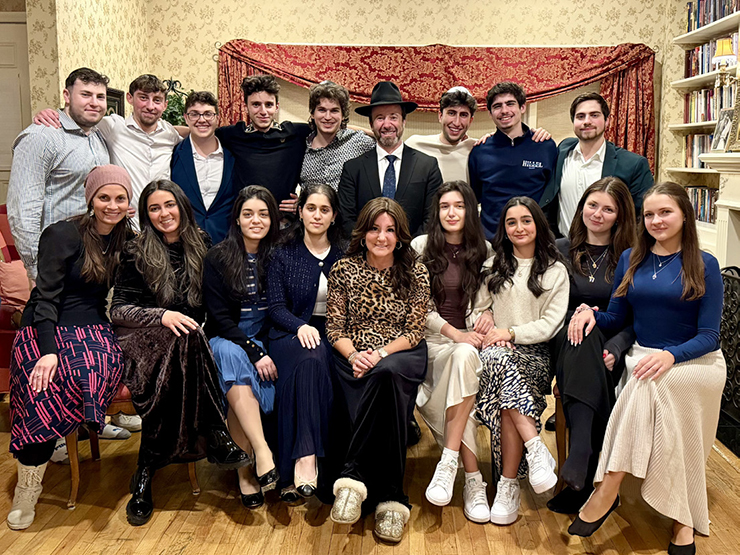
Professional purpose met spiritual growth when Emet’s jHealth and jBiz programs each hosted its own Shabbaton on two consecutive weekends. Held in Clifton, New Jersey, the jHealth Shabbaton brought together 30 students from Queens College, Adelphi University, and NYIT, along with a cross-campus cohort that meets at the Emet Center. The jBiz Shabbaton welcomed 15 Baruch College students to the Passaic home of Rabbi Reuven and Mrs. Devorah Kigel.
Run by Emet Outreach in collaboration with Olami, both eight-week programs create opportunities for students to engage with mentors, gain real-world insights, and build relationships with peers who share their ambitions. As the names imply, jHealth supports students pursuing careers in medical professions, while jBiz is geared toward those interested in business and entrepreneurship. Though each program is tailored to a different professional track, both share a common goal: to help students explore their career paths while integrating Torah values, mentorship, and community.
As Rabbi Reuven Kigel, Emet’s Campus Director, explains, “Programs like jHealth and jBiz reflect a more intentional approach to engaging students. We’re helping them connect their career paths with Torah, build relationships with mentors, and see that it’s possible to be successful professionally while living a Torah-centered life.”
Each weekend featured dynamic speakers and meaningful opportunities for engagement. At the jHealth Shabbaton, Dr. Mark Rutenberg – a pioneer at the intersection of engineering and medicine with over 30 years of experience developing technologies for early cancer detection — served as Scholar-in-Residence. He was joined by a panel of local doctors who shared their professional journeys and perspectives on integrating medicine with Torah values. At the jBiz Shabbaton, students heard from financier Jeff Shachter, who spoke about navigating the professional world with clarity, integrity, and long-term vision.
Across both weekends, conversations extended beyond formal sessions, as students connected with mentors and peers in more personal and relaxed settings. A highlight of each Shabbaton was the opportunity for students to be hosted by local families for Shabbos meals. These moments reinforced that growth happens not only through structured programming, but also through personal connection.
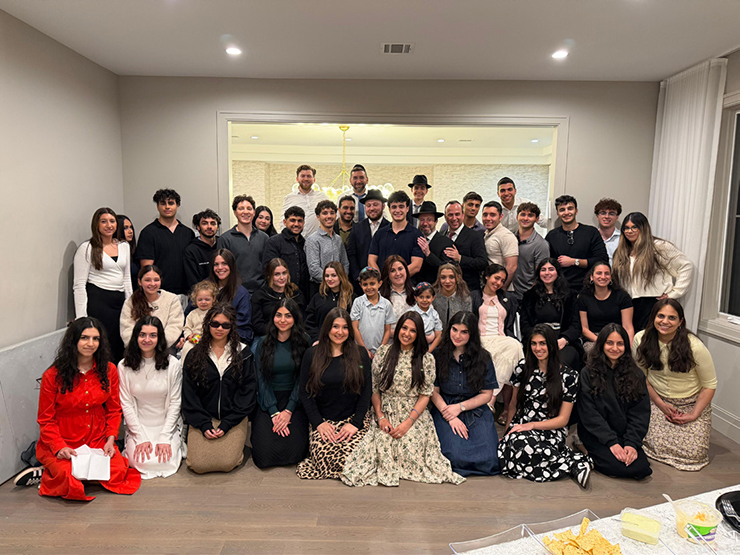
As student Samuel Ilyajanov shared, “As someone who hopes to become a medical professional, jHealth has been such a great and useful resource for me. Hearing firsthand from doctors – especially in the specialty I’m considering – gave me clarity and insight into where I see myself and the journey to get there. The Shabbaton itself was an amazing experience. The highlight was Shacharis at [Congregation] Beth Shalom, where you could feel the energy, passion, and love for Hashem. I left feeling grateful to Emet for placing us in such an inspiring community.”
Isabella Yakutilov, a jBiz participant, captured the tone of the other weekend: “The Shabbaton was such a meaningful and heartwarming experience. It gave us the chance to slow down, be present, and really connect with other students outside of our usual busy schedules. Being surrounded by people who are thinking about similar goals – both professionally and personally – made it feel relevant in a completely different way.”
For Rabbi Kigel, that sense of relevance is exactly the point. “We want to make Yiddishkeit meaningful and enjoyable,” he added. “Young people often think of spirituality as something serious, but it can be something students genuinely connect to, enjoy, and value in their daily lives.”