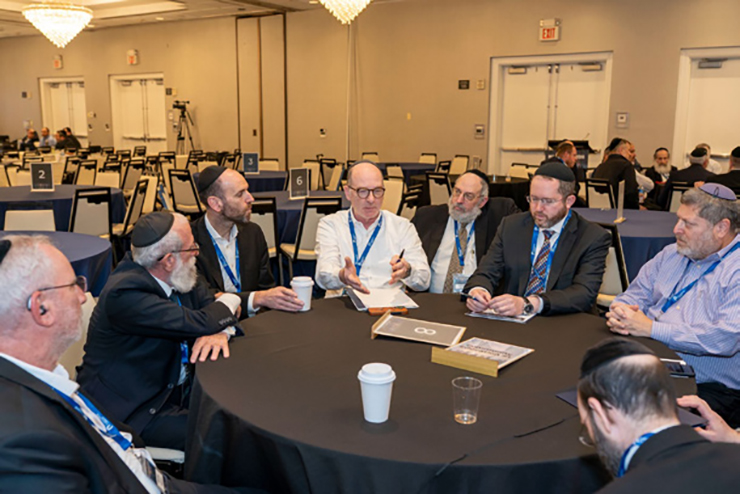
Participants from across diverse hashkafic backgrounds came together for chizuk, networking, and practical guidance rooted in a shared mission of chesed shel emes.
The sacred work of chevros kadisha is among the most humble and quietly performed mitzvos – carried out by individuals for whom this final act of kindness is its own reward. Recently, however, more than 100 men devoted to this ultimate chesed shel emes stepped out from behind the scenes and joined together for chizuk, networking, and practical guidance at the Men’s Chevrah Kadisha Leadership Conference. Hosted by the Orthodox Union and NASCK (National Association of Chevra Kadisha), the conference brought together administrators and active taharah leaders from more than 50 cities across 17 US states, as well as Canada. Representing chasidish, yeshivish, Chabad, Sefardi, and Modern Orthodox communities, participants were united in their avodas ha’kodesh.
“The people who devote the most time and energy to serve klal Yisrael often go unrecognized, by choice,” says OU Director of Torah and Halachah Initiatives Rabbi Ezra Sarna, who organized the conference together with NASCK Director of Chevrah Relations Rabbi Shmuel Fromowitz. “They do their chesed quietly. Yet to be in a room with others who understand their expertise and who are similarly carrying klal Yisrael on their shoulders gives them strength. The exchange of knowledge and experience, along with the relationships formed, significantly enhances their work and service.”
Rabbi Elchonon Zohn is a world-renowned halachic expert in afterlife care, the director of the chevrah kadisha of the Vaad Harabonim of Queens, and the founder and president of NASCK, which he launched over 25 years ago as a resource for chevros kadisha. NASCK offers education and practical guidance on a broad range of issues relating to kavod ha’meis with a special focus on taharah and the broader role the chevrah kadisha plays in its communal work.
Rabbi Zohn reflects that the sense of achdus cultivated by the diverse community representatives was truly inspirational. “From smaller communities in Seattle and San Francisco to the major Torah centers of Brooklyn, Monsey, and Lakewood, the energy and synergy were palpable,” he says. “Everyone was engaged: learning, growing, sharing, and united by a common sense of purpose, mission, and the goal to emulate Hashem and His chesed shel emes, as defined by His Toras emes.”
In his keynote address, Rabbi Zohn recognized the overwhelming power and collective impact of the chesed represented at the conference, and underscored the basic precepts of chesed shel emes: to treat each taharah as a singular moment of loss for that specific family and neshamah, to perform this selfless mitzvah in the spirit of Hashem’s boundless kindness, and to ensure that every act of chesed is guided by the halachos and minhagim passed down through generations.
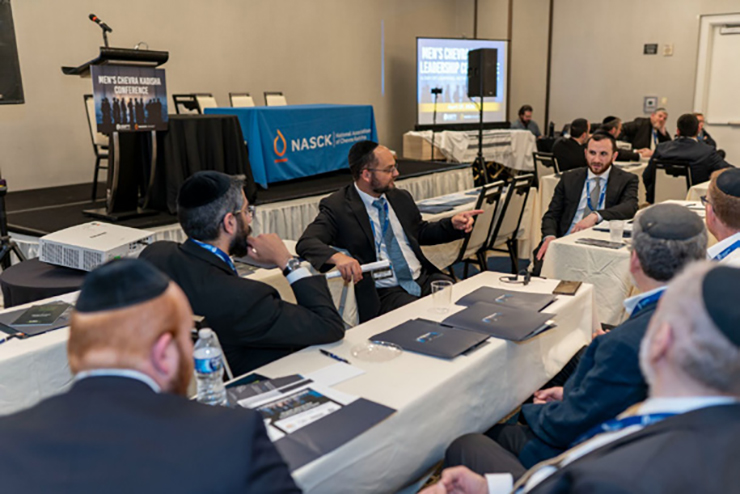
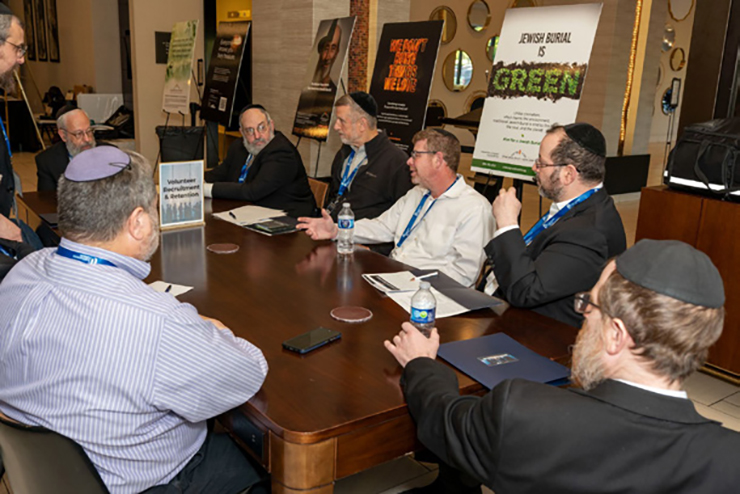
Throughout the day, participants attended sessions exploring both halachah and best practices, covering topics such as r’chitzah, taharah, tachrichim, and complications that arise in the taharah room. A conference highlight was the informal networking that took place between sessions and over lunch, where participants exchanged experiences and practical approaches. Equally meaningful were two roundtable sessions in which participants divided into small groups, each focusing on a specific area such as meis mitzvah, taharah team organization, volunteer recruitment and retention, shmirah, coordination with medical examiners, community education, and cemetery relations.