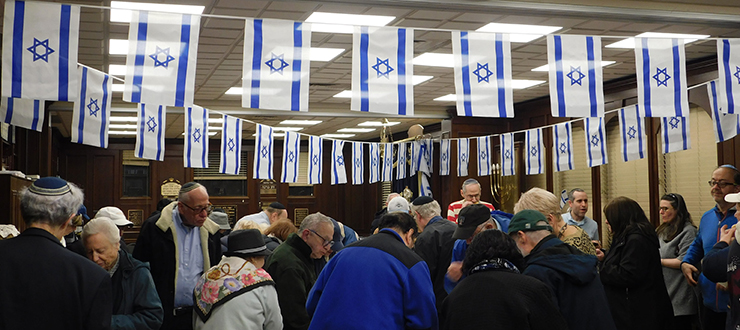
Blending mourning with resolve, the Queens Jewish Center marked Israel’s Memorial and Independence Days. Four local rabbis, a Jewish media leader, and more than 60 attendees honored the difficulties and sacrifices. Rabbi Dovid M. Cohen, CEO of The Algemeiner, a free online Jewish newspaper, was the keynote speaker. Cohen received s’michah from Yeshiva University and was a pulpit rabbi for 18 years in Manhattan, New Jersey, and the Five Towns.
After “multiple years of trial and tribulation, we still find ourselves in this period of friction,” said Rabbi Cohen. Quoting Israel’s first Chief Rabbi, Rav Avraham Kook: “The Jewish people do not fear the long road.” Prime Minister Benjamin Netanyahu described Israel fighting on seven fronts, but also an eighth: how Israel and the Jewish people are portrayed in the media.
Rabbi Cohen described Matthew Friedman working at the Jerusalem Bureau for the Associated Press (AP) more than a decade ago. It was AP’s largest bureau in the world with more than 40 employees. “Disproportion creates distortion. By putting so much emphasis on one sliver of land, that in and of itself creates an environment for distortion,” said Rabbi Cohen. AP leaders at the Jerusalem Bureau started each day asking about the Israel-Palestinian conflict. Friedman thought this was odd, since most of Israel’s wars have been with their surrounding neighbors, not the Palestinians. Rabbi Cohen said: “Wars that entail 300 million Muslims surrounding seven million Jews in Israel – or worldwide, 15 million Jews and two billion Muslims. If you zoom out, and you view things from a more truthful perspective, you’ll see a very, very different picture.”
Friedman found the media simplifying narratives “to evoke hatred and enmity, completely out of touch with the realities.” He noted the media’s “distorted perspective of Israel as colonist.” The mainstream media were stuck in their narrative, even after the Hamas attacks on October 7, 2023. “All it took was three weeks,” said Rabbi Cohen, for Israel to begin fighting back. A false story about Israel killing 500 people at a hospital was spread by the media. They neglected to tell the world that it didn’t happen: “And the word had already spread.”
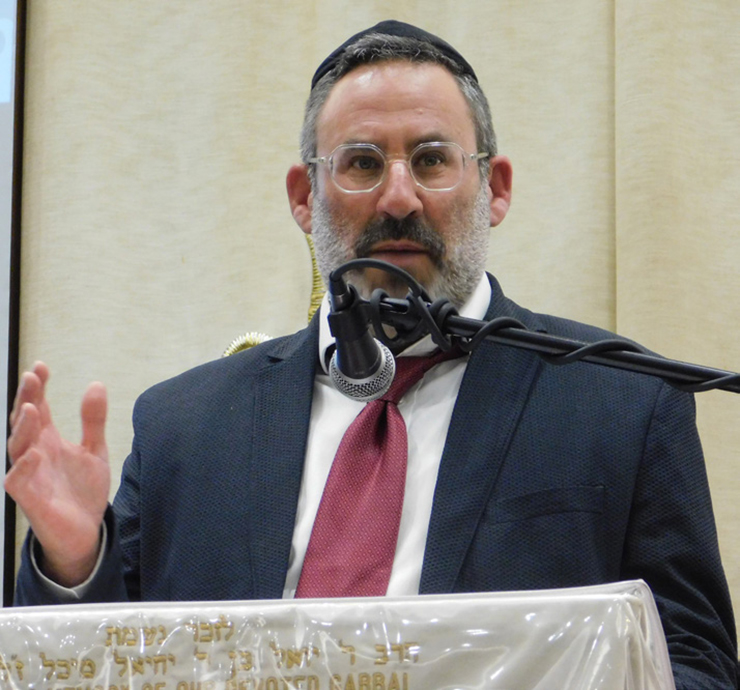
The media has become activism. It’s not run by facts on the ground. “Their question is not what’s going on, but who does this serve? It’s an activist agenda trying to convince people of a certain worldview.” None of the mainstream media reported on the decline of President Biden’s health while in office, even though it was observable. That story would have benefited the Republicans and President Trump, which doesn’t serve the mainstream media’s perceptions of the “good guys.” If it doesn’t align with the media outlet’s narrative, then it won’t be shared: “No matter how accurate or how realistic it is transpiring right before our eyes day in and day out,” said Rabbi Cohen.
A story about Hamas in Gaza dressing as civilians came out more than 12 years ago. Matt Friedman was told not to print the story because the source in Gaza would be killed. Friedman asked for the AP to adapt the story, saying, “because of Hamas pressure,” without going into specific details or endangering the source, but that was denied. Many media outlets are “searching for headlines, trying to grab attention, generate outrage. The old institutions are broken: Like the media and universities, they are unlikely to be fixed. The only way to address it is to rejuvenate with new media,” said Rabbi Cohen.
Similar to “The October Eighth Jew” who awoke and connected to his Judaism: “We all have to double down. We all have to find new vistas of strength within ourselves, and we have to be able to fight the tide. Keeping in mind that as the eternal people, we are not afraid of the trials and tribulations that we have been confronted by and continue to confront day in and day out.”
Rabbi Cohen’s wife is a professional midwife who advises pregnant women “to hold the vision and trust the process.” Rabbi Cohen asked Jews to do the same and keep in mind the vision of what is coming in the end. “Throughout Jewish history, and the founding of the Jewish state until today, atzma’ut has been paved with Jewish blood, with young men and young women who have been willing to sacrifice their futures so that we can have a Jewish homeland and a Jewish future.”
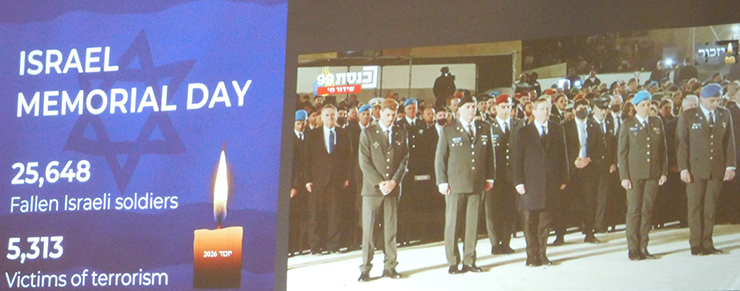
Rabbi Judah Kerbel of the Queens Jewish Center paid tribute to the approximately 940 soldiers who have died since the Hamas attacks on 10/7/23. Since Israel and the United States began operations against Iran on 2/28/26, 30 Israeli civilians – 20 from direct hits by ballistic missiles – and 12 soldiers have died. “In marking Yom HaZikaron, we recognize that the cemetery came before the country. Everything we have comes on the backs of the chayalim who gave their lives to create a better and stronger Jewish future,” said Rabbi Kerbel.
Rabbi Kerbel recited T’hilim 20, which contains the words: “Hashem will answer you on a day of trouble: He will shelter you with the shelter of Jacob.” Transitioning to Yom HaAtzmaut, “We have to remember and celebrate what we are fighting for, and hold on to our gratitude for all of the good that has come from the State of Israel,” said Rabbi Kerbel. He asked people to donate to causes helping Israel.
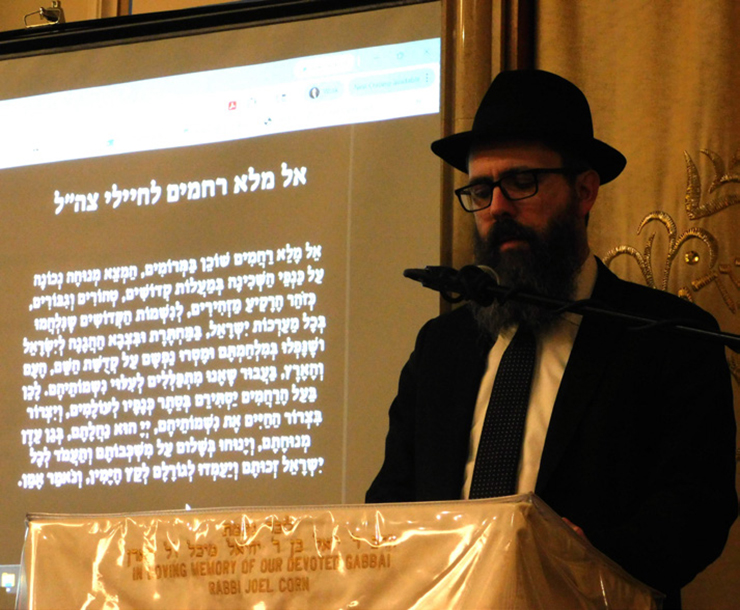
Rabbi Yossi Mendelson of Congregation Machane Chodosh said two Keil Malei Rachamim prayers: one for those killed in battle. The second was written by the IDF Chief Cantor Shai Abramson in memory of those murdered on October 7. Rabbi Avrohom Levitt, Assistant Rabbi at Havurat Yisrael, said a Mi SheBeirach for Israel’s soldiers. Rabbi Elisha Friedman of the Young Israel of Forest Hills said a prayer for the State of Israel. Maariv and a full Hallel, without a brachah, were led by Herbert Schonhaut, Senior Gabbai at the Queens Jewish Center. The program concluded with the singing of HaTikvah. Israeli snacks like bourekas, pickles, olives, hummus, and other items were enjoyed inside the beis midrash, which was decorated with Israeli flags.