The Turning Baby
The Maharal writes that when Hashem places Jews in positions of power, from which they are able to...
 Queens Jewish Link
Connecting the Queens Jewish Community
Queens Jewish Link
Connecting the Queens Jewish Community The Maharal writes that when Hashem places Jews in positions of power, from which they are able to...
The great Rebbe of Berditchev, R’ Levi Yitzchok (Roskov) zt”l, was renowned for his tremendous erudition in Torah, his love for every single Jew, and his advocacy before the Heavenly court on behalf of the Jewish people. R’ Levi Yitzchok was known as the “defense attorney” for the Jewish people, because it was believed that he could intercede on their behalf before Hashem. He was, therefore, one of the most beloved leaders of Eastern European Jewry, and he made the name of the little village of Berditchev everlastingly famous.
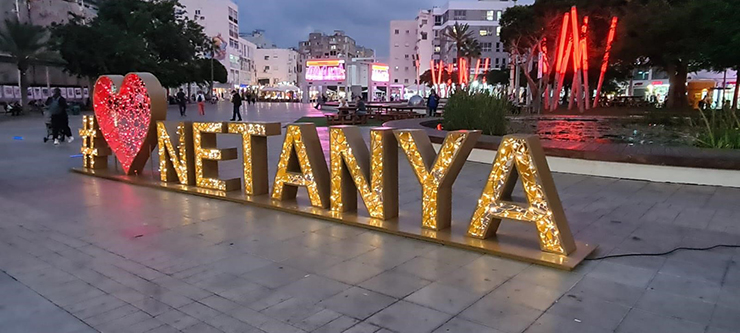
In the early 1990s, a group of real estate developers purchased land in the heart of Tel Aviv with the intention of constructing a massive development project, replete with office buildings, malls, and shops. It was to become known as the Azrieli Center. Many sharp-eyed investors recognized the opportunity and invested huge sums of money, some purchasing entire floors of the towers, plucking down large sums of money even before the building plans were drawn up.
It is well known that when people went to Rav Chaim Kanievsky zt”l to receive a brachah or ask a sh’eilah, in many cases he will tell them to either cut their hair short or grow their beard. He also tells people to keep their pei’os out, not behind their ears. He was once asked by his son-in-law, Rav Mordechai Tzivyon shlita, why he told a person with facial issues to grow his beard and that Rav Chaim responded, “A beard is a person’s hadras panim (glory of the face). If one grows his beard, he has a real hadras panim. His issues that affect his hadras panim will be healed when he grows a beard.”
The Maharal writes that when Hashem places Jews in positions of power, from which they are able to save their people, this reveals His special love and protection for us. The Purim story, the incredible hashgachah, and the fact that Mordechai and Esther were appointed to positions of authority to bring about Haman’s downfall, teaches us the importance of emunas chachamim. We must always look for Hashem when He is not clearly present, but even more so must we trust the insight of our Torah leaders who are better able to strip away the physical mask that conceals spiritual reality and show us the truth. For klal Yisrael, these are the true keys to salvation and redemption.
The day of the Chanukas HaMishkan – the Inauguration of the Mishkan, the holy Sanctuary – was one of great joy and happiness. In fact, the Gemara teaches that the day of the Chanukas HaMishkan was as joyous for the Almighty as the day He created Heaven and Earth. It says: “Va’y’hi ba’yom ha’shmini–And it was on the eighth day,” and it says “Va’y’hi erev va’y’hi boker–And it was night, and it was day.”
The Mishkan is universally known as the “House of G-d.” It serves as a potent symbol of the unique relationship between Hashem and His Nation, am Yisrael. The Ramban in Parshas T’rumah comments on the juxtaposition of the command to build the Mishkan to Matan Torah, when klal Yisrael received the Torah on Har Sinai. He explains that the Mishkan perpetuated the experience at Har Sinai. It transformed this one-time event into a continuous and everlasting relationship, allowing every single Jew the opportunity to bask in the presence of the Sh’chinah. The Mishkan’s structure and rituals reflect not only the events that took place at Sinai, but also their purpose, which was to command B’nei Yisrael with the laws that they are to keep in the Holy Land of Israel, so they can properly represent Hashem as His special nation.