Since opening last summer, the Knesset Museum has welcomed tens of thousands of visitors. Housed in Jerusalem’s historic Froumine House at 24 King George Street, it served as Israel’s parliament from 1950 until 1966, when the Knesset moved to its current home in Givat Ram. Today, cutting-edge technology allows visitors to become members of the Knesset (MKs) for a day, voting on historic issues and listening to famous speeches as they explore the early years of Israeli democracy.
The 120-member parliament was modeled on the Anshei K’neses HaG’dolah (the Men of the Great Assembly), the 120-member judicial body during the period of the Bayis Sheini (the Second Beis HaMikdash). Shimon Peres, the late prime minister and president, once remarked that the intimate setting of the original parliament felt less like a government building and more like a shul. Stormy political debates were frequent; and while the parliament has changed in many ways over the decades, that fiery debate remains the same.
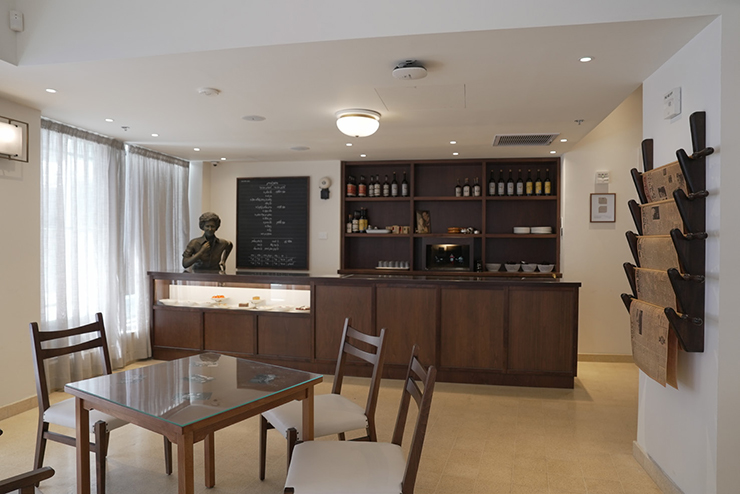
At the entrance hangs the original mezuzah that guarded the building during its years as parliament. At the start of the tour, selfies taken by visitors are immediately displayed on an attendance screen alongside photographs of former members of parliament. The museum intentionally limits its photographs and exhibits to political leaders who have passed away. The next stop is the reconstructed cafeteria, featuring original tables, authentic menus, and traditional Eastern European dishes like gefilte fish, borscht, chopped liver, and calf’s-foot jelly. These meals were prepared by Hungarian immigrant chefs who cooked the foods of their homeland. Staff, journalists, and guests all ate there, though lawmakers were charged more for their meals on the assumption that they earned higher salaries.
Eri Jabotinsky, son of Revisionist Zionist leader Ze’ev Jabotinsky – and himself a member of Herut – arrived at the cafeteria and asked for a glass of milk after eating a meat platter. When he was refused, the matter was brought before the Knesset committee, which ultimately ruled that the Knesset cafeteria would remain strictly kosher.
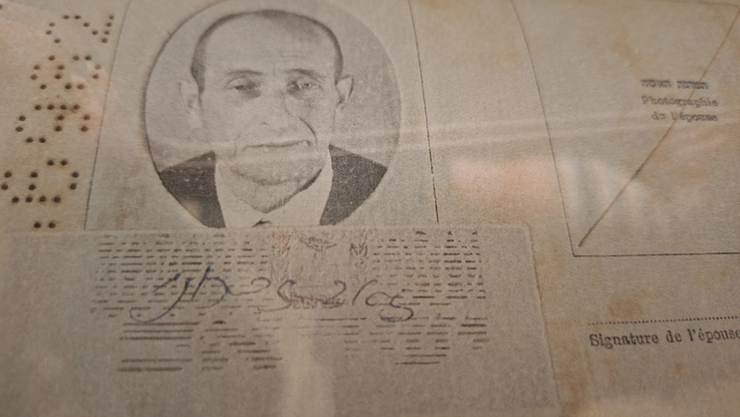
Further along, the Roots of Democracy interactive escape room challenges visitors to solve puzzles centered on the foundations of democracy and early Israeli history. Another highlight is the historic committee room, hidden behind a concealed door. Due to a severe lack of space, the room also served as the cabinet room. Inside stands a safe containing David Ben-Gurion’s secret protocol announcing the capture of Nazi mastermind Adolf Eichmann, alongside an authentic fake passport created by the Mossad. The Mossad chose the surname “Zichroni” – derived from the Hebrew word for “remember” – as a symbolic reminder that the Jewish people had not forgotten Eichmann’s crimes. It was in this small room that Ben-Gurion met privately with his cabinet to share the news of Eichmann’s capture. He then locked them in the room, ensuring that nothing leaked before he announced to a stunned parliament that Eichmann was in Israeli custody.
In those early days, politicians were remarkably accessible to the public. Visitors can view a funny exchange of letters in which a parliamentary official complained that local schoolchildren were becoming a nuisance by constantly asking politicians for autographs. The school principal dryly responded that once the school bell rang, the children were no longer his responsibility. He suggested that if politicians didn’t want children collecting autographs, they should simply stop signing them.
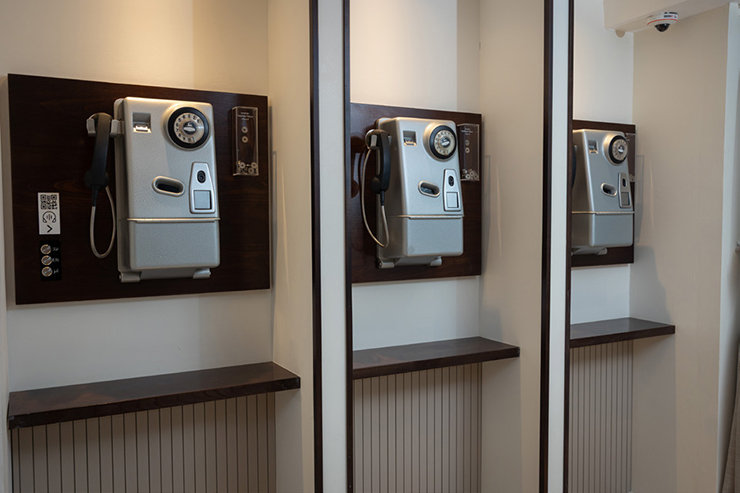
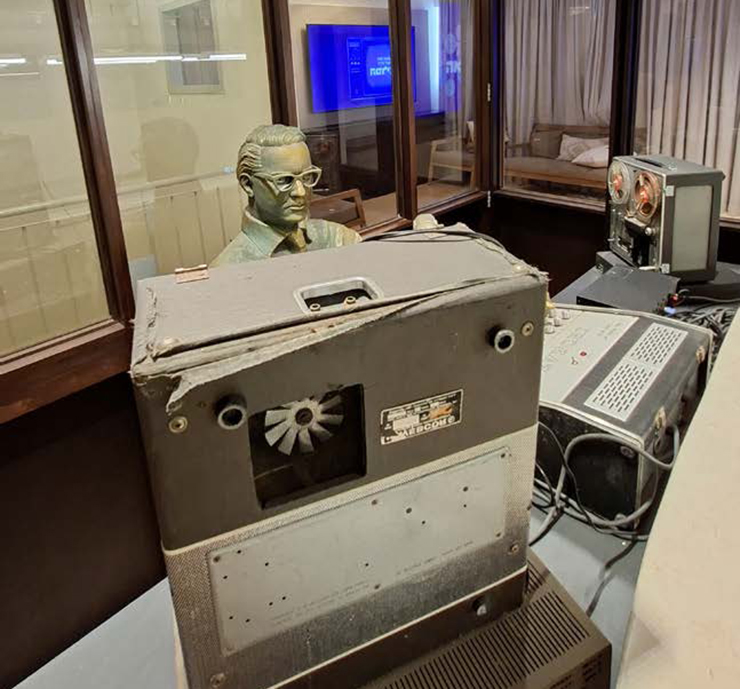
In the reconstructed visitors’ gallery overlooking the parliamentary chamber, guests can see the President’s Booth, where a life-sized representation of Israel’s first president, Chaim Weizmann, sits in his seat. Nearby is the original Kol Yisrael radio booth, where Israel’s sole radio station at the time once broadcast live. Visitors can listen to those historic broadcasts through vintage telephones.
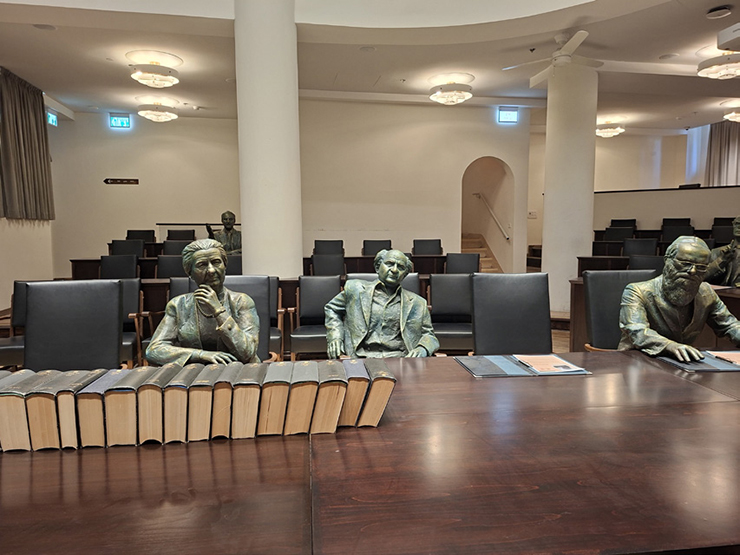
The tour ends in the Plenary Hall, reconstructed with the original speaker’s gavel, microphones, and desk fans, where visitors can sit alongside life-sized figures of David Ben-Gurion, Golda Meir, and Menachem Begin. In the informal setting of the original Knesset, security was almost nonexistent. The quiet chamber gives little hint of the violence that erupted there on October 29, 1957, when an attacker hurled a live grenade from the visitors’ gallery into the government benches, wounding Prime Minister Ben-Gurion, Golda Meir, and two other ministers. The most severely injured was Minister Chaim Moshe Shapira. He eventually recovered, though his family noted that he was never quite the same. After that incident, the Knesset began implementing security measures. One year later, before the holy day of Yom Kippur, the attacker sent a letter asking for forgiveness, and Shapira graciously accepted his apology.
Sixty-six years later, on October 7, 2023, Chaim Moshe Shapira’s great-grandson, Aner Shapira, faced a grenade attack of his own. When terrorists attacked the Nova Music Festival, Aner stood at the entrance of a crowded bomb shelter to protect the people inside. As grenades were thrown into the shelter, Aner caught seven of them, one by one, and tossed them back out. He kept going until the eighth grenade exploded in his hand, killing him. Seven people hiding in what became known as the “Shelter of Death” survived. Remarkably, Chaim Moshe Shapira and his great-grandson Aner shared the same Hebrew birthday – two men from the same family, linked by courage in the face of grenade attacks across 66 years of Israeli history.
Suzie Steinberg, (nee Schapiro), CSW, is a native of Kew Gardens Hills and resident of Ramat Beit Shemesh who publishes articles regularly in various newspapers and magazines about life in general, and about life in Israel in particular. Her recently published children’s book titled Hashem is Always With Me can be purchased in local Judaica stores as well as online. Suzie can be reached at This email address is being protected from spambots. You need JavaScript enabled to view it. and would love to hear from you.