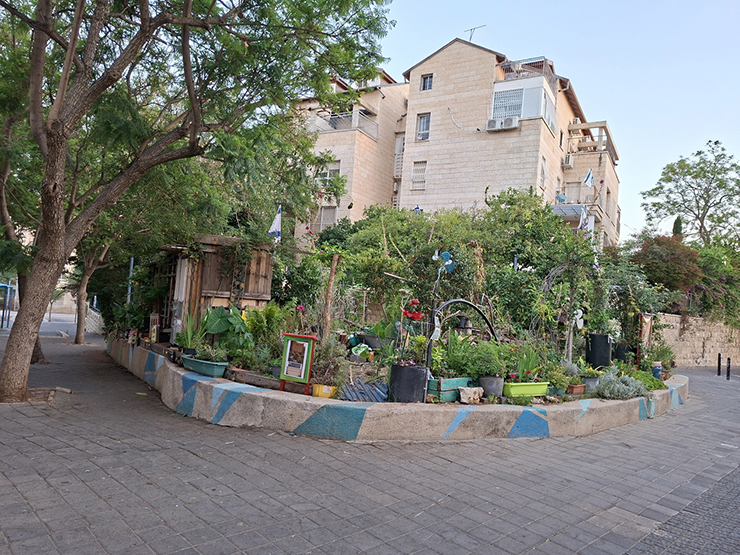
Life continues here in Israel; however, bereaved families carry the weight of their grief forever. Gil Karsenty, a resident of Ramat Beit Shemesh, decided to help local families keep the memories of their sons alive.
Gil has long been a driving force in our community. He built a visitor center at Be’er Tikvah (the Well of Hope), an educational agricultural farm for students from all schools and educational sectors in Beit Shemesh. The center offers workshops and enrichment classes focused on agriculture and the environment, including hands-on agricultural work in orchards, vegetable cultivation, and animal care. He even taught my own kids science.
During Covid, Gil established a community garden right outside his home in the middle of our residential area of Ramat Beit Shemesh. With parrots chirping loudly beside rows of beautiful plants, it offers a calm, natural setting where neighbors gathered and davened together. Every year, he leads a moving Yom HaZikaron ceremony there.
It was in this same garden that he launched Ginat HaGiborim (the Garden of Heroes), an interactive center in memory of the soldiers from Beit Shemesh who gave their lives during the Swords of Iron War. Gil wants the community to get to know the bereaved families beyond just a name on a page – to stand together with them and offer real support.
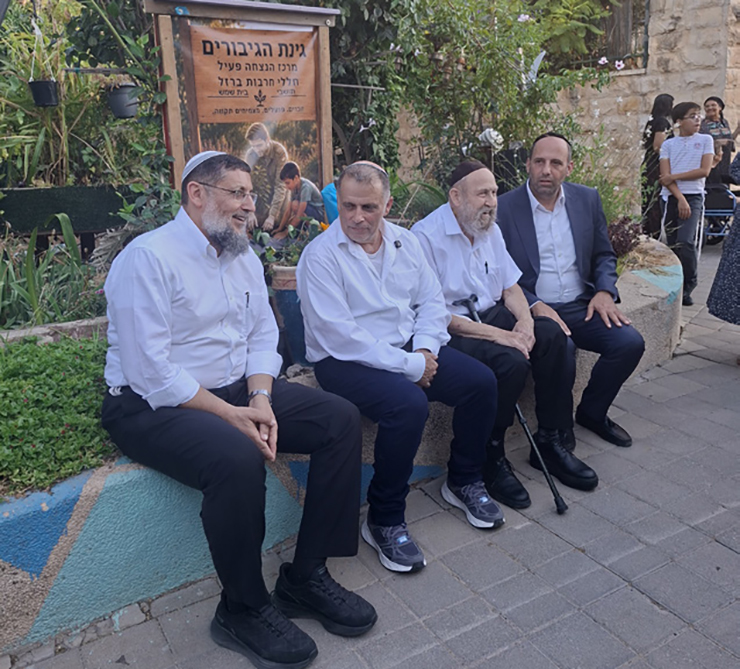
At the opening ceremony, attended by the city’s mayor, rabbis, and public figures, the bereaved families were introduced to a crowd of 150 people – a turnout much larger than anticipated. Representatives of the bereaved families were encouraged to speak.
HaRav Rafi Assulin, father of Shimon Yehoshua, who fell in Gaza, spoke about the famous story of Rabbi Elazar ben Azariah, Rabbi Yehoshua, and Rabbi Akiva walking up to Yerushalayim. When they reached the Har HaBayis, they saw a fox emerging from the location of the Kodesh HaKodashim. While the other rabbis started to cry, Rabbi Akiva laughed. He explained that there were two prophecies: Uriah HaKohen prophesied during the Bayis Rishon that there would be a churban, while Zechariah prophesied during Bayis Sheini that old men and women would one day sit safely in the streets of Yerushalayim. Rabbi Akiva explained that seeing the fulfillment of the prophecy of destruction gave him absolute certainty that the prophecy of the G’ulah would also come true.
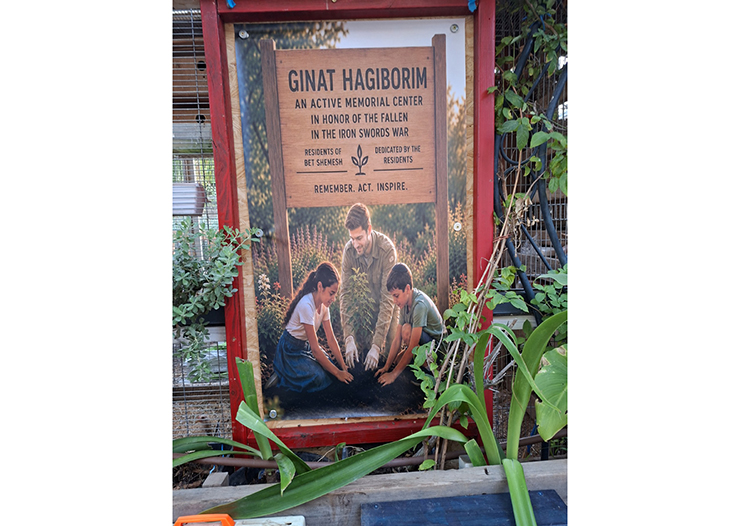
Rav Assulin explained that while we all believe in the G’ulah, we must be active partners in bringing it. The chayalim did exactly that. They left home to fight so that children would be able to play in the streets with birds chirping in the background. The development of this center, rising straight from the hearts of the residents, gives these families tangible hope and strength.
Rav David Noll – who dedicated a sefer Torah two weeks ago on the first yahrzeit of his son Moshe Shmuel – broke down when talking about “the best of us” who went out to serve. He shared his belief that the nation will emerge from this war stronger than ever, even though some must pay the ultimate price. He said that they do it without regret because our nation has a wonderful future ahead. He stated that his son is a symbol of what we are all prepared to do for Eretz Yisrael and the Jewish people.
Gil stated that in their deaths, the soldiers commanded us to live. He explained that a soldier is built on the values he learns at home. Through this garden, he wants to instill those values – ahavas chinam, m’sirus nefesh, and simchah – in the younger generation. On the yahrzeit of each chayal, a poster with his story will hang in the garden, and b’samim will be on hand so passersby can make a brachah in his memory. The center is planning a youth trivia tournament, Chidon HaGiborim: 22 shiurim taught in their memory, a Sports Day, a community s’lichos program, and much more.
Gil shared a deeply personal piece of his own story. Fifty years ago, he went to the beach with his father and brothers and tragically watched his father and a brother drown before his eyes. If that is a weight he still carries half a century later, one can only imagine the raw pain of these families, who have only recently lost their loved ones.
Gil described standing at the grave of Avraham Azulay, a soldier killed while operating an excavator. Next to the grave was a pile of dirt where the family had placed toy tractors to honor his memory. Everyone stood in shock when suddenly, a one-and-a-half-year-old child crawled right over to the dirt and happily started playing with the toys. The contrast of grieving people crying while a baby played was striking. But such is life. At Ginat HaGiborim, there will be memories, there will be tears, but there will also be simchah.
Suzie Steinberg, (nee Schapiro), CSW, is a native of Kew Gardens Hills and resident of Ramat Beit Shemesh who publishes articles regularly in various newspapers and magazines about life in general, and about life in Israel in particular. Her recently published children’s book titled Hashem is Always With Me can be purchased in local Judaica stores as well as online. Suzie can be reached at This email address is being protected from spambots. You need JavaScript enabled to view it. and would love to hear from you.