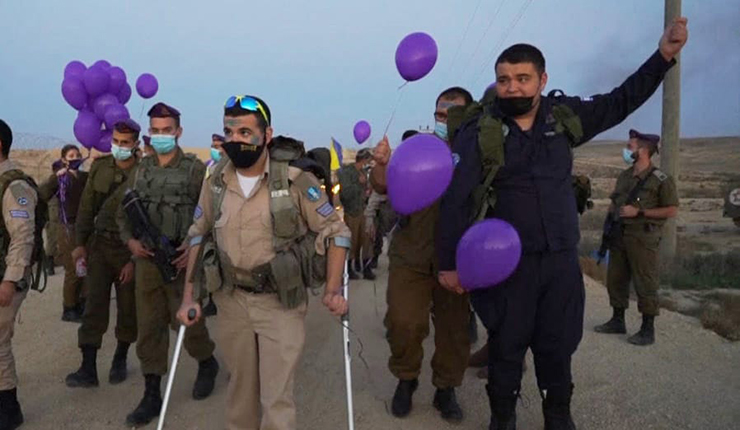
Masa Kumta (Beret Journey) is the march IDF combat soldiers complete before receiving their brigade’s unique beret in a ceremony that marks their readiness for battle. The event is filled with pride, music, and celebration. But for participants in the Gedolim B’Madim (Special in Uniform) program, it represents something deeper: a declaration of belonging.
Daniel Taverzar was born with Williams Syndrome, a rare genetic disorder affecting only about 200 Israelis, of whom only a handful have served in the army. Growing up, his classmates viewed him as strange, and they ostracized him. Even so, Daniel believed he was capable. He wanted to serve like everyone else.
When evaluated for the army, a psychiatrist granted him an exemption after only 30 seconds. Daniel, who loved his country, was determined to earn the privilege of serving. With his parents’ help, he found a path.
That path became possible because of a revolution that began years earlier. Major General (res.) Gabi Ofir, former commander of the Home Front Command, was the father of Ronit, who also has Williams Syndrome. Seeing her father and brothers in uniform, Ronit wanted to contribute, too.
Gabi partnered with Professor Reuven Feuerstein, a world-renowned expert in educational psychology, to create a plan for integrating special-needs teens into military service. Ronit was among the first participants. Her identity as the commander’s daughter was kept secret to ensure she received no special treatment. She completed her service successfully.
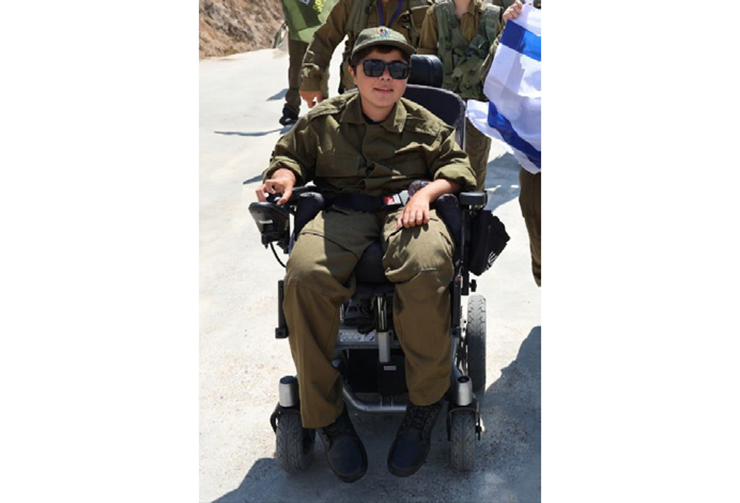
In 2006, Gabi transferred management of the program to Lieutenant Colonel Ariel Almog, who founded Gedolim B’Madim. Chabad Rabbi Mendi Belinitsky, CEO of the program, works in partnership with the Ministry of Defense and JNF-USA to give special-needs youth the opportunity to experience the rite of passage of army service – fostering independence, personal growth, and meaningful friendships.
Before entering, teens participate in a preparatory course that includes visits to military bases. A social worker evaluates the applicants’ abilities and interests, placing them with the commander and base best suited to their strengths. A professional support team – social workers and personal instructors – accompanies them throughout their service.
Each unit consists of ten soldiers. Those still in school work twice a week; those from special-needs residential homes come daily. They receive training, including limited and supervised shooting practice, and participate in traditional ceremonies such as the tekes hashbaah (swearing-in) and masa kumta, just like other soldiers. There is also a special uniform ceremony.
Soldiers in the program serve in diverse roles: supporting police and first responders, assisting as K9 handlers with dogs that detect weapons, explosives, and narcotics, working in municipal emergency warehouses (organizing rescue equipment), performing logistics on bases (inspecting, repairing, and preparing combat gear), providing kitchen and facility support, or handling administrative tasks in detention facilities (without direct detainee contact).
The Gedolim B’Madim Band performs at IDF events, business gatherings, and community programs, touching hearts wherever they go.
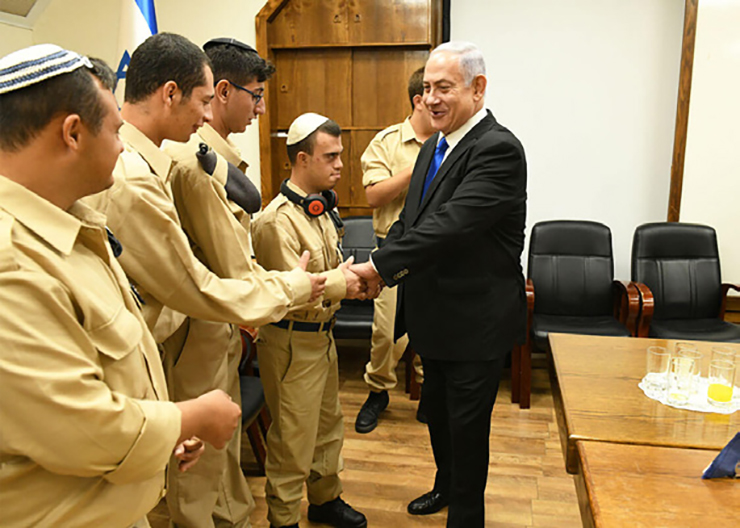
When the program began, 60 soldiers served on five bases. Today, 1,200 soldiers serve on 75 bases across Israel. Word has spread that people with special needs are not defined by their limitations, but by their contributions.
Daniel served four years as an aircraft technician at Palmachim Air Base, one of the IDF’s most respected bases. His work was highly classified, so he could not share details. He went to work each day determined to do his best and returned home fulfilled. On base, his disability did not define him. Eventually, he was promoted to Samal Rishon (First Sergeant).
On the day of his army ceremony, Daniel was invited to the office of base commander Omri Dor. Omri personally informed him that he had been chosen for an Outstanding Soldier Award and would stand on stage with other honorees. Daniel was deeply moved when Omri explained that the army had come to rely on his professionalism and dedication.
The army once exempted Daniel in 30 seconds. Years later, it honored him on stage.
Suzie Steinberg, (nee Schapiro), CSW, is a native of Kew Gardens Hills and resident of Ramat Beit Shemesh who publishes articles regularly in various newspapers and magazines about life in general, and about life in Israel in particular. Her recently published children’s book titled Hashem is Always With Me can be purchased in local Judaica stores as well as online. Suzie can be reached at This email address is being protected from spambots. You need JavaScript enabled to view it. and would love to hear from you.