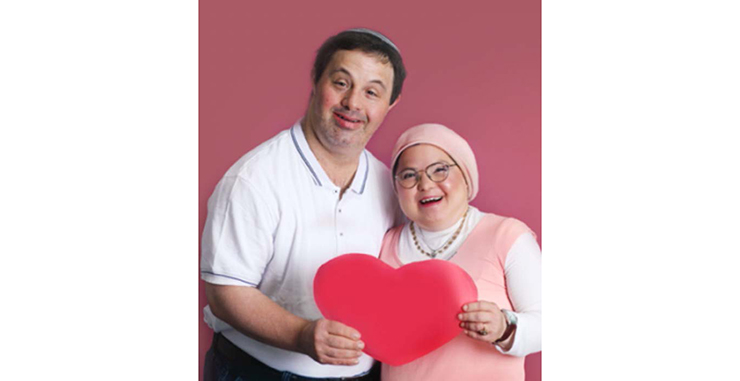
The chasan broke the glass, and the guests screamed “Mazal Tov!” While the simchah was palpable, there was not a dry eye in the hall. This was no regular wedding. It was special in more ways than one. The chasan and kallah had special needs, and they were building a bayis ne’eman b’Yisrael!
Alei Siach is a nonprofit organization dedicated to providing solutions for people with disabilities in the chareidi-dati community, in accordance with Torah and mitzvot. It is also my place of work.
Among the many programs Alei Siach provides, one that stands out is the Ofek (Hebrew for “horizon”) Project, created for married couples with disabilities. The program was launched fifteen and a half years ago with the encouragement of Rav Chaim Druckman, zt”l, one of the most senior spiritual leaders of the Religious Zionist community at the time of his death three years ago. Rav Druckman’s daughter, who has Down syndrome, was living in the Alei Siach residential program. When she expressed a desire to get married, Rav Druckman approached Rav Perkal, the founder and CEO of Alei Siach, and asked him to help make his daughter’s dream a reality. And so, the program was born.
Special-needs couples who are ready to get engaged join the program and receive essential support both before and after their wedding. Today, there are approximately 35 such couples, with several more on the way, from Litvish, Chassidish, and Dati Leumi families living in cities across the country.
Five years ago, Alei Siach took the concept of special-needs marriages to the next level. Hodaya Krief was working in the residential department of Alei Siach in a girls’ apartment. She would hear firsthand from the girls how much they wished to get married. But that was all it was at the time: a wish. They had no way to meet appropriate men.
The idea of actually suggesting shidduchim to adults with special needs became a topic. Gita Mondri, director of the Housing and Development Department of Alei Siach, Tali Biton, director of the Ofek Department, and Hodaya believed that every person should have the right to make choices as well as the opportunity to talk about the possibility of marriage. However, before any steps could be taken, several questions needed to be addressed. What does halachah say about this? Is it ethical? Alei Siach consulted with Rav Eichler, their rabbinical advisor, who stated that shidduchim can be made between people who are capable of keeping the halachos related to married couples. With that caveat, he gave Alei Siach his blessing.
With Hodaya serving as the official shadchan, Alei Siach now serves as a resource for residents of Israel seeking shidduchim for their children with special needs. With so many interested in their services, she has difficulty keeping up with the demand. Parents travel for hours from all over the country to meet with Hodaya to determine whether their child is suitable for marriage. Some come looking for a spouse for their child. Some come already with a match but want the support services. Some believe that support will only be necessary before the wedding but then return afterward, asking for help.
Shidduchim for people with special needs are far more complex than typical shidduchim. Before any suggestion is made, difficult and essential questions must be discussed. First, it must be determined whether the people in question are capable of such a relationship and all it entails. People with serious mental disorders are automatically disqualified. Everything about the potential candidate is explored. Evaluations and medical reports are shared. Where do the parents want the couple to live? What kind of support would they like the couple to have? How much independence do they want them to have? How much of a potential spouse’s challenges is the family willing—and able—to take on in addition to what they are already carrying? The parents must have a clear understanding. Who is their child? What are his/her strengths and weaknesses? These preliminary conversations can prevent aggravation and disappointment down the road.
Hodaya describes the qualities that the candidates must bring to the marriage. They must be flexible, independent, and able to communicate. After discussing these important topics with the parents, Hodaya then interviews the candidates to ensure that they are fit for marriage. When making a suggestion, Hodaya considers the whole package: the people looking to get married, family compatibility, level of functioning, mentality, and religious compatibility.
The program offers a general course of preparation for shidduchim. After suggesting a shidduch, the couple goes out. Sometimes they go on their own, and other times they are accompanied by a professional staff member. They also meet with professionals between dates. Once married, a staff member visits their home every week. Additionally, they receive counseling sessions at the office to help them handle conflicts and dilemmas that arise.
Hodaya shares the story of the first shidduch she made. Esther* entered Alei Siach on an emergency basis. Her mother had reached an advanced stage of cancer and needed a placement for her daughter. Sadly, several months after her placement, Esther’s mother passed away.
Esther thrived at Alei Siach, steadily progressing in her understanding and independence. She was eventually transferred to a higher-functioning apartment. Around that time, Hodaya met a boy whom she thought would be a perfect match for Esther. But Esther was not yet ready to pursue marriage. The boy’s mother was very much in favor of proceeding and would call Hodaya to see if there was any progress. It was only two years later that Esther was finally ready to date. The couple has been happily married for three years.
Since the initiation of the Shidduch Department, seven couples have been added to the Ofek Project. Sometimes we assume something is impossible. But when we allow ourselves to imagine new possibilities, we can make the impossible happen. May we merit the building of many more batei ne’eman b’Yisrael!
*Name changed
Suzie Steinberg, (nee Schapiro), CSW, is a native of Kew Gardens Hills and resident of Ramat Beit Shemesh who publishes articles regularly in various newspapers and magazines about life in general, and about life in Israel in particular. Her recently published children’s book titled Hashem is Always With Me can be purchased in local Judaica stores as well as online. Suzie can be reached at This email address is being protected from spambots. You need JavaScript enabled to view it. and would love to hear from you.